
Adhesive hooks versus tension rods for rental curtains
Ads
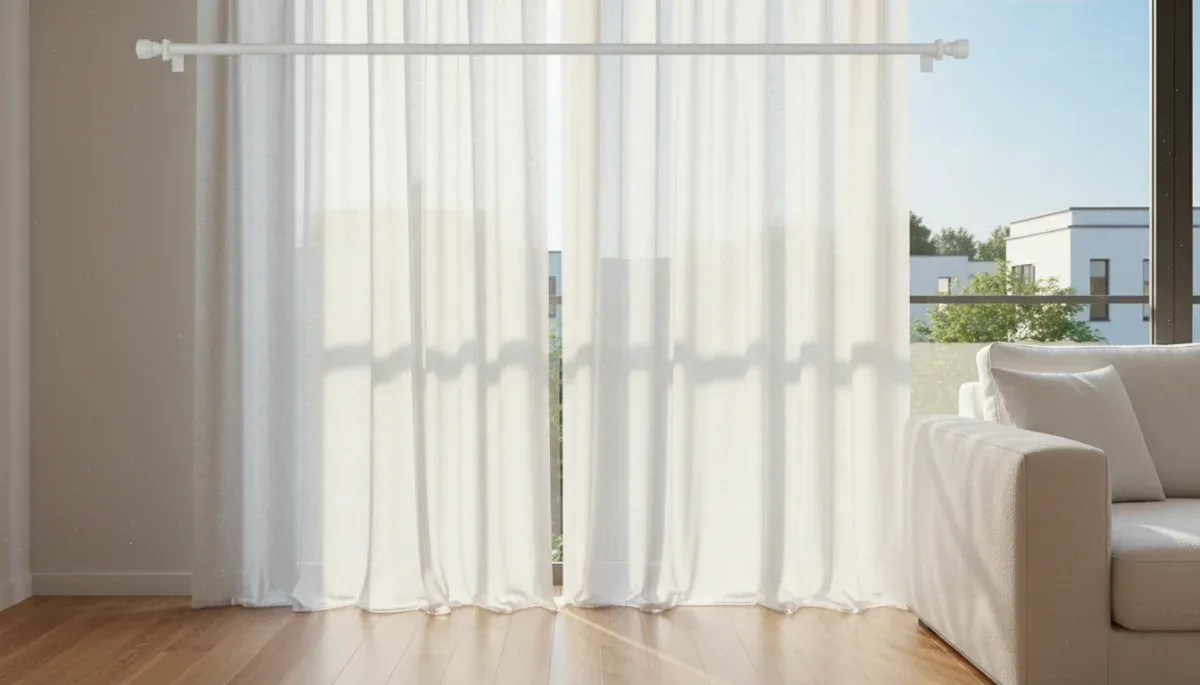
Tension rods work best for lightweight curtains mounted inside deep window frames, while adhesive hooks allow you to hang standard curtain rods outside the frame to block more light. Choosing the right method preserves your rental security deposit by eliminating the need to drill holes into window frames or drywall.
Ads
This comparison helps apartment renters, dorm occupants, and temporary residents find a stable setup without risking costly paint or trim repairs. The primary tradeoff comes down to mechanical leverage: tension rods rely entirely on inward friction against solid jambs, whereas adhesive hooks rely on chemical bonding to painted surfaces that can fail or tear away wall finishes if overloaded.
Ads
How tension rods work inside rental window frames
A tension rod uses an internal steel spring or a threaded twist-and-lock mechanism to exert outward horizontal force against the opposite sides of a window frame. When installed correctly between two solid, parallel surfaces, the rubber end caps create friction that keeps the rod suspended without screws, anchors, or brackets. This mechanical approach keeps your walls completely untouched, making it one of the cleanest options for short-term housing.
The key limitation of any tension rod is the structural requirement of the window itself. You must have an inset window opening with at least one to two inches of flat, rigid framing on both sides. Windows that sit flush with the interior drywall, rounded drywall returns without wooden trim, or frames with decorative sloped moldings generally provide inadequate grip. If the jamb flexes, yields under pressure, or features textured trim, the rubber caps cannot seat flatly, causing the rod to slide downward over time.
Spring-loaded models suit narrow windows and ultralight fabrics, but they lose tension gradually as temperature changes expand and contract the metal. Twist-to-fit telescoping rods feature an internal barrel that locks into place with mechanical threads, offering a much more dependable hold across wider spans. In all cases, tension rods remain restricted to inside-mount configurations, which means light will naturally bleed around the edges of your drapery panels.
Understanding adhesive hooks and wall mount brackets
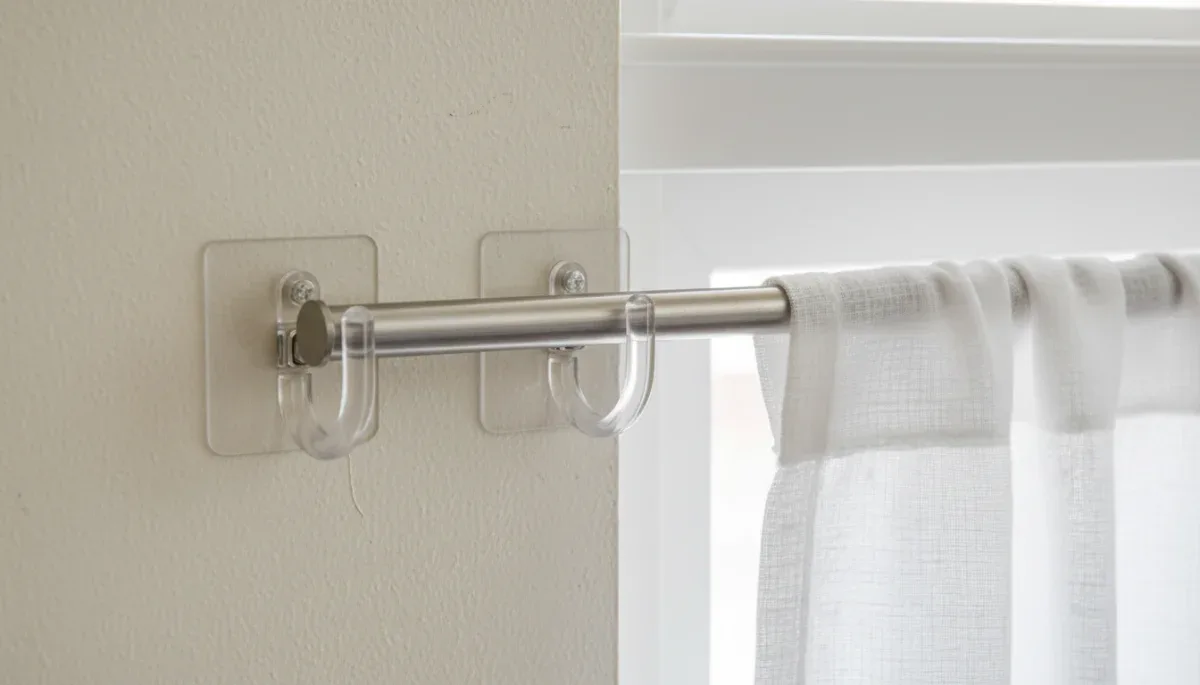
Adhesive hooks, such as those manufactured with pressure-sensitive foam strips by Command or generic utility brands, transfer the vertical load of your curtains directly onto the surface of your wall or casing. Specially designed curtain rod brackets with adhesive backings cradle standard curtain poles, allowing you to mount drapery outside the window frame. This outside-mount position allows you to position the rod higher and wider than the glass, creating the visual impression of taller ceilings and larger windows.
To support a curtain assembly successfully, adhesive systems depend entirely on the condition of the substrate beneath them. The adhesive bond works on clean, fully cured, non-porous surfaces like painted wood trim, smooth tile, metal, or thoroughly primed and painted drywall. If your rental features chalky builder-grade flat paint, peeling layers from older renovations, or heavy orange-peel plaster texturing, the adhesive strip will anchor only to the topmost dust or paint layer rather than the wall structure itself.
Weight capacity ratings on retail packaging apply strictly to static vertical shear force under ideal laboratory conditions. When you pull a curtain open or closed, you introduce dynamic rotational force, pulling the top edge of the adhesive bracket outward away from the wall. This peeling force is the leading cause of sudden bracket failure, meaning you must deliberately over-specify your hook capacities and distribute the load across multiple support points.
Weight limits and fabric compatibility
Assessing the total weight of your drapery setup is mandatory before selecting hardware. A standard setup includes the fabric panels, the rod itself, rings or grommets, and any decorative finials. Underestimating the total combined load often leads to dropped rods and damaged furniture or flooring below.
Typical weight capacities for non-drill curtain hardware
- Standard small tension rods (up to 48 inches): Safely hold between three and five pounds, suitable for single sheer panels, lightweight voile, or tier café curtains.
- Heavy-duty twist-lock tension bars (up to 84 inches): Rated between ten and twenty pounds, capable of supporting light-filtering cotton, linen blends, or single unlined draperies.
- Standard utility adhesive hooks (per pair): Rated between five and ten pounds total, provided the rod weight is evenly split between both sides.
- Specialty adhesive curtain rod brackets (three-bracket array): Accommodate twelve to fifteen pounds total when supported by a center bracket that limits central pole sagging.
Thermal, velvet, and blackout curtains contain dense acoustic weaves and multiple layers of acrylic lining that easily exceed ten to fifteen pounds per pair. Placing heavy thermal drapes on standard spring tension hardware causes the central joint to bow, pulling the rubber ends inward until friction fails entirely. Similarly, heavy drapery on adhesive mounts creates constant peeling leverage against the upper strip edge, which will inevitably strip the top layer of sheetrock paper off the wall.
Installation and surface preparation requirements
Proper surface prep dictates whether non-invasive curtain systems stay up for months or crash down in days. Tension rods require you to clean the inside jambs with a damp cloth to strip away household grease and settled dust that reduce rubber friction. Once dry, set the rod roughly one inch wider than the interior opening before compressing the spring into position, ensuring the bar sits perfectly horizontal with a spirit level to prevent diagonal creep.
Adhesive brackets require a precise chemical cleaning sequence. Wipe the intended mounting area with isopropyl rubbing alcohol rather than household surface sprays, which often leave behind conditioning oils or silicone residues that interfere with polymer bonding. The ambient room temperature during application should remain between 50 and 100 degrees Fahrenheit, as cold walls prevent pressure-sensitive adhesives from flowing into microscopic surface grooves.
After pressing the adhesive strip firmly against the wall for thirty seconds, the most critical step is allowing the bond to cure. High-strength adhesive foam requires a minimum curing window of one hour—and ideally twenty-four full hours—before bearing any physical weight. Removing the plastic bracket body to press directly against the baseplate, as instructed by manufacturers like 3M, guarantees complete contact area across the entire adhesive surface.
Damage risks and security deposit protection
Neither system is completely immune to causing property damage if mishandled or pushed beyond reasonable limits. Understanding the specific failure modes of each product helps you mitigate lease violation risks during your final rental move-out walk-through inspection.
Common rental damage scenarios to prevent
- Rubber plasticizer migration from tension caps: Inexpensive rubber end caps can leach chemical plasticizers into soft latex paint or varnished wood, leaving yellowed or gummy circular stains on the frame.
- Over-torqued hollow jambs: Excessive force from heavy-duty twist rods can crack brittle vintage wood trim or pop drywall seams in modern hollow window surrounds.
- Paint delamination during adhesive removal: Pulling an adhesive tab at an outward angle instead of stretching it flat against the wall tears away sheetrock paper, creating a repair bill.
- Adhesive residue baking: Direct solar radiation through south-facing windows heats adhesive foam over time, hardening the carrier strip and making clean removal difficult.
To safely remove adhesive brackets, never pull the plastic hook toward yourself or pry it with a putty knife. Grasp the exposed release tab and pull it straight downward, parallel to the wall surface, stretching the elastomer strip slowly up to fifteen inches until the polymer chain releases cleanly from the paint pores. If a tension rod leaves discoloration on your frame, light scrubbing with a baking soda paste or melamine foam sponge typically restores the trim without requiring repainting.
Cost and long-term durability comparison
From an ongoing financial perspective, tension rods serve as a single durable purchase that transitions easily between different rental apartments. A quality metal tension bar costs between twelve and twenty-five dollars at national home retailers and can be reused indefinitely across various windows, closets, or laundry nooks by simply resizing the internal telescope mechanism.
Adhesive systems involve lower upfront costs—typically seven to fifteen dollars for a set of specialized brackets—but incur recurring expenses. Every time you clean your curtains, wash windows, or move to another apartment, you must purchase replacement adhesive strips designed specifically for the bracket baseplates. Reusing old adhesive tape or substituting standard foam mounting tape guarantees eventual wall failure, as general construction adhesives lack the controlled elongation chemistry required for damage-free removal.
Durability also diverges based on room humidity and sun exposure. Bathrooms and kitchen windows subject adhesive strips to steam cycles and oil aerosols, both of which weaken polymer bonds within three to six months. Tension rods maintain mechanical hold regardless of ambient moisture or temperature swings, making them markedly more reliable for high-humidity residential environments.
At a glance
| Mounting factor | What to know |
|---|---|
| Installation position | Tension rods fit strictly inside the window frame, whereas adhesive hooks mount on surrounding walls or outer casing. |
| Light blocking ability | Adhesive setups support outside mounts that eliminate peripheral light gaps, while tension rods leave unavoidable edge leaks. |
| Paint safety profile | Tension rods carry zero risk of tearing wall paint, while adhesive strips can rip drywall paper if removed improperly. |
| Humidity performance | Tension rods remain stable in steamy spaces, while adhesive strips degrade quickly in humid kitchens or bathrooms. |
Frequently asked questions
Can adhesive hooks support full blackout curtains?
No, standard adhesive hooks rarely support full-length blackout curtains safely over time. Blackout panels typically weigh between seven and fifteen pounds per pair, creating outward rotational leverage that exceeds the peel strength of pressure-sensitive foam strips, eventually tearing the adhesive away from drywall surfaces.
Do tension rods leave marks on window frames?
Tension rods leave no screw holes, but cheap rubber pads can leave faint circular marks or scuffs. You can eliminate this risk by placing small squares of felt, thin silicone pads, or clean paper towels between the rubber end caps and the painted window frame during installation.
Can I hang curtains with adhesive hooks on textured walls?
Adhesive hooks should not be installed on textured drywall or plaster walls. Orange-peel, knockdown, or stucco finishes reduce the surface contact area by more than half, preventing the adhesive strip from forming a continuous vacuum seal and causing sudden bracket failure under minimal fabric weight.
How do I keep a tension rod from sliding down?
Clean the frame jambs with rubbing alcohol to remove grease, extend the rod one inch wider than the opening, and compress it firmly into position. Adding thin silicone furniture bumpers or non-slip rubber grip pads to the rod tips significantly increases friction against slick gloss paint.
The bottom line
Choose tension rods if you have deep, solid window jambs, light curtains, or high humidity, because they pose zero risk of stripping paint. Select adhesive curtain brackets if you require an outside mount to block light with medium-weight panels and have smooth, soundly painted trim. Before purchasing either option, measure the depth of your interior window frame and test your paint with a discreet piece of painter's tape to confirm it will not lift.
Written by
Mariana Viana
Mariana Viana writes about house, electronics and clothes for onlyshein.com. Each article explains how things work, compares published details such as prices, policies and program rules, and points readers to the official source before they decide.