
How blackout curtains work and materials to look for
Ads
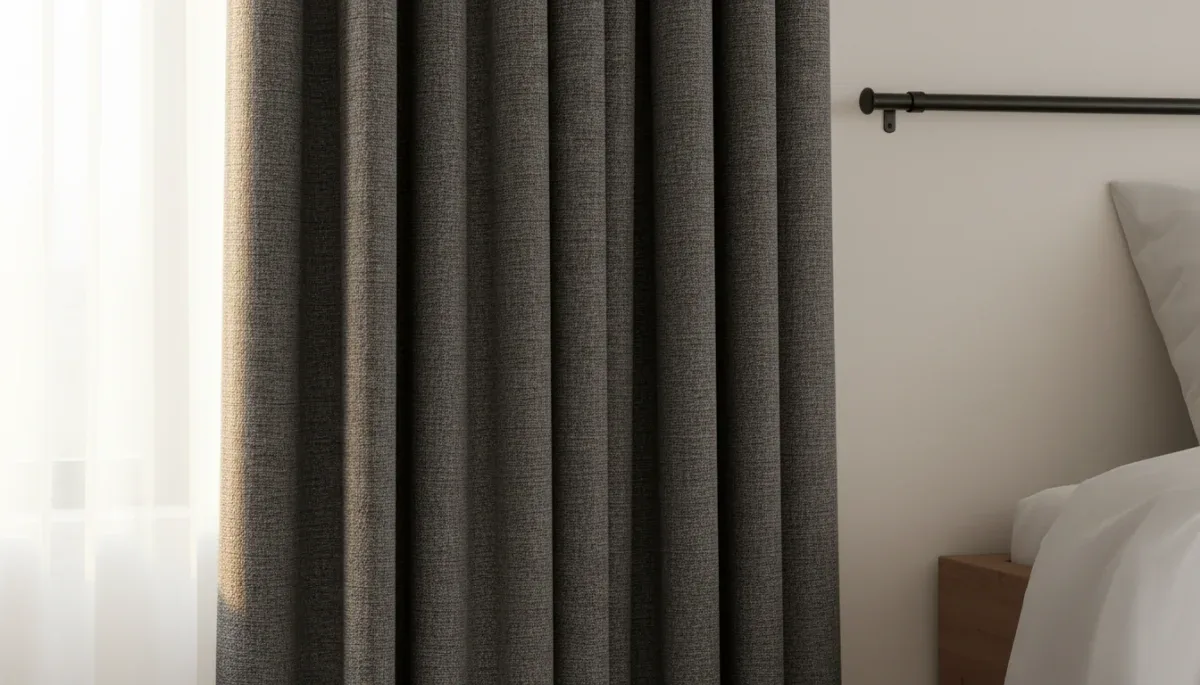
Blackout curtains block incoming light through high-density textile weaves or opaque chemical backings applied directly to the cloth. This design helps shift workers, light-sensitive sleepers, and home theater owners establish pitch-black environments at any hour of the day, while also offering modest thermal insulation against seasonal drafts. The catch is that true light suppression depends as much on the underlying fabric chemistry and hanging method as it does on the aesthetic face fabric you see from inside the room.
Ads
Shoppers browsing budget online storefronts often encounter confusing terminology, such as room darkening, light filtering, and total blackout used interchangeably. Room-darkening panels reduce glare and block up to ninety-five percent of ambient sunlight, but they still glow when struck by direct sunbeams. Genuine blackout panels stop virtually all light penetration through the fabric itself, relying on specialized blackout curtain materials that prevent illumination from passing between individual yarn fibers.
Ads
The mechanics of light suppression and thermal insulation
Light behaves as an electromagnetic wave that easily penetrates standard woven drapery by passing through the microscopic gaps between the warp and weft yarns. Standard window curtains prioritize drape and airflow, which naturally leaves these microscopic apertures open to sunlight. Blackout drapery alters this mechanic in two distinct ways: mechanical blockage through ultra-tight weaving, or barrier blockage through an impermeable compound layer.
Thermal regulation is a secondary performance characteristic created by these same dense construction techniques. Air trapped between the window glass and the heavyweight drapery fabric acts as a thermal buffer, slowing the rate of conductive and convective heat transfer. In winter, this barrier reduces the transfer of interior warmth toward cold glass panes; in summer, reflective linings turn back radiant heat before it warms the interior air.
Core functions of light-blocking textiles
- Total photon obstruction: Dense core filaments or acrylic foam barriers stop direct and ambient light waves from penetrating the panel surface.
- Thermal dead air space: Heavy drapery hanging close to the wall creates an insulated air pocket that dampens conductive heat exchange.
- Acoustic dampening: Porous, heavyweight fabrics absorb sound reflections inside the room, softening street noise even if they cannot soundproof a window completely.
Primary blackout curtain materials and face fabrics
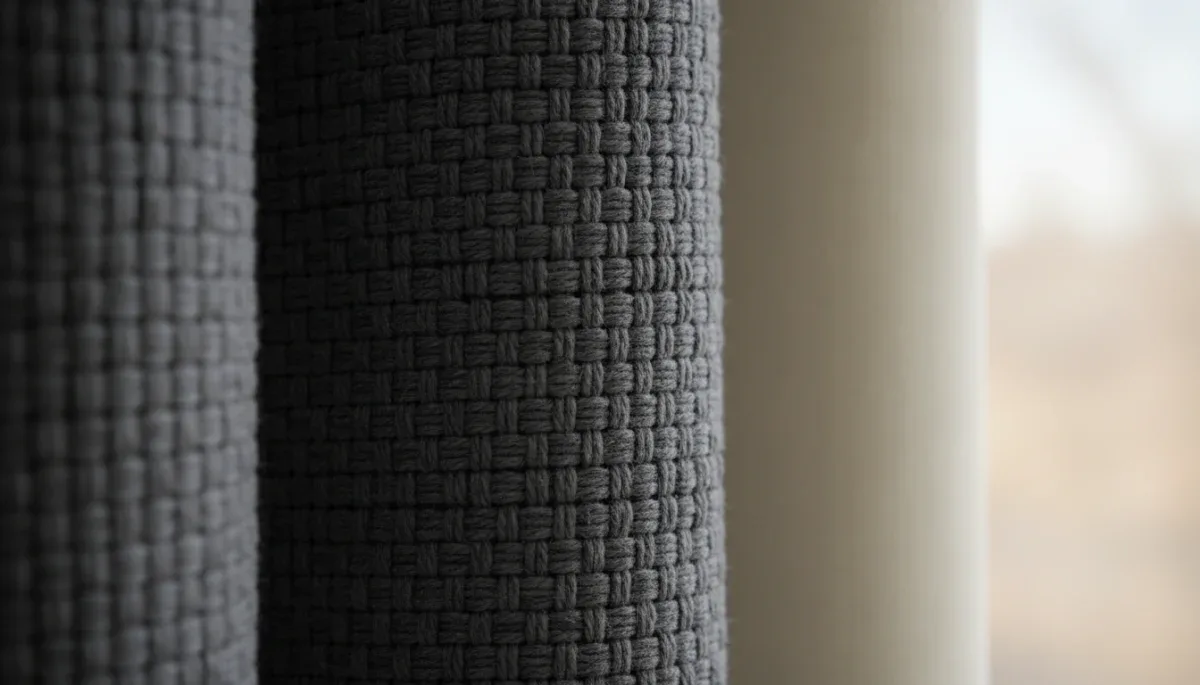
When selecting drapery, the face fabric provides the color, texture, and visual finish, while the structural backing performs the heavy lifting. High-grade synthetic filaments represent the most practical choice for consumers shopping on value-oriented websites, primarily because synthetic polymers like polyester can be spun into extraordinarily fine, tightly packed threads.
Polyester remains the dominant industry standard for budget-friendly blackout drapery. The material resists moisture absorption, holds vibrant dyes, and does not shrink or warp under prolonged exposure to solar UV radiation. Natural fibers like linen, cotton, and velvet offer premium texture and weight, but they are naturally porous and require dedicated synthetic linings to block incoming light effectively.
Fabrics commonly used in blackout drapery
- Microfiber polyester: Lightweight, tightly spun synthetic yarn that resists wrinkling and holds up well against repeated washing cycles.
- Faux linen blends: Textured polyester designed to mimic the slubby, organic hand of natural flax while maintaining structural light resistance.
- Velvet: Heavy pile fabric that naturally diffuses light across its plush surface, creating superior acoustic deadening alongside visual opacity.
- Cotton canvas: Sturdy natural fiber requiring an attached lining to prevent direct light from highlighting inconsistencies in the yarn weave.
Backing techniques: coated fabrics versus triple-weave construction
Understanding the difference between coated backings and woven technology prevents post-purchase disappointment. Coated drapery utilizes an opaque layer of acrylic foam or silicone sprayed directly onto the back of the face fabric. In manufacturing terminology, a single pass involves a light layer of foam that dampens sunlight, while a two-pass coating adds a black opaque layer followed by a decorative white topcoat. A three-pass blackout coating applies two layers of white foam surrounding a central layer of dense black compound, delivering one hundred percent opacity without requiring an extra hanging liner.
Triple-weave technology takes a purely textile-based approach. Specialized weaving looms interlock three separate layers of thread simultaneously: a colorful decorative yarn on the front, an identical or coordinating face on the back, and a high-density black yarn concealed in the center. Because triple-weave fabric relies solely on thread rather than sprayed chemicals, it drapes more naturally, produces zero synthetic chemical odor out of the packaging, and can be machine washed without risk of the backing cracking or peeling away over time.
While triple-weave panels feel softer and last longer under typical machine laundering, they rarely achieve absolute zero-light blockage under direct, unfiltered afternoon sunlight. Light-colored triple-weave draperies, such as white, cream, or pale pink, often let four to ten percent of sunlight filter through as a soft halo. Coated backings, despite their stiffer hand and delicate laundering requirements, remain the only definitive way to achieve total zero-light conditions in direct southern or western exposures.
Header styles and avoiding light bleed
Purchasing panels made from premium blackout curtain materials resolves only half of the light-control equation. The way a curtain mounts to the wall dictates whether sunlight bypasses the fabric entirely. Light bleed occurs when photons leak around the perimeter of the installation, typically above the rod, through the hanging hardware, or along the sides where the drapery meets the drywall.
Grommet headers feature metal rings punched directly through the fabric. While grommets slide smoothly along a rod, they present two unavoidable design vulnerabilities: direct light penetrates the open ring openings, and the alternating folds force the fabric outward, creating wide air gaps between the panel and the window frame. Rod pocket and back-tab headers pull the fabric flat against the rod, significantly reducing the open space above the window molding.
Steps to eliminate peripheral light leakage
- Select wrap-around French rods: Curved curtain rods allow the edge of the panel to turn ninety degrees and sit flush against the wall surface.
- Extend horizontal coverage: Hang the curtain rod eight to twelve inches past the outer window casing on both sides so the seams rest over solid drywall.
- Mount high above the frame: Position the rod four to six inches above the top trim, or directly below the ceiling molding, to block upward light plumes.
- Account for generous fullness: Choose a total curtain panel width that measures one and a half to two times the actual width of the window opening.
Maintenance, washing, and long-term durability
Care instructions vary significantly depending on whether your drapery utilizes a chemical foam backing or a triple-weave structural build. Machine washing a foam-backed panel in warm water or tossing it into a heated tumble dryer causes the rubberized backing to soften, adhere to itself, and peel off in large chunks. Once a coated backing begins flaking, its light-blocking capability cannot be restored.
For triple-weave polyester curtains, maintenance is relatively straightforward. These panels tolerate gentle cold-water washing cycles and low-temperature tumble drying without losing opacity, making them the preferred choice for children's bedrooms, nurseries, and dining spaces where dust or spills occur. For coated drapery, spot-cleaning the front fabric with mild detergent and wiping the back coating with a damp microfiber cloth represents the safest approach to extending product life.
Sunlight itself presents an ongoing hazard to drapery longevity. Direct ultraviolet light slowly degrades synthetic polymers over several years, rendering the backing brittle. Choosing panels with a white or reflective outward-facing coating bounces UV rays away from the primary fabric, preserving the internal fibers and preventing premature discoloration of the interior-facing pattern.
At a glance
| Feature | What to know |
|---|---|
| Triple-weave | Durable and machine-washable fabric that softens light without stiff chemical backings. |
| Coated backing | Blocks one hundred percent of light but requires gentle spot-cleaning to prevent flaking. |
| Polyester composition | Resists UV degradation and maintains dimensional stability over years of temperature swings. |
| Wrap-around rods | Eliminates peripheral edge leaks by securing fabric flush against the interior drywall. |
Frequently asked questions
Can any fabric be turned into a blackout curtain?
Yes, any decorative face fabric can achieve complete opacity if you attach a separate three-pass blackout liner behind it. Liners can be sewn directly to the drapery, clipped onto existing rings, or hung independently on a secondary rear rod to convert lightweight cotton, silk, or linen into functional light barriers.
Do blackout curtains actually help lower electric bills?
Yes, heavy blackout drapery reduces energy usage by serving as a barrier against thermal conduction at the window glass. By drawing panels closed during hot summer days, homeowners reduce solar heat gain, which decreases the workload on residential air conditioning systems throughout peak daylight hours.
Why does my triple-weave curtain still let some light through?
Triple-weave fabric relies on a layer of dense black yarn interwoven between two decorative fabric faces rather than a solid plastic coating. Lighter face colors like white or beige do not conceal this internal weave completely, allowing small amounts of light to diffuse through the threads during intense sunlight.
How do I remove wrinkles from coated blackout panels?
Never apply a hot household iron directly to the foam or rubberized backing of a blackout curtain, as the heat will melt the coating instantly. Instead, steam the front fabric side while the panel hangs on the rod, or run a handheld clothes steamer at least six inches away from the material.
The bottom line
Selecting reliable light-blocking drapery requires looking past decorative colors to verify the underlying manufacturing technique, whether you opt for machine-washable triple-weave yarn or impermeable three-pass coated backings. The most dense fabric on the market will fail if mounted improperly, so invest in adequate panel width and wrap-around hardware to seal the perimeter. Before you finalize an order online, confirm the backing style on the product specification sheet to verify whether the panels can be safely machine-washed.
Written by
Mariana Viana
Mariana Viana writes about house, electronics and clothes for onlyshein.com. Each article explains how things work, compares published details such as prices, policies and program rules, and points readers to the official source before they decide.