
How to Read Care Labels and Wash Delicate Synthetics
Ads
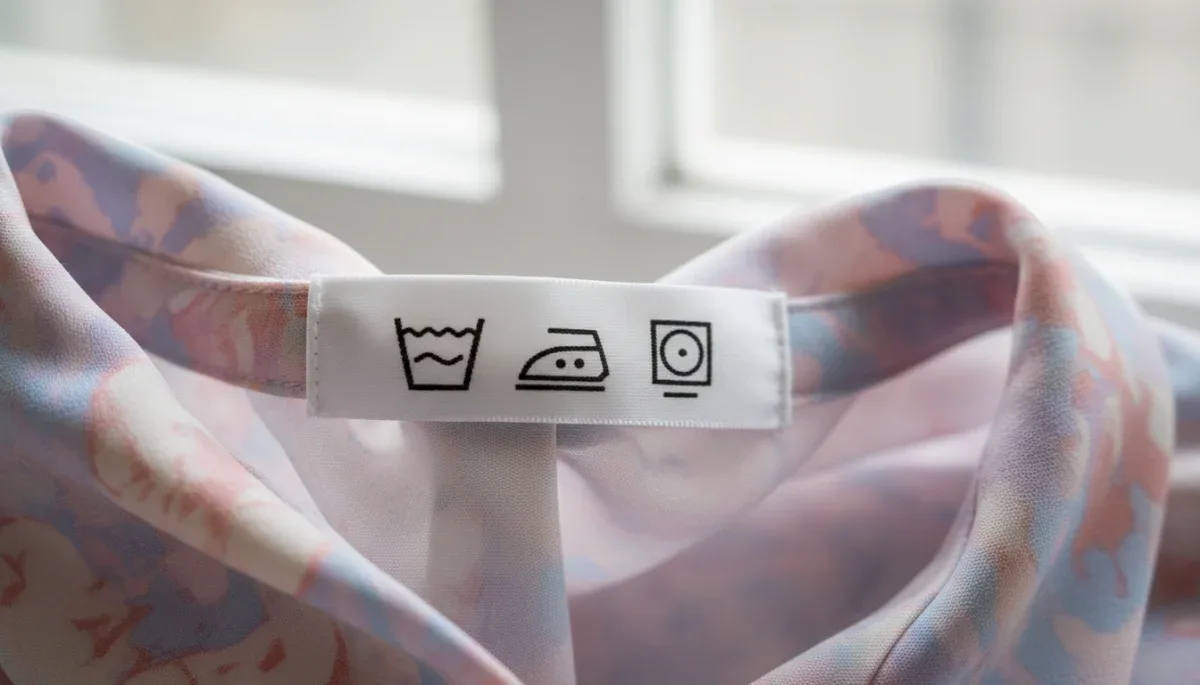
Garment care labels use a standardized international system of symbols to instruct you on the exact washing, bleaching, drying, ironing, and professional cleaning methods your clothes can tolerate. Decoding these tags ensures you do not accidentally melt, warp, or unravel delicate synthetic garments during regular wash routines.
Ads
Understanding these guidelines helps anyone purchasing budget-friendly online fashion protect their wardrobe investments from premature wear, though the challenge lies in translating abstract icons into the correct cycle settings and water temperatures on your household machines.
Ads
Decoding the five core garment care symbols
Every care label relies on five basic geometric shapes arranged in a predictable sequence. In the United States, the Federal Trade Commission enforces the Care Labeling Rule, requiring manufacturers to attach permanent labels that provide at least one safe cleaning method. Knowing the primary shape tells you immediately which phase of garment care the manufacturer is addressing.
The sequence starts with washing, represented by a tub filled with water. A triangle indicates bleaching instructions, while a square signifies drying. An iron shape represents pressing, and a circle gives instructions for professional dry cleaning. When a symbol has an X marked through it, that specific process is forbidden and could permanently ruin the fabric structure.
The primary care label shapes
- Wash tub: Details machine or hand washing water temperatures and agitation levels.
- Triangle: Outlines whether chlorine or non-chlorine bleach is safe to use.
- Square: Instructs how to tumble dry or air dry the garment safely.
- Iron: Specifies the maximum heat setting and whether steam is permitted.
- Circle: Alerts you or a professional cleaner to dry cleaning requirements.
Understanding temperature dots and agitation bars
Once you identify the core shape, small modifications inside or underneath the icon provide vital details regarding temperature and mechanical action. For synthetics, these modifiers are critical because manufactured fibers are particularly sensitive to both thermal heat and friction.
Dots placed inside the wash tub, tumble dry square, or iron indicate the level of heat allowed. One dot corresponds to low heat (generally up to 85 degrees Fahrenheit for water), two dots mean medium heat (around 105 degrees Fahrenheit), and three dots indicate high heat (up to 120 degrees Fahrenheit or higher). If a wash tub shows a hand submerged in water, the item should never go through a machine cycle.
Bars drawn directly underneath the wash tub or drying square indicate the level of mechanical agitation recommended for the garment.
Interpreting agitation modifier lines
- No bar underneath: Standard cycle with normal agitation and regular spinning.
- One bar underneath: Permanent press cycle with reduced agitation and a cooling cooldown rinse to prevent wrinkling.
- Two bars underneath: Gentle or delicate cycle designed for fragile weaves and easily snagged synthetic threads.
Common delicate synthetics and their vulnerabilities
Modern fast-fashion garments rely heavily on synthetic materials like polyester, nylon, acrylic, and elastane (spandex). While these petroleum-based polymers offer stretch, wrinkle resistance, and affordability, they behave very differently from natural fibers like cotton and wool. Synthetics have a low melting point, attract static electricity, and absorb skin oils readily.
Polyester resists shrinking, but excessive heat can permanently set creases or warp fine microfibers. Nylon is exceptionally strong but weakens quickly under chlorine bleach and high tumble-dry heat. Acrylic mimics knit wool yet stretches out of shape when hung wet, and elastane loses its elasticity permanently if washed in hot water or exposed to fabric softeners.
Machine washing delicate synthetics safely
Proper preparation is crucial before washing delicate synthetics in a standard home appliance. Always sort synthetics away from heavy items like jeans, metal zippers, or rough towels, which create abrasion that causes immediate fabric pilling. Turn garments inside out to protect the smooth outer surface from drum friction.
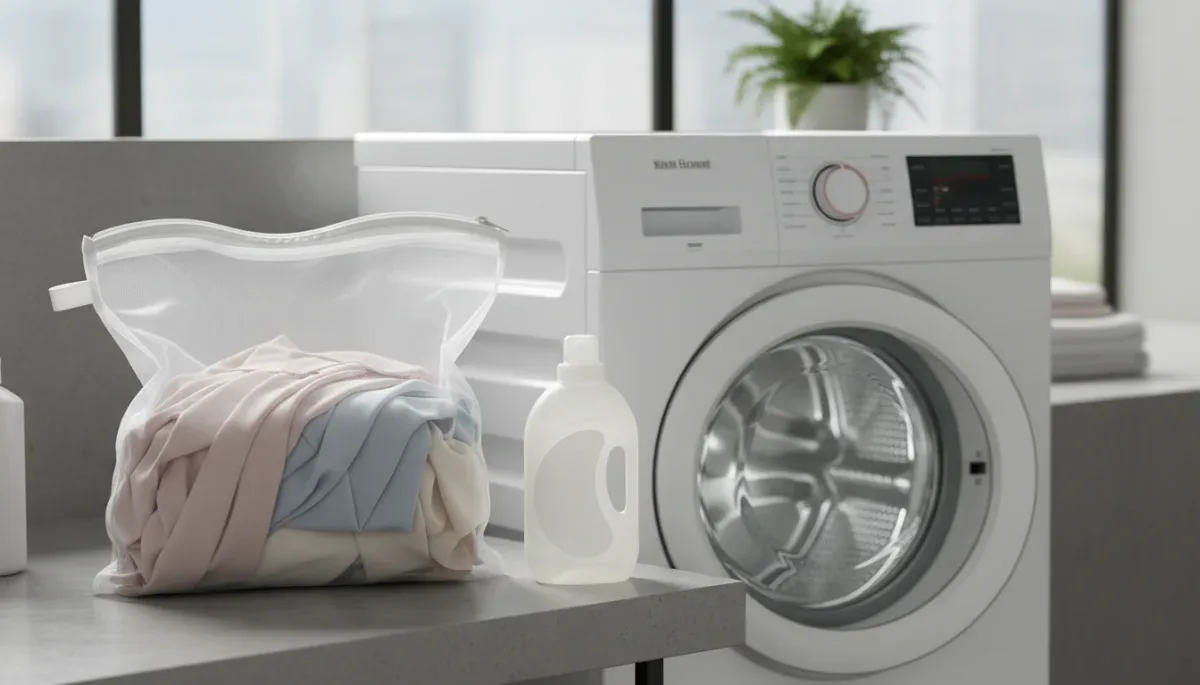
Placing delicate pieces into zippered mesh laundry bags prevents shoulder straps, ties, and fine mesh weaves from stretching or tangling around the washing machine agitator. Always select a gentle cycle with cold water to preserve fiber integrity.
Best practices for machine cycles
- Select mild liquid detergents: Powder formulas may not dissolve completely in cold water and can leave chalky residues on synthetic fibers.
- Skip the fabric softener: Softeners coat synthetic fibers with a waxy film that locks in body odors and destroys fabric breathability.
- Use cold water exclusively: Cold water preserves synthetic elastane bonds and prevents colors from transferring across blended garments.
- Limit load size: Giving clothes room to move freely prevents friction knots and excessive mechanical pulling during the spin cycle.
Hand washing and drying techniques for fragile pieces
When the care tag indicates hand washing or features sheer mesh, lace trims, or light embellishments, skip the appliance entirely. Fill a clean basin or sink with cool water and submerge the garment with a teaspoon of gentle liquid detergent. Swish the water gently for two minutes, avoiding any aggressive scrubbing or twisting.
Rinse thoroughly with cold water until no soap suds remain. Instead of wringing out synthetic items, which snaps delicate seams, press the fabric gently against the side of the basin to expel excess water. You can also lay the wet garment flat on a clean, dry towel, roll the towel up like a cylinder, and press down to absorb moisture.
Never hang heavy, wet synthetic knits on hangers, as the weight of the water stretches out the neckline and sleeves permanently. Instead, lay the clothing flat on a drying rack away from direct sunlight, which can discolor and degrade synthetic polymers.
Preventing static cling and odor retention
Synthetic fibers are hydrophobic, meaning they repel water and hold onto oils. This property explains why gym shirts and polyester tops can retain body odor even after a complete wash cycle. To address persistent smells without damaging delicate fibers, pre-soak the garments in a basin of cold water containing one cup of distilled white vinegar for thirty minutes before washing.
Static electricity occurs naturally when dry synthetic garments rub together in low humidity. Since high-heat dryer sheets are not recommended for fragile synthetic weaves, air drying remains the most effective defense against static buildup. If static persists, lightly misting the inside of the garment with plain water or applying an unscented body lotion to your skin before dressing neutralizes the electric charge instantly.
At a glance
| Fabric or symbol | Care requirement |
|---|---|
| Polyester & nylon blends | Wash in cold water on gentle; dry flat to prevent static. |
| Acrylic knitwear | Hand wash or use mesh bag; always dry flat to avoid stretching. |
| Elastane / Spandex | Avoid hot water and fabric softener to preserve elasticity. |
| One bar under wash tub | Use permanent press setting with mild agitation and cool rinse. |
Frequently asked questions
What happens if I wash delicate synthetics in hot water?
Hot water weakens synthetic fibers, melts delicate elastic bands, and causes permanent heat wrinkles. It can also cause synthetic dyes to bleed and degrade the structural finish of the garment.
Can I use bleach on white synthetic clothes?
Chlorine bleach should never be used on synthetics like nylon, polyester, or spandex because it chemically alters the fibers, turning white items yellow and thinning the weave. Use oxygen-based bleach instead if the tag permits.
Why do synthetic clothes smell bad after washing?
Synthetic fibers naturally trap body oils and bacteria inside their weave. Traditional laundry detergents and fabric softeners coat these oils rather than removing them, locking in unpleasant odors over time.
Is it safe to iron delicate synthetic tops?
Only iron synthetics if the care tag shows an iron symbol, and always use the lowest heat setting (one dot). Always place a damp pressing cloth between the iron and the fabric to prevent melting.
The bottom line
Mastering garment care labels protects your synthetic clothing from preventable rips, stretching, and heat degradation. By prioritizing cold water washes, liquid detergents, mesh laundry bags, and flat air-drying, you can significantly extend the lifespan of affordable synthetic wardrobe pieces. Before running any new garment through a wash cycle, always check the inner side-seam tag for specific manufacturer temperature limits and drying instructions.
Written by
Lucas Bastos
Lucas Bastos writes about house, clothes and discounts for onlyshein.com. Each article explains how things work, compares published details such as prices, policies and program rules, and points readers to the official source before they decide.