
Viscose versus polyester for breathable summer tops
Ads
Viscose is generally the more breathable choice for hot and dry summer weather, while polyester performs better in humid conditions where quick drying and moisture management matter most. Viscose allows air to circulate freely through its semi-natural cellulose structure, which helps keep the skin cool during elevated temperatures.
Ads
This comparison helps budget-conscious online shoppers choose comfortable warm-weather tops, though both fabrics carry distinct maintenance and durability trade-offs that affect how long each garment lasts. Reading fabric composition tags before buying prevents unexpected shrinkage, excessive sweating, and premature wear throughout the summer months.
Ads
How fiber origin determines warm-weather airflow
The core difference between viscose and polyester begins at the molecular level. Viscose is a semi-synthetic fiber derived from regenerated wood cellulose, usually sourced from trees such as eucalyptus, pine, or bamboo. Because it originates from plant matter, the fiber contains microscopic channels that allow body heat to dissipate naturally. When woven into lightweight summer fabrics, viscose mimics the airy feel of silk or fine cotton, creating minimal barrier between the skin and external air currents.
Polyester is a fully synthetic fiber made from petroleum-derived polymers. The individual strands are solid plastic filaments that do not have natural porous structures. As a result, standard polyester woven tops tend to trap radiant body heat against the skin. While high-end athletic polyester utilizes specialized mesh weaves to force ventilation, affordable fashion tops typically use standard tight weaves that offer limited natural airflow in high heat.
Key physical differences between the two fibers
- Fiber source: Viscose uses plant-based cellulose pulp, whereas polyester uses synthetic petroleum polymers.
- Air permeability: Viscose fibers allow heat and air to pass through easily, while standard polyester acts as a thermal barrier.
- Surface feel: Viscose feels cool to the touch immediately upon contact, while polyester matches the ambient room temperature.
Moisture absorption and sweat management in the heat
How a fabric interacts with sweat determines whether a summer top feels fresh or uncomfortably damp. Viscose is naturally hydrophilic, which means its fibers attract and absorb liquid water. When perspiration begins, a viscose top absorbs the moisture directly into the fiber core, keeping the skin surface dry. However, once viscose absorbs high volumes of sweat, it holds onto that moisture for an extended period, which can cause visible wet spots on light-colored garments.
Polyester is strictly hydrophobic, meaning it repels water rather than absorbing it. Liquid sweat cannot penetrate the plastic fibers, so moisture remains on the surface. In loose-fitting garments, this allows sweat to evaporate quickly if there is an active breeze. In tighter fits, unabsorbed perspiration remains trapped against the skin, leading to a sticky feeling and higher rates of odor buildup because synthetic fibers tend to trap skin oils and odor-causing bacteria more readily than plant-based fibers.
Drape, weight, and everyday styling differences
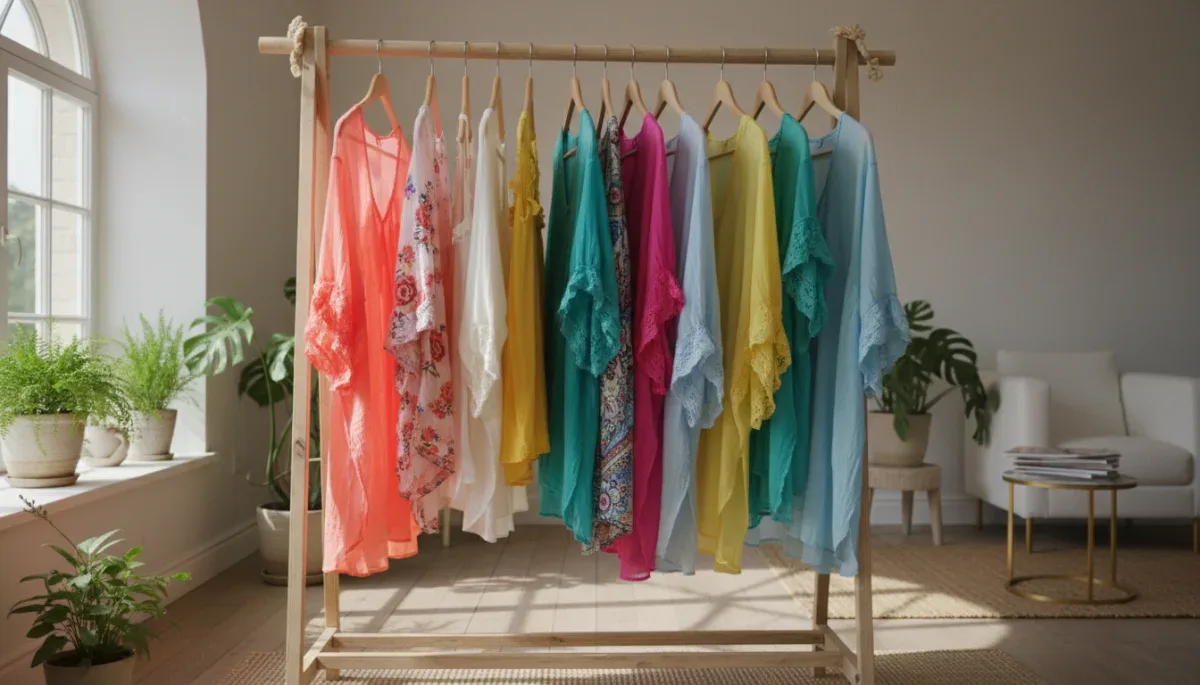
The visual presentation and movement of summer tops vary significantly between these materials. Viscose has a fluid, liquid-like drape that falls gracefully along the body without clinging. This characteristic makes it suitable for relaxed camisoles, billowy wrap tops, and breezy button-up shirts. Because it lacks rigid structural memory, viscose creates an effortless, relaxed silhouette that moves with the wearer, though it is prone to wrinkling within minutes of sitting down.
Polyester has high dimensional stability and structural memory, meaning it holds sharp pleats, crisp collars, and structured ruffles exceptionally well. It does not stretch out of shape during wear and naturally resists creasing throughout a long workday. The trade-off is that lightweight polyester can generate static electricity in dry environments, causing the fabric to cling tightly to the torso, which reduces airflow and increases discomfort on warm days.
How fabric movement impacts cooling comfort
- Fluid drape: Viscose moves away from the skin during walking, generating personal airflow around the torso.
- Shape retention: Polyester maintains its exact cut and structure all day without sagging under humidity.
- Static cling: Polyester creates static friction that can cause tops to stick to skin, while viscose remains static-free.
- Creasing: Viscose develops visible creases quickly, whereas polyester emerges from storage wrinkle-free.
Care requirements and long-term garment durability
Durability and ease of cleaning are where polyester holds a clear advantage over viscose. Polyester fibers possess exceptional tensile strength that remains unchanged whether the garment is wet or dry. You can wash polyester tops in warm water, run them through standard spin cycles, and tumble dry them without fear of significant shrinkage or color loss. It stands up well to repeated laundering, making it practical for high-rotation basic wardrobe items.
Viscose requires delicate handling because cellulose fibers lose up to half of their structural strength when wet. Agitation in a standard washing machine can cause viscose tops to stretch out of shape, develop surface pilling, or tear at the seams. Furthermore, high heat from hot water or clothes dryers causes viscose fibers to contract irreversibly, leading to severe shrinkage. To preserve viscose garments, gentle cold cycles or hand washing followed by flat line drying are necessary.
Steps to protect delicate summer tops in the laundry
- Read the inner care label to check whether machine washing or hand washing is specified.
- Place lightweight tops in a mesh laundry bag to prevent snagging against zippers or buttons.
- Select a gentle wash cycle with cold water to prevent fiber contraction and color bleeding.
- Lay viscose garments flat on a clean towel to dry rather than using a high-heat machine dryer.
- Use a low-heat iron or gentle fabric steamer on the reverse side to remove wrinkles safely.
Evaluating blended fabrics on online product tags
Online fashion retailers frequently blend viscose and polyester together, or combine them with other fibers like cotton, linen, or elastane. A viscose-polyester blend attempts to combine the cooling comfort and soft drape of viscose with the structural durability, wrinkle resistance, and colorfastness of polyester. A top with a sixty-forty ratio of viscose to polyester often provides a practical compromise for shoppers who want breathability without extreme ironing requirements.
When reviewing clothing listings, examine the exact percentage breakdown on the product specifications tab rather than relying on promotional marketing terms. Items labeled simply as silky or linen-touch often contain entirely synthetic materials. Checking the composition ensures you know exactly how the garment will behave in high temperatures and how much effort will be required on laundry day.
Common fabric blends and their summer performance
- Viscose and polyester: Combines soft drape with improved wrinkle resistance and easier washing.
- Viscose and linen: Maximizes total airflow and cooling, though it requires frequent ironing.
- Polyester and elastane: Delivers flexible stretch and rapid drying, ideal for fitted active tops.
- Polyester and cotton: Offers balanced breathability and durability for casual everyday t-shirts.
At a glance
| Fabric factor | What to know |
|---|---|
| Airflow | Viscose provides superior natural ventilation compared to standard polyester. |
| Moisture response | Viscose absorbs perspiration, while polyester repels water and dries fast. |
| Maintenance | Polyester is durable in machines, whereas viscose requires gentle cold washing. |
| Wrinkles | Polyester resists creasing, while viscose wrinkles easily during normal wear. |
Frequently asked questions
Does viscose shrink more than polyester in the wash?
Viscose shrinks significantly more than polyester when exposed to heat or vigorous washing. Polyester fibers resist heat and water contraction, while wet viscose fibers contract easily, often shrinking an entire garment size if placed in a standard hot dryer.
Why does polyester feel hot in the summer?
Polyester feels hot because its non-porous synthetic plastic fibers trap body heat and humidity against your skin. Unless constructed with specialized activewear mesh weaves, standard woven polyester blocks natural airflow and prevents thermal regulation in warm weather.
Is viscose considered a natural or synthetic fiber?
Viscose is classified as a semi-synthetic fiber. It begins with natural cellulose pulp extracted from trees, which is then dissolved and regenerated through a chemical manufacturing process to create spun yarn suitable for lightweight apparel manufacturing.
Can a polyester blend be breathable for summer?
Polyester blends can offer decent breathability if combined with a high percentage of cotton, linen, or viscose. Loose open weaves and relaxed fits also allow air circulation, offsetting the heat-trapping tendencies of synthetic fibers in warm weather.
The bottom line
Choosing between viscose and polyester comes down to prioritizing personal cooling comfort or laundry convenience. Viscose is the superior fabric for breathable, sweat-absorbing summer tops that drape naturally against the body, though it demands gentle laundering and frequent ironing. Polyester offers unmatched durability, wrinkle resistance, and rapid drying, making it dependable for low-maintenance wear. Before completing your next online clothing order, check the fabric composition percentage on the product page to match the material with your local climate.
Written by
Lucas Bastos
Lucas Bastos writes about house, clothes and discounts for onlyshein.com. Each article explains how things work, compares published details such as prices, policies and program rules, and points readers to the official source before they decide.