
How to choose between tall and regular inseam lengths
Ads
To choose between tall and regular inseam lengths when buying pants online, compare your actual inner leg measurement against the retailer specific size chart rather than relying solely on your total height. This distinction helps shoppers prevent premature hemming expenses or ankle-baring mistakes, though inconsistent manufacturer definitions across different budget apparel lines mean you must review garment rise alongside the published hem drop.
Ads
Finding the right pant length on modern fast-fashion and catalog platforms is often challenging because standard size categories are rarely uniform. One brand may classify a thirty-two-inch measurement as regular, while another reserves that length for its tall range. Learning how to calculate your personal vertical dimensions, assess garment cut, and anticipate fabric reaction after laundering allows you to make consistent choices across disparate product pages.
Ads
Measuring your true body inseam at home
An accurate pant purchase begins with a precise measurement of your inner leg. The inseam represents the distance from the lowest point of your groin fork down to the bottom hem of the garment. Many shoppers mistakenly gauge this distance using total standing height, but proportions vary widely between individuals. Two people who stand five feet nine inches tall can possess entirely different leg lengths due to torso ratios.
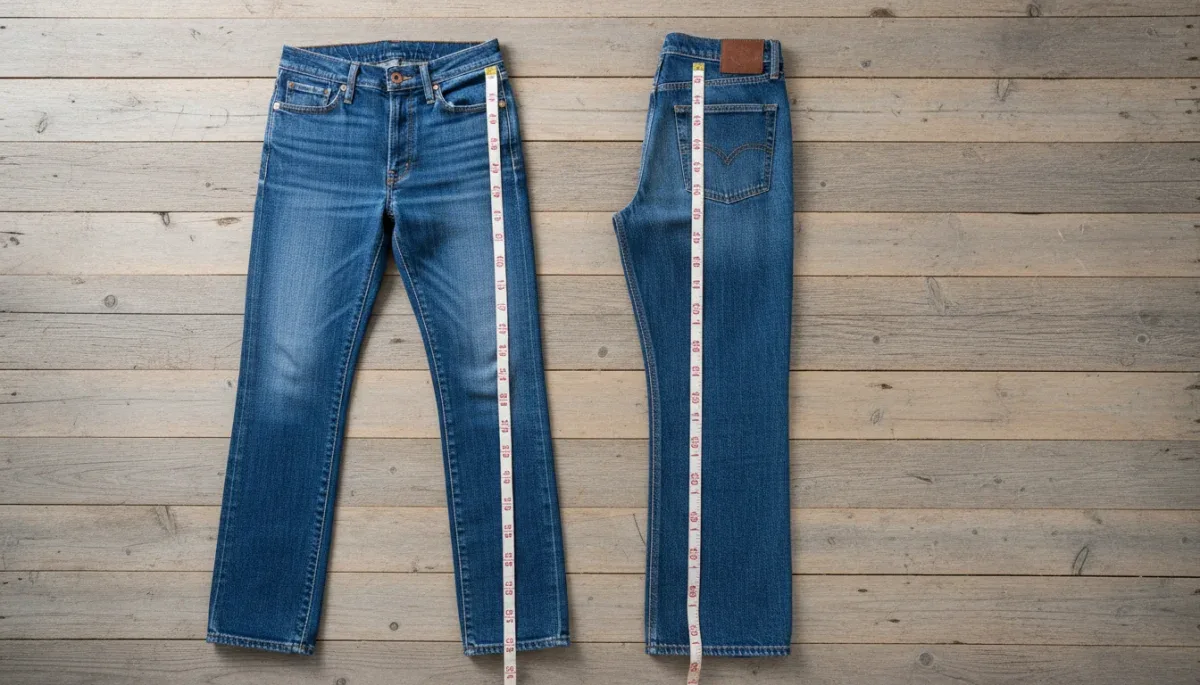
To obtain an accurate number without professional assistance, take a pair of non-stretch trousers or jeans from your closet that currently fit you well in length. Lay them completely flat on a hard, level floor. Smooth out any wrinkles across the thighs and knees without pulling the fabric out of its natural shape. Align the front and back waistbands, then stretch a flexible measuring tape directly from the center crotch intersection point down along the inner seam to the edge of the leg opening.
Key steps for measuring garments directly
- Use a rigid wooden surface or hard floor rather than a soft carpet to prevent fabric sagging.
- Measure along the natural curve of the seam rather than pulling it into a rigid straight line.
- Note whether the reference pants are worn with flats, athletic sneakers, or elevated soles.
- Repeat the process on a second pair of pants to confirm consistent personal preferences.
If you prefer measuring directly against your body, stand barefoot with your back against a flat wall, maintaining your feet roughly six inches apart. Place a firm hardcover book between your upper thighs with the spine snug against your pubic bone, mimicking where a pant crotch rests. Have a partner measure the straight distance from the top of the book spine down to the floor, or mark the wall at the spine level and measure down. This baseline number serves as your zero-break measurement.
Understanding how rise changes required length
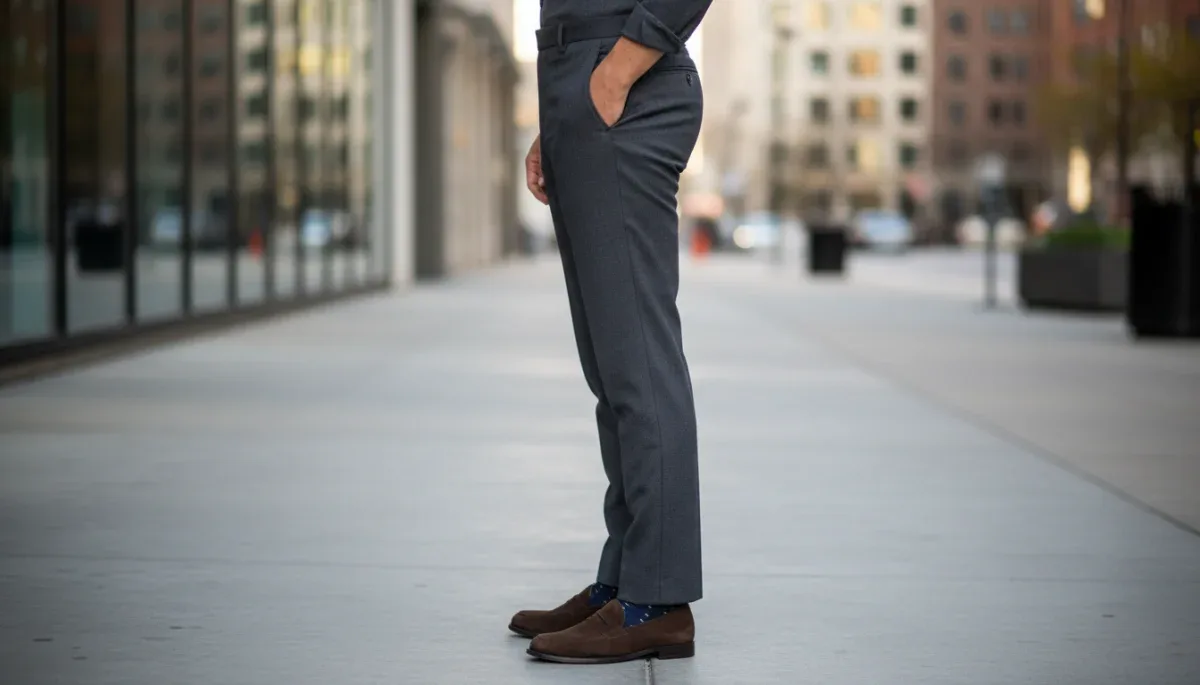
Garment rise is the vertical distance from the center crotch seam to the top edge of the waistband. This single specification heavily alters where the pant legs begin and end relative to your frame. When comparing a tall vs regular inseam, failing to factor in the rise is the most frequent cause of fit disappointment. A high rise sits near your natural waistline, whereas a low rise sits below your hip bones.
Because low-rise bottoms sit several inches lower on your pelvis, the crotch seam naturally drops closer to your knees unless the pattern is specifically tailored with an aggressive curve. Consequently, a thirty-inch inseam on a low-rise trouser might drag on the ground, while that exact same thirty-inch inseam on an ultra-high-rise pair could leave your ankles exposed. The lower the waistband sits, the shorter your practical inseam needs to be to achieve the identical floor clearance.
Tall categories frequently modify more than just the leg length. Mainstream clothing manufacturers regularly add one to two inches to the front and back rises of tall pants to accommodate longer pelvic frames. If you have an average torso but long legs, buying a designated tall size might cause excess, bunched fabric around your stomach and hips. In such instances, purchasing a regular rise with an extended length option or selecting wide-leg cuts that naturally drape lower can provide a cleaner silhouette than buying into a full tall department.
Factoring in shoe height and hem styling
The type of footwear you intend to pair with a specific garment determines the target hemline. Tailored trousers designed for office settings or evening wear generally look best with a defined break, which refers to the slight crease formed when the fabric touches the shoe. A full break covers the top third of the shoe, requiring a longer inseam, whereas a no-break cut skims the ankle bone and requires a shorter cut.
If you primarily wear platform sneakers, lug-sole boots, or heels, a standard regular inseam that grazes your ankle in bare feet will sit awkwardly high once elevated footwear is added. For floor-skimming wide-leg denim, flared trousers, or palazzo pants, shoppers often deliberately choose tall lengths to allow the fabric to drape gracefully over elevated soles without exposing the instep.
Footwear pairings and hem adjustments
- Flat sandals and low athletic shoes require hem clearance roughly half an inch off the ground.
- Chunky platform footwear requires an additional one to two inches of inseam length.
- Casual cropped styles should terminate cleanly between two and three inches above the ankle bone.
- Dress heels require calculating the exact heel elevation to prevent the fabric from catching beneath your step.
Conversely, straight-leg cuts and tapered joggers require less length allowance because they are intended to sit above or directly against the ankle collar. Purchasing a tall inseam in a tapered cut can result in unsightly pooling around the calves, which disrupts the intended aesthetic of the design. Always evaluate product photography to identify how the stylist anchored the leg opening against the model footwear.
Fabric composition and post-wash shrinkage
Fabric construction determines how a pant behaves after domestic washing and drying cycles. When shopping budget fashion sites, material blends frequently include substantial percentages of cotton, rayon, modal, or unwashed raw denim. These fibers are prone to progressive shrinkage, particularly along the vertical warp threads that form the inseam.
Natural cotton denim without pre-shrinking treatments can lose up to three percent of its total length after initial laundering, which equates to roughly one full inch on a thirty-two-inch inseam. Rayon and linen blends are notoriously vulnerable to vertical contraction if exposed to warm wash water or standard tumble dryers. If your physical measurement sits directly on the border between regular and tall, choosing the tall option provides an insurance margin against heat-related fabric reduction.
Synthetic fibers such as polyester, nylon, and elastane demonstrate exceptional dimensional stability and rarely shrink under moderate laundering temperatures. However, heavy stretch fabrics can stretch horizontally across the thighs and hips when worn throughout the day. This crosswise stretch often pulls fabric upwards from the hem, effectively shortening the visible inseam by half an inch during active movement. Factoring in textile elasticity helps you predict whether the initial fit will remain intact through regular use.
Deciphering retailer size charts and tall lines
Never rely on universal assumptions when reading clothing dimension tables online. In standard American women sizing, regular inseams historically fall between thirty and thirty-two inches, while tall lines range from thirty-four to thirty-six inches. For men, regular trousers typically hover between thirty and thirty-two inches, with tall selections starting at thirty-four inches and extending upward. However, value-oriented fast-fashion platforms operate on global manufacturing templates that routinely deviate from these conventions.
Always inspect the specific product listing page rather than the generic brand-wide sizing chart. Reputable fashion platforms provide actual garment measurements for individual stock-keeping units. Look for the designated inseam specification listed under the materials and care tab. If a site only lists the model height and the size they are wearing, use that context to calculate visual scale: a model standing five feet ten inches wearing a size small with visible ankle clearance indicates that the regular cut is tailored on the shorter side of industry norms.
Pay close attention to customer reviews containing uploaded photos and self-reported body dimensions. Filter reviews by shoppers sharing your height and weight metrics to observe where the pant cuff hits in real-world scenarios. Look for repeated comments noting whether a style runs short or drags, as production batch variances can occasionally shift final hem lengths by half an inch in either direction from the published guide.
Managing borderline measurements and tailoring realities
Many shoppers possess measurements that fall directly between standard factory tiers. If a regular cut leaves your socks visible but a tall cut drags along the floor, strategic shopping tactics can bridge the gap. In such cases, purchasing the tall version and employing basic tailoring is generally the more reliable path, as shortening a garment is simple, whereas lengthening an item is constrained by minimal internal hem allowances.
Most mass-produced pants retain no more than half an inch of folded fabric inside the bottom cuff, making it impossible to let the hem down significantly. Conversely, taking up an overly long pant requires only a straight stitch or iron-on adhesive webbing. If professional alteration costs exceed the value of an inexpensive online garment, look for designs that incorporate raw hems, elasticated ankles, or split cuffs that naturally sit well across various leg lengths without dragging.
Another practical solution for in-between heights is adjusting the styling. Cuffed denim, pin-rolled hems, and casual ankle folds remain standard aesthetic choices that disguise minor length mismatches. When selecting structured slacks, suiting, or wide flares, however, exact tailoring remains the only way to avoid fabric wear and water damage along the heel edge. Assessing the garment purpose helps determine whether custom alterations are worth the total investment.
At a glance
| Factor | What to know |
|---|---|
| Leg measurement | Measure flat pants along the inner seam from crotch fork to bottom hem. |
| Rise impact | Lower rises drop the crotch downward and require shorter inseam selections. |
| Fabric shrinkage | Cotton and rayon blends lose length in warm washes, favoring taller choices. |
| Footwear height | Platforms and dress heels demand one to two extra inches of hem drop. |
Frequently asked questions
Can I determine my inseam by subtracting my torso length from my height?
No, you should never calculate inseam length by simple subtraction. Human proportions vary significantly across identical heights, meaning two individuals of the exact same stature can easily possess inseams differing by two or three inches. Always measure an actual garment or use a physical measuring tape directly along your inner leg.
How much difference is there between tall and regular inseams?
The difference between regular and tall inseams is typically two to four inches depending on the retailer. In standard ready-to-wear sizing, regular lines generally measure thirty to thirty-two inches, whereas dedicated tall categories measure thirty-four to thirty-six inches. Always check the specific product listing, as values fluctuate across brands.
Should I choose tall if I plan to hem the pants anyway?
Yes, choosing tall is safer if you plan to alter the pants, provided the rise fits your frame comfortably. Inexpensive pants rarely have sufficient internal seam allowance to be lengthened if regular cuts arrive too short. Shortening a longer pant is straightforward, while lengthening an undersized leg is usually impossible.
Do tall sizes have wider leg openings than regular sizes?
Yes, tall sizes frequently scale the entire pattern rather than merely extending the lower hem. This means tall trousers may feature slightly wider leg openings, longer front rises, and lower knee placement. If you only have longer shins, a tall cut might feel loose around your upper thighs and hips.
The bottom line
Deciding between tall and regular inseams comes down to comparing your inner leg dimensions, garment rise, and intended footwear against published product tables instead of guessing by overall height. When your measurements straddle two categories, buying the longer cut offers protection against laundering shrinkage and allows for simple hem alterations. Before submitting your online order, check the retailer specific return policy and confirm whether the product size chart lists actual garment specs or generic body measurements.
Written by
Lucas Bastos
Lucas Bastos writes about house, clothes and discounts for onlyshein.com. Each article explains how things work, compares published details such as prices, policies and program rules, and points readers to the official source before they decide.