
Rayon versus acrylic: breathability and stretch compared
Ads
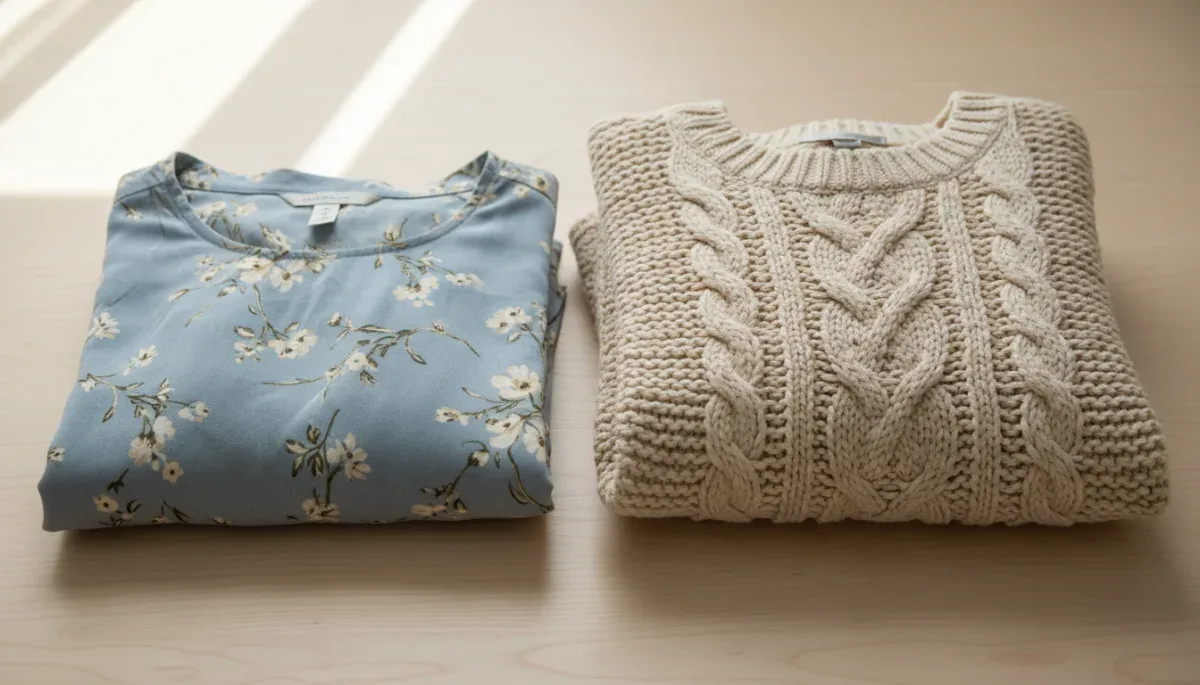
Rayon offers significantly higher breathability and moisture absorption than acrylic, whereas acrylic delivers superior thermal insulation and weather resistance. Choosing between them determines whether a garment keeps the body cool during humid afternoons or traps body heat when ambient temperatures drop.
Ads
This comparison helps online shoppers navigating fabric content labels on budget fashion platforms where material names often disguise how a garment will actually feel and fit. The catch is that neither material possesses significant natural stretch on its own without specific mechanical knitting or added elastane, meaning construction dictates flexibility just as much as fiber type.
Ads
Fiber origins and how they shape fabric behavior
Understanding the fundamental difference between rayon versus acrylic begins at the molecular level, because their base raw materials dictate how the finished yarns interact with air, water, and movement. Rayon is classified as a regenerated cellulose fiber, meaning it begins as natural plant matter, typically dissolved wood pulp from eucalyptus, beech, or bamboo trees. Chemical processing converts this plant material into a liquid solution that is extruded through fine spinnerets into solid filaments, creating a semi-synthetic textile that retains many physical properties of natural plant fibers like cotton and linen.
Acrylic, on the other hand, is a purely synthetic fiber derived from petroleum compounds and chemical polymers, primarily polyacrylonitrile. Developed in the mid-twentieth century as a lightweight, economical substitute for natural sheep wool, acrylic fibers are engineered with internal crimp and air-trapping pockets that produce noticeable loft and volume without excessive weight. Because acrylic relies entirely on petrochemical synthesis, its filaments are inherently hydrophobic, meaning they naturally repel water rather than soaking it into the interior of the fiber.
These opposing manufacturing foundations directly impact how fabrics behave against bare skin. Rayon yarn is smooth, dense, and cool to the touch, resulting in garments that drape close to the natural contours of the body with fluid motion. Acrylic yarn is spun into fuzzy, textured strands that hold their own shape, creating garments with substantial visual thickness and structural body.
Key physical differences in fiber manufacturing
- Rayon utilizes natural wood cellulose broken down chemically, creating an absorbent and biodegradable base.
- Acrylic utilizes synthetic acrylonitrile polymers, resulting in non-biodegradable fibers that resist biological decay.
- Rayon fibers are smooth and continuous, producing a silk-like sheen and heavy downward drape.
- Acrylic fibers are crimped and textured during extrusion, producing a wool-like fuzziness and high thermal loft.
Breathability and moisture management compared
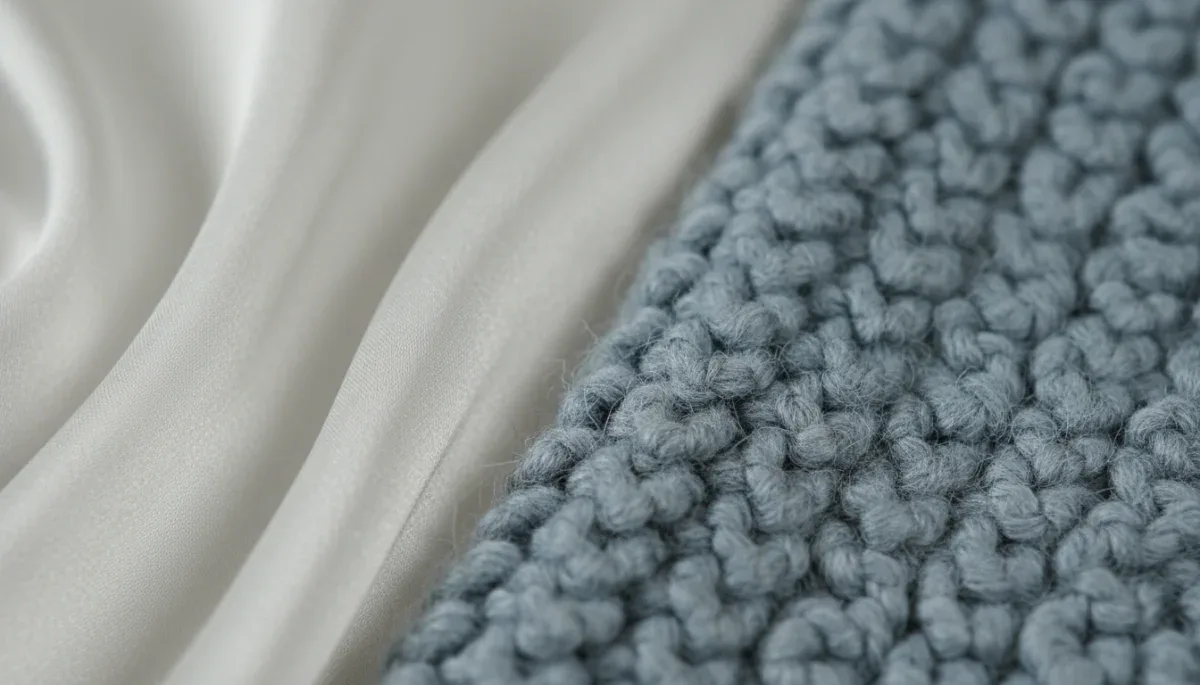
When comparing rayon versus acrylic for daily wear, breathability is the most noticeable point of divergence. Breathability refers to a fabric's ability to allow water vapor and ambient air to move freely through its yarns and weave openings. Rayon excels in this category because cellulose fibers naturally absorb moisture from the skin and allow it to evaporate into the surrounding environment. In humid conditions, a lightweight rayon top allows body heat to dissipate quickly, preventing the clammy buildup of perspiration under clothing.
Acrylic performs poorly in terms of true breathability due to the impermeable nature of synthetic polymers. Because acrylic filaments do not absorb moisture internally, sweat generated by the wearer remains trapped on the surface of the skin or sits between the yarns of the garment. While coarse or loose knit constructions allow some passive airflow between wide stitch loops, the acrylic fiber itself acts as an insulator, blocking thermal transfer and preventing rapid moisture evaporation.
This moisture dynamic creates very specific use cases for each textile. Wearing an acrylic shirt or dress in warm weather frequently causes overheating and persistent odor, as synthetic materials provide a stable environment for odor-causing bacteria when sweat cannot escape. Rayon garments, conversely, absorb perspiration rapidly, keeping the skin dry until the textile reaches saturation, at which point the fabric may cling slightly until airflow dries the surface.
Moisture interaction characteristics
- Rayon absorbs up to thirteen percent of its dry weight in moisture before feeling wet to the touch.
- Acrylic holds less than two percent moisture, forcing liquid sweat to sit on skin or fabric surfaces.
- Rayon facilitates natural evaporative cooling through active capillary action within cellulosic fibers.
- Acrylic traps warm air layers against the body, resisting moisture migration unless engineered as an activewear mesh.
Fabric stretch and shape retention across knitwear
A common misconception among online apparel buyers is that soft, flexible garments owe their stretchiness to fiber selection alone. In reality, neither pure rayon nor pure acrylic has high elastomeric stretch; their elongation depends primarily on whether the fabric is woven or knitted. Woven rayon fabrics, such as poplin, challis, and crepe, have virtually zero mechanical stretch and will rip or pull at seams if cut too tightly without ease. Similarly, woven acrylic fabrics are rigid and inflexible, commonly reserved for outdoor awnings, heavy blankets, or structural outerwear.
Stretch properties change significantly when looking at jersey knits, rib knits, and sweater knits. When rayon is spun into jersey knit fabric, often labeled as modal jersey, viscose jersey, or rayon spandex blends, it gains incredible four-way stretch from the looping structure of the knit. Rayon knitwear flows easily over curves, but pure rayon lacks elastic recovery. Over the course of a day, a one hundred percent rayon garment can stretch out under its own weight, causing knees, elbows, and necklines to sag without bouncing back until laundered.
Acrylic knitwear behaves differently because the synthetic polymer has higher dimensional stability and mechanical springiness than limp cellulose. In sweater knits, cardigans, and beanies, acrylic yarn maintains its spring and structural loft across repetitive movement. However, when acrylic fibers are pulled past their mechanical yield point through heavy snagging or tight fitting, they suffer from plastic deformation. Once overstretched, acrylic fibers remain permanently elongated and cannot be snapped back into shape with water or steam.
Stretch and recovery characteristics
- Pure woven rayon provides no mechanical stretch and requires loose tailoring or pleats for movement.
- Rayon knitwear stretches generously along the grain but requires elastane or spandex for long-term recovery.
- Acrylic knitwear provides moderate structural springiness due to crimped, textured yarn construction.
- Overstretched acrylic yarn permanently deforms, whereas rayon recovers its original tighter dimensions after careful laundering.
Durability, pilling, and long-term wear
Durability involves tensile strength, resistance to surface abrasion, and how well a fabric resists unsightly fiber balling, commonly known as pilling. In a side-by-side comparison of rayon versus acrylic, neither fabric is indestructible, but they deteriorate under completely different environmental stressors. Rayon is mechanically fragile when wet, losing roughly thirty to fifty percent of its dry tensile strength the moment it absorbs water. Vigorous agitation in a washing machine can snap damp rayon fibers, leading to thin patches, fraying seams, and small friction holes around pockets and belt lines.
Acrylic is remarkably strong whether wet or dry, resisting tearing, seam splitting, and degradation from ultraviolet sunlight and household cleaning agents. However, acrylic is notorious for surface pilling. Because acrylic filaments are strong synthetics, broken surface fibers do not break away and fall off the garment as natural wool or weak rayon fibers do. Instead, the broken ends of acrylic yarns tangle with adjacent fibers, forming tight, stubborn little balls across high-friction areas such as the underarms, chest, and outer thighs.
Rayon exhibits much lower pilling tendencies because any tangled surface fibers are weak enough to shear off cleanly during movement and washing. A rayon blouse or dress maintains a smooth, clean aesthetic over months of careful wear, while an inexpensive acrylic sweater often requires frequent mechanical depilling with a fabric shaver after just a handful of outings to keep from looking worn out and fuzzy.
Durability factors to consider
- Rayon loses structural strength when wet, requiring delicate laundering to prevent tears.
- Acrylic maintains full tensile strength regardless of moisture levels, resisting ripping and seam failure.
- Rayon produces minimal long-term surface pilling because loose fibers break away naturally.
- Acrylic pills aggressively in high-friction zones, trapping synthetic fuzz balls that must be shaved away manually.
Seasonal performance and thermal regulation
Determining whether rayon versus acrylic is the right choice depends heavily on climate, seasonal shifts, and intended layering. Rayon is widely regarded as a warm-weather staple alongside cotton and linen. Its high specific heat capacity and rapid thermal conductivity allow heat to escape from the skin into the air quickly. A rayon sundress, vacation button-up, or wide-leg palazzo pant allows air to circulate around limbs, providing an airy cooling effect in temperatures exceeding eighty degrees Fahrenheit.
Acrylic is the exact opposite, serving primarily as a cool-weather and winter textile. Because polyacrylonitrile polymers are poor thermal conductors, acrylic fibers act as an insulating barrier that slows the movement of heat away from your skin. Manufacturers spin acrylic into heavy, brushed yarns that trap large volumes of dead air within the fabric structure, mimicking the insulating warmth of animal hair at a fraction of the retail cost. An acrylic cable-knit sweater, scarf, or knit cap provides sufficient insulation for autumn chill and mild winter days without the heavy weight of solid wool.
When worn out of season, both materials cause significant user discomfort. An acrylic sweater worn in a heated indoor office or during unseasonably mild weather leads to rapid overheating, clamminess, and trapped odors that persist until the garment is taken off. Conversely, wearing pure rayon during cold winter winds offers practically zero insulation, allowing freezing drafts to cut straight through the weave and chilling damp skin if the wearer begins to sweat beneath a winter coat.
Seasonal wardrobe utility
- Rayon functions best in spring and summer for lightweight dresses, loose shirts, and cooling pajamas.
- Acrylic functions best in autumn and winter for pullovers, beanies, cardigans, and insulating outerwear.
- Rayon excels as an inner lining for blazers and coats because it glides smoothly and stays breathable.
- Acrylic excels as an outer knit layer where lofty yarns block cold drafts and retain core body warmth.
Washing, drying, and shrinkage risks
Maintenance routines highlight another major operational divide between rayon versus acrylic. Care labels must be followed strictly, as improper cleaning can ruin either garment type in a single laundry cycle. Rayon is infamous for severe shrinkage when subjected to warm water or mechanical dryer heat. Because cellulosic fibers swell dramatically when wet and compact when dried under tension, an unwashed rayon garment dried on standard dryer settings can permanently shrink up to two full clothing sizes.
Washing rayon requires cold water, gentle agitation, and air drying flat or hanging away from direct sunlight. High-end rayon items or structured pieces frequently carry "Dry Clean Only" tags because industrial dry cleaning solvents clean the fabric without causing fiber swelling or distortion. Steaming is the preferred method for removing wrinkles from rayon, as standard hot clothing irons can scorch cellulose or leave glossy pressure marks across the fabric surface.
Acrylic is far more forgiving regarding shrinkage from water immersion, as synthetic polymers do not absorb moisture or swell. However, acrylic is thermoplastic, meaning it is sensitive to high thermal exposure. Exposing an acrylic garment to a hot iron, high-heat dryer cycle, or boiling water will cause the plastic filaments to melt, warp, or permanently stretch out of alignment. Once acrylic fibers melt or experience heat-glazing, the fabric becomes stiff, scratchy, and unwearable. Acrylic knitwear should be washed in cool or warm water on gentle cycles and either tumble dried on low heat or laid flat to preserve knit proportions.
Garment care guidelines
- Rayon demands cold water cycles with minimal machine agitation to prevent fiber snapping and shrinkage.
- Acrylic tolerates regular water washing but melts and warps when exposed to high iron or dryer heat.
- Rayon garments dry relatively slowly due to moisture absorption and require gentle steaming for wrinkles.
- Acrylic garments dry quickly due to low moisture retention and should be reshaped while damp.
At a glance
| Factor | What to know |
|---|---|
| Breathability | Rayon is highly breathable and cooling, while acrylic traps heat and blocks airflow. |
| Natural stretch | Neither fiber stretches naturally without elastane blends or flexible knit stitches. |
| Warmth retention | Acrylic provides heavy wool-like insulation, whereas rayon provides zero thermal protection. |
| Laundry care | Rayon shrinks easily in warm water, while acrylic permanently melts under high heat. |
Frequently asked questions
Does rayon stretch out more than acrylic over time?
Rayon knitwear tends to sag and stretch out more during daily wear because cellulose fibers lack natural elasticity. Without blended spandex or nylon, rayon garments droop downward under their own weight. Acrylic knitwear holds its structural shape better throughout the day, though rough pulling can cause permanent yarn deformation.
Can you wear acrylic clothing in the summer?
Wearing acrylic clothing in summer is generally uncomfortable because the synthetic fiber does not breathe or absorb perspiration. Liquid sweat remains trapped against your skin, creating a sticky, warm environment that encourages skin irritation and lingering odors. Lightweight rayon is far better suited for warm, humid weather conditions.
Does rayon shrink worse than acrylic?
Rayon shrinks significantly worse than acrylic when washed in warm water or dried with machine heat. Water causes cellulose fibers to swell and contract tightly upon drying. Acrylic does not shrink from water immersion, though high dryer temperatures will melt the synthetic fibers rather than shrinking them conventionally.
Is rayon or acrylic softer against sensitive skin?
Rayon is typically much softer and smoother than acrylic, offering a cool, silk-like texture that minimizes friction against delicate skin. Low-cost acrylic fabrics often feel scratchy, prickly, or fuzzy, mimicking coarse natural wool, which can provoke itching or contact dermatitis in individuals with sensitive skin barriers.
The bottom line
Rayon and acrylic serve opposing roles in a balanced wardrobe, making fiber identification an essential habit when shopping online. Choose rayon when you need cool, breathable drape, flowing silhouettes, and reliable moisture absorption for warm weather or active indoor settings. Reserve acrylic for chunky winter knitwear, cold-weather layering, and lightweight wool substitutes where thermal heat retention matters most. Always verify the fabric percentage tag on the garment listing and check customer reviews for unprompted warnings about sizing changes or wash-induced shrinkage before submitting your order.
Written by
Lucas Bastos
Lucas Bastos writes about house, clothes and discounts for onlyshein.com. Each article explains how things work, compares published details such as prices, policies and program rules, and points readers to the official source before they decide.