
What to check before using buy now pay later discounts
Ads
Before applying buy now pay later discounts at checkout, verify the minimum spending threshold, the exact cancellation policy for returned items, and whether the provider assesses late fees on missed installments. Taking a moment to read the financing agreement ensures that an instant five- or ten-dollar discount does not trigger auto-debit overdrafts or complicated merchant disputes down the line.
Ads
These introductory coupons help budget-conscious consumers trim upfront costs on fast fashion, seasonal decor, and everyday electronics, but they require linking your bank account or debit card to a legally binding credit agreement. When returns stall or automated withdrawals fail, the initial savings can disappear beneath bank charges, payment service penalties, and restricted refund credits.
Ads
How promotional financing offers function during checkout
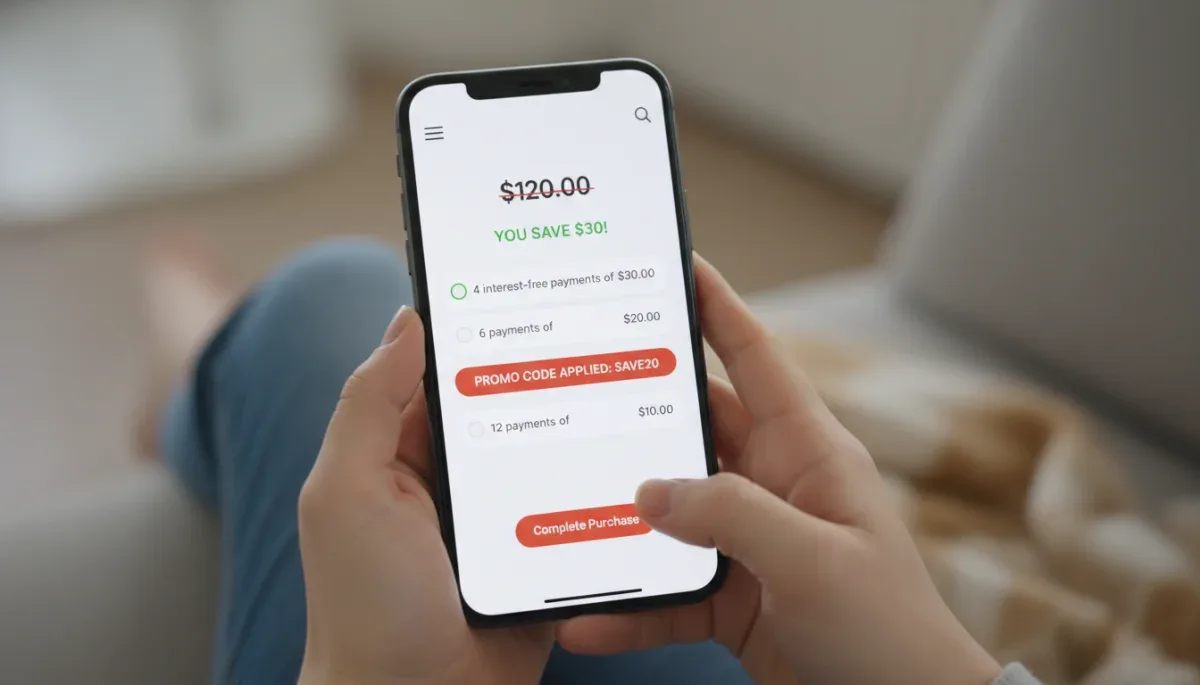
Major online retailers frequently partner with third-party fintech platforms such as Klarna, Afterpay, Affirm, and PayPal to offer instant price cuts. When you reach the payment gateway, you may see an enticing banner offering fifteen percent off your cart or a flat ten-dollar deduction if you select an installment plan instead of entering a traditional credit card. The retail merchant funds or subsidizes this promotional cut because installment options reduce cart abandonment and encourage shoppers to add extra goods to their shopping bag.
These offers operate differently from standard coupon codes that you manually copy and paste into a voucher box. In most cases, selecting the discount creates an active installment loan with the third-party financial provider rather than the retailer itself. The lender pays the shopkeeper the full purchase price minus platform interchange fees, and you enter a contract promising to repay the loan balance across equal payments over a specified timeframe, most commonly four installments spaced two weeks apart.
It is critical to distinguish between a pure store markdown and a financing-dependent discount. If you choose an installment coupon, your payment information passes directly to the lending service. The company checks your basic eligibility, conducts an identity verification, and often evaluates your internal payment history or performs a soft credit inquiry before finalizing the transaction. While the discount displays immediately on your order invoice, your payment obligation transfers entirely away from the storefront to an independent financing institution.
Minimum purchase thresholds and cart exclusion rules
Promotional financing markdowns almost always require reaching a specified subtotal before the coupon deducts anything from your checkout balance. For example, a platform might offer twenty dollars off an order, but only if your qualifying merchandise totals eighty dollars or more. When buyers add low-cost clearance items or accessories just to hit the numerical limit, the calculated financial benefit of the promotion quickly diminishes.

Fine print agreements also exclude certain categories of goods from promotional eligibility. Retailers routinely block digital gift cards, final sale merchandise, and select electronics from third-party financing coupons. If an excluded item makes up a portion of your cart, the discount may only apply proportionally across eligible garments or housewares, reducing your anticipated savings.
Common checkout hurdles to inspect
- Subtotal calculations that exclude sales tax and shipping fees from the qualifying threshold
- Restrictions preventing you from combining installment coupons with sitewide discount codes
- Exclusions on third-party marketplace goods sold through the primary storefront
- Proportional clawbacks of the discount amount if any portion of your bundle goes out of stock
Always review the itemized payment summary before submitting your order. If a promotional discount fails to attach because your subtotal fell short by mere cents, you may accidentally finance the full retail cost of the goods across multiple weeks without obtaining any cost reduction at all.
Automatic repayment schedules and unexpected account fees
A primary feature of pay-in-four programs is automated billing, which debits your selected payment card every fourteen days until the debt reaches zero. When utilizing buy now pay later discounts, shoppers often focus on the small initial down payment—typically twenty-five percent of the discounted total—while ignoring how future withdrawal dates align with their real-world paychecks.
While standard four-installment consumer plans marketed by companies like Afterpay and Klarna advertise zero interest, missing a scheduled repayment can activate consequences. Certain providers assess fixed late fees for every overdue draft, while others freeze your account and deny access to future discount programs. If your linked debit card lacks sufficient funds on the draft date, your personal bank may also charge non-sufficient funds fees or overdraft penalties, compounding the expense of an otherwise affordable cart.
Some installment checkout promotions represent longer-term consumer loans extending over six to twelve months rather than brief four-payment structures. Longer installment contracts often carry variable annual percentage rates that can exceed thirty percent, depending on the provider and your credit profile. An upfront ten-dollar promotion offers no net savings if you accumulate months of compounding interest charges on a modest wardrobe purchase.
Return complications and store credit adjustments
Returning an item purchased through an installment promotion involves three separate entities: yourself, the retail merchant, and the financing network. This multi-party relationship causes significant friction when items do not fit or arrive damaged. When you return an order paid for by debit card, the merchant returns money straight to your checking account. With installment deals, the merchant must instead report the return credit back to the financing company.
Processing delays between retail distribution warehouses and fintech processing systems often take multiple weeks. Under published terms for most pay-later services, you must continue making your scheduled payments even while a returned package travels through the postal service. If you skip a payment assuming the pending return cancels your debt, the lender can flag the installment as delinquent and levy late charges against your account.
Potential refund bottlenecks after financing
- Retailers that issue refunds as store credit while the third-party lender still requires cash payments
- Forfeiture of the promotional coupon value without redistribution to the rest of your order
- Restocking or return shipping fees deducted directly from the financed principal
- Lengthy disputes when a merchant acknowledges delivery but fails to notify the lending portal
If you return only one piece from a multi-item package, the financing service recalculates your remaining balance rather than sending you cash. The upfront promotional discount is frequently distributed proportionally across all items, meaning your refund for a single garment will be reduced by its share of the original coupon.
Credit reporting practices and consumer dispute limitations
Consumer protection rules for installment financing continue to evolve through regulatory updates published by agencies such as the Consumer Financial Protection Bureau. Traditional credit cards provide explicit legal protections under the Truth in Lending Act and the Fair Credit Billing Act, giving cardholders formal chargeback mechanisms if an online merchant sends defective goods or fails to deliver an order. Installment platforms operate under separate framework rules that vary between jurisdictions.
When you encounter a billing dispute with an order financed through an app promotion, resolving the issue requires navigating internal customer service channels rather than executing a quick bank chargeback. If you initiate a chargeback through your primary bank against the installment service, the lender may close your financing account, report negative repayment behavior to specialized credit bureaus, or send uncollected installment balances to third-party collection agencies.
While many pay-in-four services advertise soft inquiries that do not alter general credit scores during the application stage, longer-term monthly installment options often require hard credit checks. Furthermore, major credit reporting bureaus continue developing systems to incorporate short-term installment debt into comprehensive consumer files. Consistently utilizing multiple promotional plans simultaneously across different stores can increase your overall debt obligations, potentially affecting your debt-to-income profile when applying for auto loans or mortgages.
Safer alternative discount methods without financing agreements
If the terms and repayment requirements of an installment coupon appear too burdensome for a modest order, several alternative savings strategies provide similar price reductions without opening new credit lines. Many online apparel and home goods platforms offer first-order newsletter coupons, loyalty point redemptions, and official app download incentives that deduct equivalent amounts directly from your receipt.
Paying with a standard cash-back debit card or a rewards credit card that you pay off in full every month provides instant price relief alongside robust fraud and dispute protections. Credit card rewards portals often provide extra cash-back percentages for popular fashion and electronics outlets, generating passive savings without creating separate repayment dates on third-party mobile applications.
Direct savings options to explore
- Direct email or SMS marketing coupons applied directly to the retail cart
- Cash-back browser extensions that offer rebates paid straight to your bank account
- Free shipping thresholds reached by consolidating orders rather than splitting payments
- Store reward balances accrued through verified past shopping activity
Choosing an unencumbered discount method keeps your transaction straightforward. You deal strictly with the retailer who sells the product, eliminating third-party intermediaries, auto-debit risks, and return processing headaches.
At a glance
| Factor | What to know |
|---|---|
| Cart minimums | Promotions require hitting subtotal thresholds that often exclude taxes and shipping. |
| Late payment fees | Missing an automatic installment draft can trigger provider fees and bank overdrafts. |
| Return processing | You must pay scheduled installments until the store officially confirms delivery. |
| Consumer disputes | Installment purchases lack the statutory chargeback rules applied to credit cards. |
Frequently asked questions
Does using an installment discount hurt my credit score?
Most short-term four-payment plans use soft credit inquiries that do not reduce your score during checkout. However, taking out longer monthly financing plans or missing scheduled payments can result in negative reporting to consumer reporting agencies, depending on the provider terms at the time of writing.
What happens to my promotional discount if I return an item?
You lose the promotional benefit on the returned item. The merchant deducts the coupon value from your refund calculation, adjusts your remaining loan balance through the financing app, and refunds only the actual out-of-pocket cash paid toward that specific garment or device.
Can I combine financing discounts with other site coupon codes?
Usually not, because retail shopping carts rarely allow code stacking at checkout. Selecting a third-party financing discount typically overrides general promotional codes, meaning you must calculate whether the financing coupon provides a better net saving than standard seasonal promo vouchers.
Can I pay off my installment agreement early without penalty?
Yes, all reputable installment services allow you to pay off your outstanding balance early through their mobile application or website without pre-payment penalties. Paying early closes the loan faster and prevents accidental bank overdrafts on future scheduled auto-debit dates.
The bottom line
Checkout discounts tied to installment financing offer genuine upfront savings, but they exchange a simple purchase for an active credit agreement with scheduled payment drafts and separate dispute procedures. Before checking out, review the vendor return policy, make sure future automated draft dates match your personal checking account balances, and always confirm whether a standard store coupon code provides comparable savings without requiring an installment loan.
Written by
Rita Luiza
Rita Luiza writes about clothes for onlyshein.com. Each article explains how things work, compares published details such as prices, policies and program rules, and points readers to the official source before they decide.