
Active Noise Cancellation vs Passive Noise Isolation
Ads
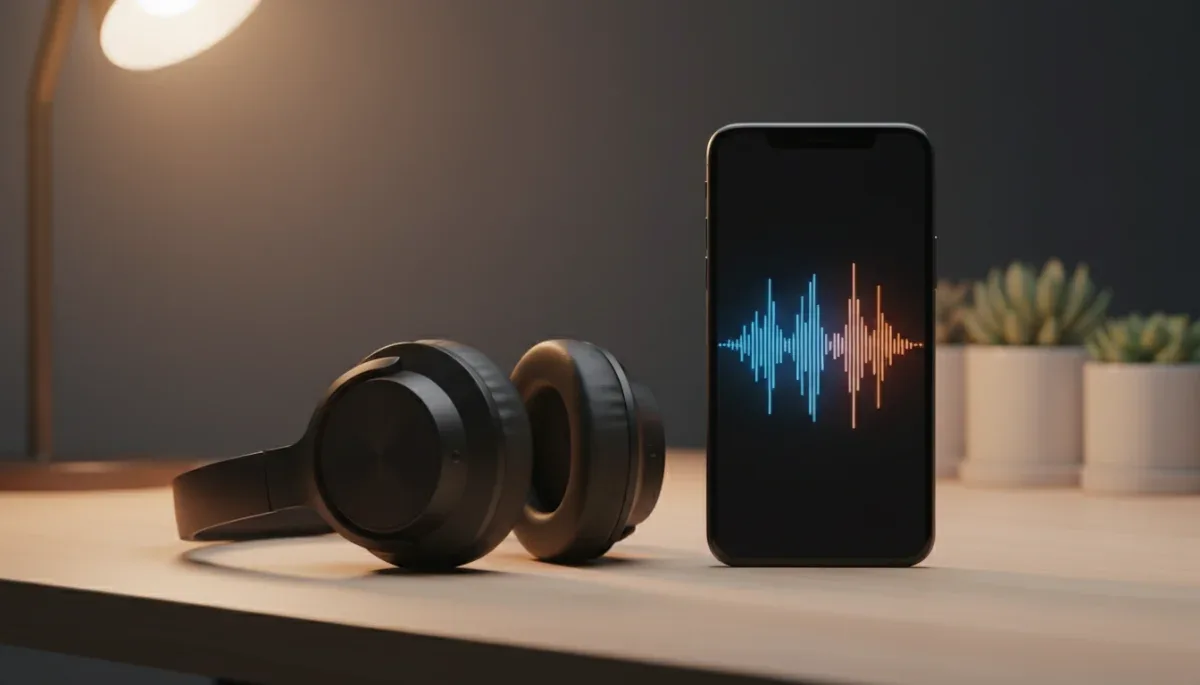
Active noise cancellation relies on battery-powered digital microphones to erase low-frequency ambient sounds, while passive noise isolation physically blocks sound waves through tight acoustic seals and dense padding. Choosing between them determines whether your wireless headphones will completely silence a droning commuter train engine or merely muffle the background chatter in a shared office space.
Ads
This breakdown helps shoppers who want clear sound without overspending, though picking the wrong technology can leave you with unwanted ear pressure or a dead battery in the middle of your workday. Understanding how each approach works mechanically ensures you spend money on features you actually need rather than technical specifications that look good on packaging.
Ads
How passive noise isolation physically blocks sound
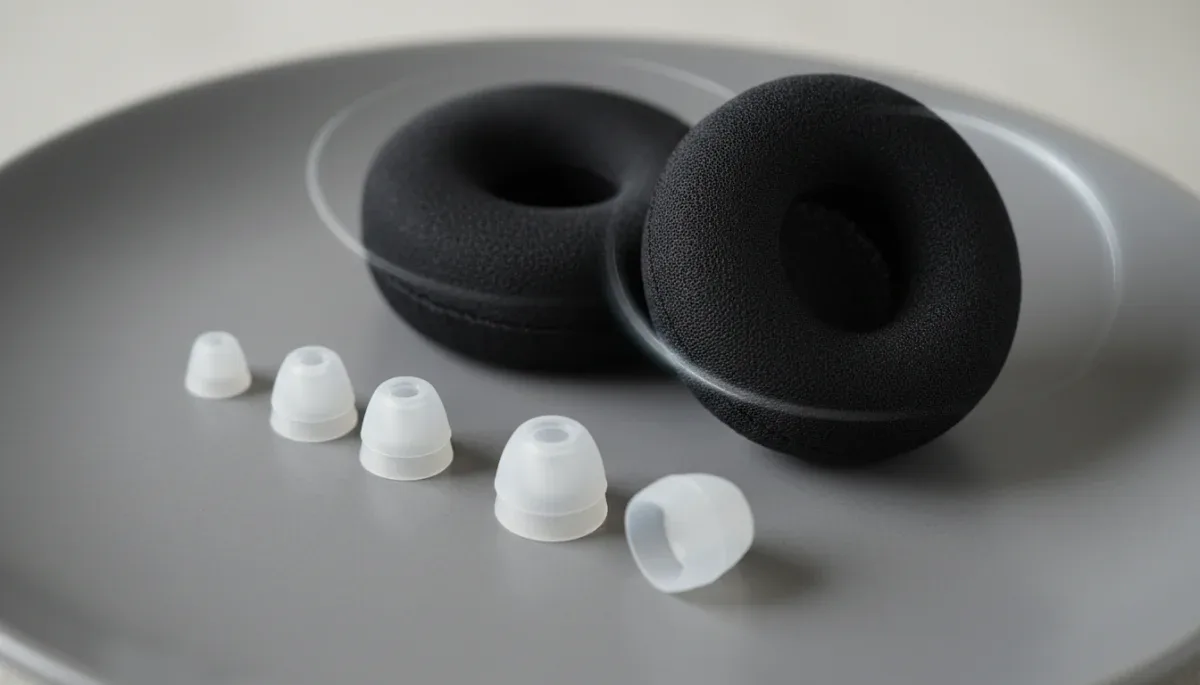
Passive noise isolation is the physical barrier that prevents ambient sound waves from entering your ear canal. Every single pair of headphones and earbuds features some level of passive isolation, regardless of whether it contains digital circuitry or runs on batteries. The process relies entirely on materials like high-density memory foam, molded plastics, and silicone ear tips that create an airtight acoustic seal against your skin.
When sound waves traveling through the air encounter these physical barriers, the energy is reflected away or absorbed into the dense mass of the cushion. High-frequency sounds, such as tapping keyboards, human speech, and ringing bells, have short wavelengths that struggle to penetrate solid materials. Because of this mechanical reality, a well-fitted pair of closed-back headphones or in-ear monitors can quiet mid-range and high-frequency noise remarkably well without needing any software or electricity.
To maximize this physical dampening, audio manufacturers design different acoustic styles that suit varying ear shapes and preferences.
Key factors in effective passive acoustic seals
- Over-ear cup depth: Deep earcups fitted with thick memory foam fully surround the outer ear to prevent leakage around the jawline.
- In-ear tip density: Multi-flanged silicone or malleable memory foam tips expand inside the ear canal to shut out external air gaps completely.
- Headband clamping force: Sufficient inward pressure keeps ear cushions pressed firmly against the skull without shifting during movement.
- Closed-back acoustic chambers: Solid outer shells contain the driver and seal off the back of the speaker cone from outside air currents.
Because passive isolation relies purely on mechanical barriers, it does not introduce any digital hiss, software latency, or battery drain. It remains effective indefinitely as long as the padding maintains its structural integrity and stays clean. For shoppers who prioritize simplicity and consistent physical performance, mastering the mechanical fit of standard ear cushions often solves most everyday noise complaints without adding electronic complexity.
How active noise cancellation uses microphones and phase inversion
Active noise cancellation, commonly abbreviated as ANC, is an electronic audio process that neutralizes background noise by generating opposing sound waves. Instead of just blocking sounds with physical mass, active noise cancellation headphones listen to incoming sound using miniature outward-facing or inward-facing microphones. An internal digital signal processing chip analyzes the frequency and amplitude of that incoming sound in real time.
Once the processor identifies the incoming wave pattern, it commands the headphone speaker to generate a mirrored wave known as an inverted phase wave. When the crest of an external sound wave meets the trough of the headphone's generated wave, the two physical pressures collide and neutralize each other. This physical phenomenon is known as destructive interference, effectively reducing the perceived volume of steady noise before it reaches your eardrum.
Electronic noise cancellation works best against sustained, low-frequency sounds that have predictable waveforms, such as airplane engines, vehicle tires on asphalt, air conditioning compressors, and refrigerator hums. Because the digital processor requires a fraction of a millisecond to calculate and output the inverted signal, rapid or erratic noises like unexpected shouting or hand claps often slip through before the system can react.
Modern wireless models frequently combine feedforward systems, which use microphones on the outside of the shell, with feedback systems, which place microphones inside the ear cup near the speaker driver. Combining both approaches creates a hybrid cancellation system that catches incoming sound early while verifying what your ear actually hears inside the chamber. While this creates a remarkably quiet listening environment, it also demands substantial processing power and clean amplification circuitry.
Everyday listening scenarios and how each method performs
Evaluating your daily routine reveals whether electronic noise cancellation is worth the added investment over simple passive seals. Commuters who spend hours on public transit, regional buses, or commercial flights experience massive relief from active systems. The low drone of jet engines and train tracks falls directly into the frequency band where phase cancellation excels, reducing listening fatigue over long trips.
Conversely, working in a bustling coffee shop or a shared home office presents a very different acoustic challenge. In these spaces, ambient noise is dominated by unpredictable human conversation, clinking ceramic mugs, and shifting chairs. Active cancellation alone struggles against these sudden spikes in sound. In such settings, thick over-ear cushions or snug memory foam ear tips provide noticeably better isolation by physically dampening those sharp mid-range frequencies.
Outdoor exercise introduces another practical variable: wind interference. External microphones on active noise cancellation headphones capture turbulent air rushing across the shell, which the digital signal processor can accidentally amplify as a low, rumbling distortion. While premium models include wind-reduction algorithms, a secure pair of passive earbuds naturally bypasses this problem by keeping microphonic elements tucked flush inside your ear.
When selecting audio gear, matching your primary environment to the correct technology ensures you do not waste battery life trying to cancel sounds that a simple foam tip handles with ease.
Battery drain, electronic components, and product longevity
One of the most significant trade-offs with active systems is energy consumption. Running multiple microphones, continuous analog-to-digital conversions, and real-time DSP chips requires steady electrical current. While standard wireless playback draws modest power, engaging active cancellation typically reduces wireless battery life by twenty to thirty-five percent on a single charge.
Because active headphones demand more frequent recharge cycles, their integrated lithium-ion cells degrade faster over time. Every wireless earbud contains a tiny battery with a finite lifespan of roughly three hundred to five hundred complete charge cycles. Once those cells lose their capacity, the entire unit must be replaced, since miniature wireless earbuds cannot be easily opened or repaired by consumers.
Passive headphones, or active models used with the cancellation toggle switched off, minimize power consumption and reduce stress on the internal cells. Over-ear headphones designed primarily for passive isolation often deliver runtimes extending past forty or fifty hours on a single charge because their internal battery only powers Bluetooth reception and standard driver amplification.
Additionally, complex electronic cancellation introduces extra points of mechanical and software failure. Dust or moisture accumulation inside microphone ports can cause screeching feedback loops or unbalanced sound. Passive acoustic components carry no such digital vulnerabilities, ensuring that your audio isolation remains identical years after purchase as long as you occasionally replace worn ear tips.
Comfort, fit, and inner-ear pressure considerations
Comfort varies greatly between active and passive approaches, largely due to how human ears perceive changes in acoustic air pressure. Many listeners experience a mild sensation of ear fullness or suction when they activate electronic cancellation, often colloquially called eardrum suck. Although active systems do not change actual atmospheric pressure, the sudden removal of low-frequency ambient rumble tricks the brain into feeling a pressure disparity similar to an elevator ride.
Passive isolation avoids this acoustic illusion entirely, but it introduces physical pressure against the skin and ear canal. To achieve thirty decibels of passive sound blocking, an in-ear monitor must fit tightly within the ear canal, which can cause tenderness during prolonged listening sessions. Over-ear models require firm clamping force along the temporal bones, which can cause discomfort for people who wear glasses or have larger head sizes.
Choosing the right ear tip material can dramatically alleviate the physical discomfort of passive isolation.
Practical tips for improving physical wearing comfort
- Switch to memory foam tips: Foam gently expands to conform to unique canal contours, distributing pressure more evenly than stiff silicone rings.
- Rotate through supplied tip sizes: Most budget earbuds include small, medium, and large tips; using different sizes for your left and right ears is common.
- Clean ear cushions regularly: Sweat and facial oils degrade cushion suppleness, leading to stiff foam that presses harshly against sensitive skin.
- Select angled acoustic nozzles: Earbuds designed with angled acoustic stems follow the natural angle of the ear canal to reduce friction.
If you are sensitive to physical pressure inside the ear canal, lightweight over-ear active noise cancellation headphones allow you to achieve a quiet listening space without having to jam dense foam plugs deeply into your ears. Balancing physical contact against acoustic pressure helps prevent listener fatigue during workday shifts.
Retail price tiers, warranties, and return policies
Pricing reflects the substantial engineering difference between physical sound dampening and electronic processing. Basic wireless headphones that rely on passive isolation frequently retail between fifteen and forty dollars. These models focus their manufacturing budget on standard speaker drivers, Bluetooth connectivity chips, and simple plastic housings, making them accessible options for everyday listening.
In contrast, effective active noise cancellation headphones generally start in the fifty-to-eighty-dollar range for entry-level models, climbing well above two hundred dollars for flagship products. Ultra-budget headphones that market active cancellation for under thirty dollars often rely on rudimentary feedforward chips that only reduce noise across a narrow band, sometimes introducing audible hiss that masks quieter music tracks.
When purchasing audio electronics from online platforms like SHEIN, Amazon, or direct import storefronts, reviewing the merchant warranty and return policy is essential. Most low-cost consumer electronics carry limited thirty-day return windows. Furthermore, some platforms classify opened in-ear headphones as personal hygiene items, which may restrict return eligibility once the factory seal is broken unless the item is mechanically defective upon arrival.
Always inspect the manufacturer warranty statement on the product listing before purchasing. Reliable brands offer at least a one-year warranty covering driver failure and battery defects, whereas white-label electronic accessories may offer no coverage once the initial marketplace return period closes. Ensuring you have clear return recourse protects your budget if the headphone fit proves uncomfortable or the electronic cancellation fails to meet your expectations.
At a glance
| Feature | What to know |
|---|---|
| Technology type | Active cancellation uses microphones to cancel sound, while passive isolation relies on physical seals. |
| Battery consumption | Active cancellation reduces playback time by roughly a third, whereas passive isolation uses no power. |
| Best noise targets | Active systems neutralize continuous low hums, while passive padding excels at blocking speech and clatter. |
| Average price range | Passive models are very affordable, while effective active systems command higher retail prices. |
Frequently asked questions
Can passive noise isolation block as much sound as active cancellation?
Yes, a tightly sealed pair of in-ear monitors can block up to thirty decibels of sound across mid and high frequencies. However, passive seals cannot match active systems when dealing with low, rhythmic rumbles like airplane engines or moving trains.
Does active noise cancellation ruin the sound quality of music?
Well-engineered systems maintain balanced audio, but budget active cancellation often alters bass response or introduces a faint background hiss. Audiophiles frequently turn cancellation off in quiet spaces to ensure they hear completely natural dynamics from their audio files.
Do active noise cancellation headphones work without playing music?
Yes, you can turn on electronic cancellation without playing any media to create a quiet environment for sleeping, reading, or concentrating. Keep in mind that the internal battery will still discharge at its standard rate while cancellation remains engaged.
Why do active noise cancellation headphones cost more money?
They require specialized internal hardware, including external microphones, dedicated processing chips, power regulation systems, and custom firmware calibration. Passive headphones skip these advanced electronic components entirely, which keeps manufacturing and assembly expenses significantly lower for budget shoppers.
The bottom line
Active noise cancellation is the superior choice for frequent flyers and mass-transit commuters who need to silence constant mechanical rumbles, while passive noise isolation provides dependable, battery-free sound reduction that naturally blocks office chatter and sharp sounds at a fraction of the cost. Before placing an order on any online retail platform, check the seller's specific return policy on opened personal audio equipment to ensure you can return the headphones if the ear fit or acoustic profile does not suit you.
Written by
Maria Eduarda
Maria Eduarda writes about discounts, house and electronics for onlyshein.com. Each article explains how things work, compares published details such as prices, policies and program rules, and points readers to the official source before they decide.