
Door Organizers vs Floating Shelves for Small Bathrooms
Ads
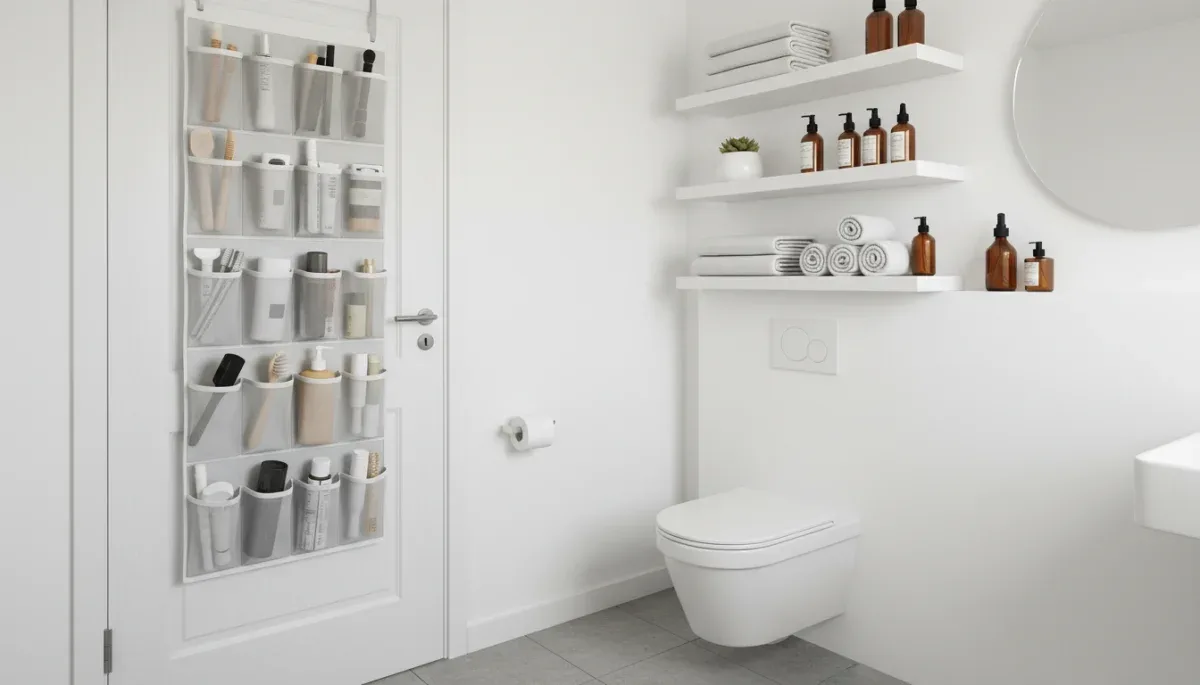
Choosing between over-the-door organizers and floating shelves depends on whether you prioritize zero-drill convenience or rigid weight-bearing capacity for your daily essentials. Small bathroom storage requires efficient use of vertical space, but each option presents distinct trade-offs regarding structural stability, moisture exposure, and aesthetic presentation.
Ads
This comparison helps renters and homeowners choose the right storage fixtures based on door clearances, wall construction, and daily hygiene routines. The catch is that neither solution fits every compact bathroom layout, as door thickness, wall stud locations, and ambient humidity dictate which system remains functional over time.
Ads
Installation requirements and structural mounting
The primary distinction between these two storage methods lies in their structural attachment requirements. Over-the-door organizers rely entirely on gravity and bracket hooks that rest along the top edge of a standard interior door. Most residential interior doors in the United States measure between 1.375 inches and 1.75 inches thick, meaning organizer brackets must match these dimensions precisely to prevent wobbling or rattling during door movement. Installation takes seconds and requires no screwdrivers, drills, or wall anchors, making it accessible for users who cannot modify their living spaces.
Floating shelves demand a permanent or semi-permanent mechanical attachment to the wall surface. To support weight reliably, shelf brackets must be driven directly into wood wall studs or secured with heavy-duty hollow-wall anchors such as toggle bolts. In bathrooms where wall surfaces consist of ceramic tile, drywall, or plaster over lath, drilling holes requires specialized carbide-tipped or diamond-tipped drill bits. Failing to anchor shelves properly can lead to sudden structural failure, drywall tearing, or cracked wall tiles under everyday loads.
Key installation steps for wall shelves
- Locating hidden wall studs using an electronic stud finder before marking hole locations.
- Using a bubble level to ensure horizontal alignment across both mounting brackets.
- Selecting toggle bolts or expanding anchors rated for the combined weight of the shelf and contents.
- Drilling pilot holes at low drill speeds to prevent cracking brittle ceramic wall tiles.
Weight capacity and item compatibility
Weight capacity determines what types of bathroom goods each system can safely support. Over-the-door units are designed primarily for lightweight, individually packaged items distributed evenly across fabric pockets, mesh sleeves, or thin metal wire baskets. When loaded with oversized shampoo bottles, large liquid detergents, or heavy glass jars, the fabric seams can stretch, and the main hanging straps may pull away from the top door frame. An uneven weight distribution also causes the unit to swing outward whenever the door opens or closes rapidly.
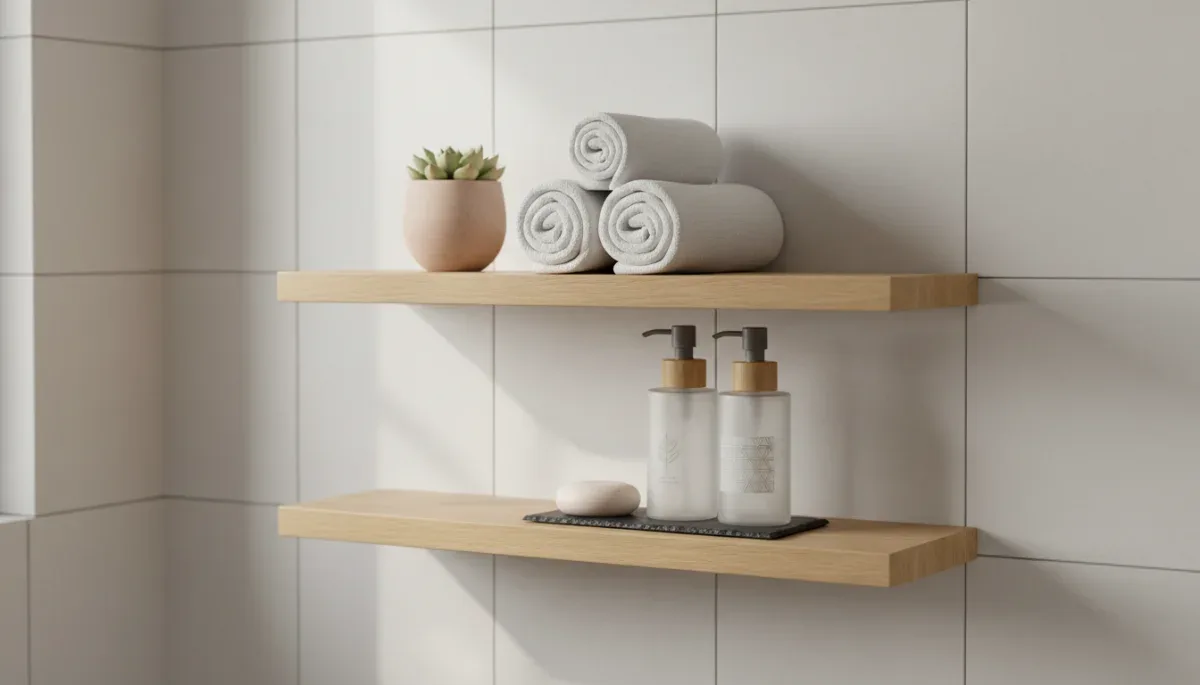
Floating shelves offer far greater rigidity and support higher total loads when anchored correctly into wall framing. A single well-mounted floating shelf can support stacks of heavy folded bath sheets, ceramic canisters, cosmetic organizers, and bulk refill bottles without flexing. Because the shelf provides a continuous, solid, flat platform, tall bottles and glass containers stand upright securely without tipping over, which frequently occurs in flexible hanging fabric pockets.
Items best suited for each system
- Door organizers: Hairbrushes, tubes of toothpaste, travel bottles, sheet masks, and styling accessories.
- Floating shelves: Folded bath towels, heavy amber glass dispensers, ceramic jars, and decorative baskets.
- Door organizers: Cleaning spray bottles, packaged soap bars, and extra rolls of toilet tissue.
- Floating shelves: Electric toothbrushes with charging bases and heavier cosmetic organizers.
Moisture resistance and material longevity
Bathrooms experience severe daily fluctuations in relative humidity and ambient temperature, which affects storage materials differently over time. Over-the-door organizers constructed from non-woven polypropylene fabric, clear vinyl (PVC), or untreated canvas absorb airborne moisture readily. In poorly ventilated bathrooms without exhaust fans, trapped moisture inside closed pockets can encourage mildew growth, retain stale odors, and degrade synthetic stitching over several months of continuous shower steam exposure.
Floating shelves vary widely in durability based on their core materials and surface finishes. Solid hardwoods, marine-grade plywood, anodized aluminum, and tempered glass handle humid bathroom microclimates exceptionally well when sealed against water penetration. Inexpensive shelves made from raw particleboard or low-density fiberboard (MDF) with paper veneers are vulnerable to edge swelling and delamination when exposed to steam or direct water splashes near shower enclosures and sink basins.
Material durability considerations
- Engineered MDF: Prone to swelling along unfinished edges if steam enters seams.
- Powder-coated metal: Resists surface rust if the protective coating remains free of deep scratches.
- Clear PVC vinyl: Wipes clean easily but can yellow and stiffen over time in warm conditions.
- Tempered glass: Completely impervious to moisture, rust, and water stains, but shows mineral spots.
Accessibility and bathroom clearance limits
Spatial geometry dictates whether a door organizer or a wall shelf functions smoothly in tight quarters. An over-the-door organizer occupies the recessed airspace behind the entry door or a closet door. However, if the door opens flush against an adjacent drywall surface or towel bar, hanging pockets will strike the wall, preventing the door from opening past ninety degrees. Organizers also require sufficient clearance along the top door header; thick metal hooks can rub against the frame, preventing the door from latching shut properly.
Floating shelves occupy vertical perimeter wall space, making them practical above water closets, next to vanity mirrors, or over standard towel bars. Because they project outward between four and ten inches from the wall, careful placement is necessary to avoid head-strike hazards when leaning over a sink or standing up from a toilet. In narrow powder rooms, shallow floating ledges preserve walking clearances while still holding essential daily toiletries within arm's reach.
Spatial clearance checks
- Checking the gap between the top of the door and the frame using a coin to ensure bracket fit.
- Measuring the depth between the back of an opened door and the adjacent interior wall.
- Mounting floating shelves at least 24 inches above toilet tanks to allow plumbing access for repairs.
- Keeping shelf projections shallow in primary walking paths to prevent accidental elbow bumps.
Visual impact and bathroom aesthetics
Storage choices influence the visual perception of space in small rooms. Over-the-door hanging racks are highly utilitarian, consolidating dozens of small, loose items into a single vertical grid. When filled with mismatched cosmetic bottles and tubes, fabric organizers can appear visually cluttered, making a compact bathroom feel busier unless hidden on the inside face of a closet door. Wire models offer a cleaner profile but keep all contents visible at eye level.
Floating shelves contribute directly to interior decor by creating deliberate display surfaces. They provide an opportunity to decant toiletries into matching containers, introduce natural wood tones, or display folded white linens that reflect ambient light. By keeping floor and counter surfaces clear while presenting organized goods on minimalist horizontal planes, floating shelves help small bathrooms feel taller, open, and more thoughtfully designed.
Cost comparison and long-term value
Budget constraints often guide the final purchasing decision between these storage fixtures. Over-the-door organizers represent an economical, all-in-one storage investment. Basic hanging fabric and wire models generally range from ten to thirty dollars at standard home goods retailers. They require zero additional mounting hardware, tools, or repair supplies, and they can be packed into luggage and moved between rental properties without leaving damage behind.
Floating shelves carry higher upfront and downstream costs. While budget shelf boards themselves are inexpensive, the complete setup often requires purchasing stud finders, mounting anchors, drill bits, and levels. Furthermore, when moving out of a rented property, tenants must account for the cost and labor of patching screw holes, sanding drywall filler, and matching touch-up paint to recover their security deposits.
At a glance
| Factor | What to know |
|---|---|
| Installation effort | Door racks require zero tools, while floating shelves require drilling and precise anchoring. |
| Weight capacity | Shelves hold heavy towels and bottles, whereas door racks are limited to lightweight sundries. |
| Rental compatibility | Door organizers leave no holes, while floating shelves require wall repairs before lease end. |
| Moisture resistance | Solid sealed shelves resist steam better than porous fabric or vinyl hanging pockets. |
Frequently asked questions
Can over-the-door organizers damage bathroom doors?
Yes, heavy organizers can bend hanging brackets, causing the metal to scrape paint from the top door frame. Over time, excess weight can also cause thin hollow-core interior doors to sag slightly on their hinges.
How deep should floating shelves be in a small bathroom?
Between five and eight inches is ideal for compact bathrooms. This depth holds standard toiletries, folded hand towels, and storage baskets without projecting too far into walking zones or above plumbing fixtures.
Will hanging organizers fit over commercial or extra-thick doors?
Most standard organizers come with brackets made for 1.375-inch doors and will not slide over thicker 1.75-inch solid entry doors. Check bracket dimensions on the packaging before purchasing to confirm door thickness compatibility.
Can I install floating shelves without drilling into wall studs?
Yes, you can use heavy-duty hollow-wall toggle anchors rated for your intended load. However, anchoring at least one bracket screw directly into a wooden wall stud provides significantly greater stability and weight safety.
The bottom line
Over-the-door organizers provide an instant, zero-damage storage solution for renters managing lightweight grooming products, while floating shelves offer a permanent, rigid platform capable of holding heavy linens and organizing daily essentials without visual clutter. For the best balance of utility and safety, measure your door-frame clearance gaps and inspect your bathroom wall construction before buying either storage system.
Written by
Mariana Viana
Mariana Viana writes about house, electronics and clothes for onlyshein.com. Each article explains how things work, compares published details such as prices, policies and program rules, and points readers to the official source before they decide.