
How online coupon code expiration works at checkout
Ads
Online coupon codes expire according to automated rules programmed into an e-commerce retailer's checkout software. These systems evaluate every voucher against preset parameters, including server clock timestamps, minimum order thresholds, customer account limits, and active inventory allocations.
Ads
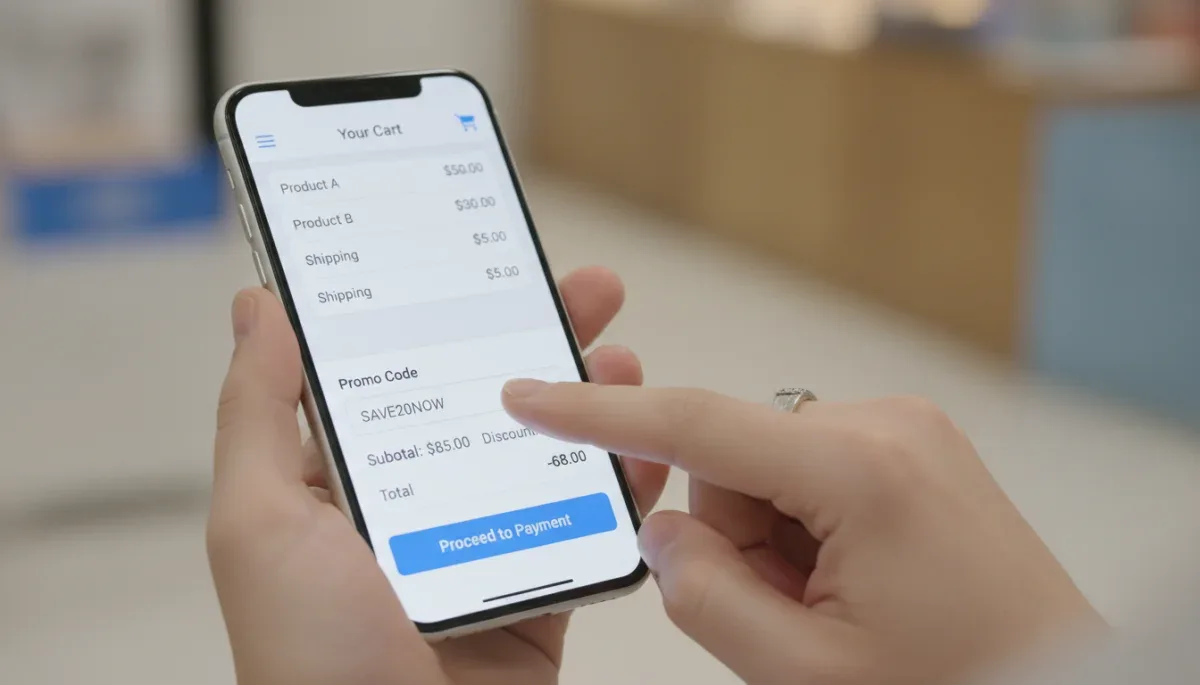
Understanding these mechanisms helps budget-conscious shoppers avoid unexpected price jumps right before submitting payment. The main catch is that promotional terms often rely on the merchant's local time zone and real-time inventory triggers rather than the date and time on your personal device.
Ads
Server time zones and precise cutoff timestamps
When an online store advertises that a promotional code expires on a specific calendar date, the deadline almost never aligns with midnight in your local area unless you share a time zone with the company's primary operational server. Retail platforms run on central server clocks set to specific regional standards, most commonly Coordinated Universal Time, Eastern Time, or Pacific Time in the United States. When the system clock strikes midnight according to that centralized reference point, the database automatically changes the status of that voucher from active to inactive.
A customer living in California attempting to apply a code at eleven o'clock at night may discover the discount is rejected if the merchant calculates dates using Eastern Standard Time. Because midnight arrived three hours earlier on the East Coast, the database has already closed the promotional window. Retailers rarely adjust these cutoff scripts dynamically for individual IP addresses, meaning the automated backend rule overrides any local perception of time.
Furthermore, daylight saving transitions can create unexpected discrepancies. Standard e-commerce server configurations rely on fixed UTC offsets. If a retailer fails to adjust its scheduling scripts when local clocks move forward or backward, the promotion may terminate an hour earlier or later than stated in marketing newsletters. The checkout platform performs a binary check at the precise second you submit the order, querying the central database to verify if the current server timestamp falls within the approved promotion range.
Cart reservation limits and session timers
Many shoppers assume that typing an alphanumeric voucher into the promo box locks in the lower price indefinitely while they browse for additional items. In modern e-commerce systems, applying a code merely creates a temporary session flag inside your browser session or customer account. These session flags carry strict background timers designed to manage traffic and release reserved promotional allocations back into the general pool.
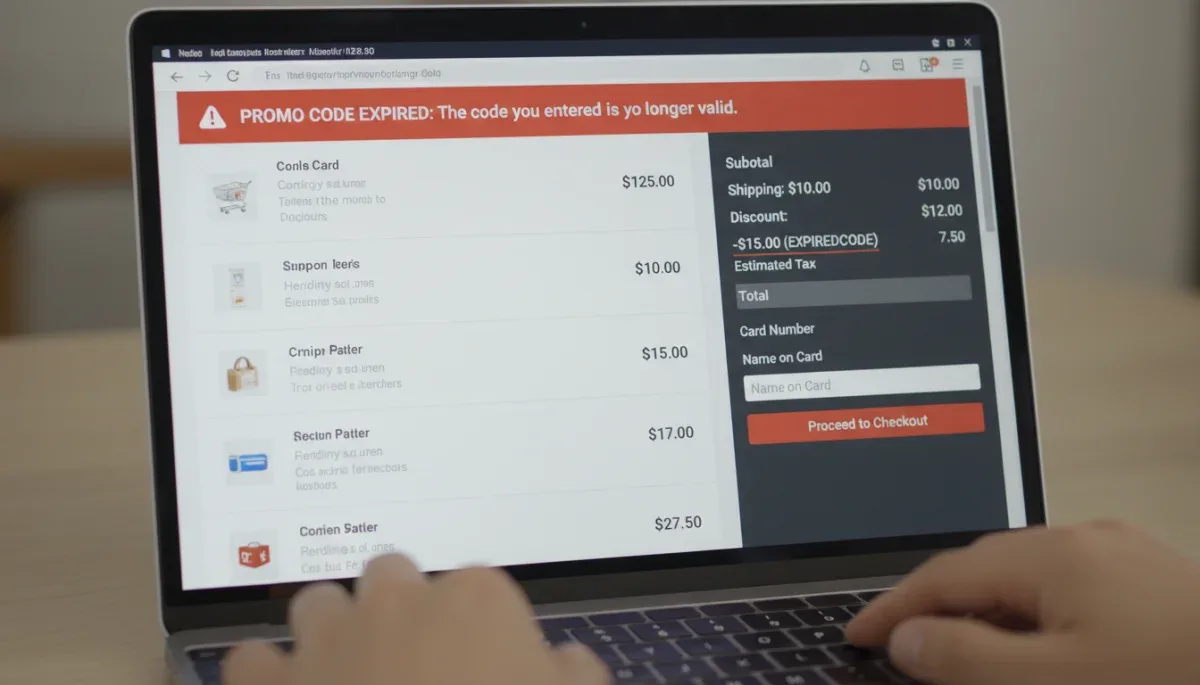
Checkout session clocks typically run between fifteen and thirty minutes depending on merchant settings. If you leave a tab open while considering your purchase, your session token may expire silently in the background. While the visual user interface may still reflect the deducted amount on your screen, the payment gateway recalculates all line items the moment you click the final order submission button. If the session expired during your delay, the server rejects the voucher and charges the full, unadjusted amount unless you re-enter the code.
Common technical barriers during active sessions
- Session timeout errors caused by prolonged inactivity on the payment screen.
- Dynamic price updates triggered when background inventory levels drop below a promo requirement.
- Cache discrepancies between mobile app sessions and desktop browser checkouts.
- Automatic removal of discounts when modifying shipping methods or billing addresses.
Redemption caps and aggregate budget thresholds
Retailers frequently attach quantitative caps to coupon code expiration policies to control marketing expenditure. A coupon code may have a calendar expiration date listed two weeks away, yet stop working within hours of publication because it reached its total aggregate redemption ceiling. Corporate finance departments assign fixed budgets to specific marketing campaigns, such as fifty thousand dollars in total order deductions or a maximum of one thousand individual customer redemptions.
The merchant checkout platform runs a real-time counter against the promotion record in its database. Each completed checkout transaction increments this counter by one. When the total transactions hit the pre-established maximum, the platform updates the promotion status flag to closed immediately. Shoppers who enter the code moments later receive standard generic messages such as invalid code or offer no longer available, even if the banner on the merchant homepage continues to display the promotion.
Flash sales and influencer collaborations frequently encounter this specific automated limitation. Marketing assets like email distributions, affiliate blog posts, and social media announcements operate on asynchronous schedules and cannot instantly vanish when a budget cap is reached. Consequently, public-facing advertisements often linger long after the underlying software rule has permanently deactivated the discount trigger at checkout.
Account restrictions and single-use token invalidation
Targeted promotional discounts, such as welcome incentives, birthday gifts, and customer recovery offers, rely on single-use alphanumeric tokens tied to individual customer profiles. These codes incorporate unique validation parameters that govern how and when they lose their validity. Once an account issues an order containing a unique token, the software permanently marks that string as consumed inside the centralized database.
A common issue occurs when a shopper initiates checkout, enters a single-use code, and encounters a payment processing interruption. If your credit card bank declines the initial attempt due to a routine security alert or if your mobile network drops during authorization, the merchant database may still log the token as pending or used. When you attempt to retry the transaction a few minutes later, the system reads the code as already spent, preventing you from applying your discount again.
Similarly, single-use vouchers often feature strict lifetime parameters that begin counting down from the exact second the token is generated. A welcome code delivered to your inbox might carry an automated lifespan of precisely seventy-two hours rather than three full calendar days. If the email lands in your inbox at two in the afternoon on a Tuesday, the token ceases functioning at two o'clock on Friday afternoon, regardless of traditional business hours or calendar dates.
Exclusions, subtotal recalculations, and threshold failures
Coupon codes that require a minimum spending threshold involve dynamic evaluation rules that run throughout the entire checkout sequence. An offer advertising twenty dollars off an order of one hundred dollars does not simply evaluate the face value of the items in your bag. The validation engine subtracts excluded categories, taxes, handling fees, shipping charges, and third-party marketplace goods before measuring the remaining balance against the threshold requirement.
If your subtotal sits at exactly one hundred and one dollars, and a single product in your cart runs out of stock while you enter your billing address, the platform removes that item automatically. The moment your qualifying subtotal slips below the required baseline, the validation engine strips the promo code from the order summary. This calculation happens instantly without requiring human intervention, leading to sudden price changes before the final payment authorization.
Furthermore, brand-specific exclusions programmed into retailer platforms can render codes functionally expired for certain items. Major fashion and electronics marketplaces regularly exclude licensed merchandise, gift cards, luxury labels, and clearance items from sitewide promotional formulas. When a cart contains both eligible and excluded goods, the system applies the discount strictly to the qualifying fraction. If the eligible portion fails to satisfy the minimum spend criterion, the entire promotion invalidates on the spot.
At a glance
| Expiration factor | What to know |
|---|---|
| Server time zones | Cutoffs follow the retailer's operational clock, which may precede your local midnight. |
| Aggregate redemption caps | Promotions can expire days early if the merchant's total budget or use limit is reached. |
| Cart session timers | Applied discounts drop from pending orders after brief periods of checkout inactivity. |
| Minimum order thresholds | Discounts invalidate automatically if out-of-stock items or exclusions drop your cart value. |
Frequently asked questions
Why did my coupon code expire before midnight in my city?
Merchant websites calculate expiration deadlines using their headquarters or centralized server time zone rather than your device's location. If a retailer operates on Eastern Time and you shop from the West Coast, daily promotional cutoffs occur three hours before your local midnight.
Can customer support reactivate an expired online promo code?
Customer support agents can sometimes issue a replacement code if the expiration occurred due to a technical error on their site. However, representatives cannot bypass hardcoded system limits or override corporate budget caps once a marketing campaign officially terminates in their software database.
Why does a promo code show as applied but charge full price?
This occurs when an order page displays cached browser data after the underlying server session token has expired. When you submit payment, the gateway queries the live database, detects the expired voucher status, and charges the current undiscounted balance shown on the final confirmation prompt.
Do coupons stay valid if an item in my cart sells out?
No, because promotional validation engines continually audit qualifying items. If an out-of-stock product disappears from your order and lowers your subtotal below the required minimum spending amount, the checkout software automatically strips the discount from your final total before payment processing.
The bottom line
Online coupon code expiration policies are determined by automated backend algorithms that enforce strict server time zones, campaign budgets, and cart qualification parameters. To ensure you receive an advertised discount, finalize your order as soon as you apply a valid voucher rather than letting your session idle in an open browser tab. Always review the final numeric total on the payment confirmation screen before clicking submit to verify that your promotional deduction remains fully intact.
Written by
Rita Luiza
Rita Luiza writes about clothes for onlyshein.com. Each article explains how things work, compares published details such as prices, policies and program rules, and points readers to the official source before they decide.