
Choosing between velvet and wooden hangers for your closet

Ads
Choosing between velvet and wooden hangers comes down to balancing rod capacity against garment structure. Velvet hangers maximize usable rail space and stop slick textiles from slipping off, whereas wooden hangers provide the rigid foundation necessary to preserve the shoulder lines of tailored pieces and heavy winter outerwear.
Ads
This comparison helps anyone dealing with a crowded closet who needs to protect their wardrobe without overspending on storage accessories. The catch is that neither style works universally across all garments, meaning an all-or-nothing approach often leads to broken hardware, stretched knits, or crumpled hems.
Ads
How hanger thickness dictates closet rod capacity
Closet capacity depends heavily on the physical footprint of the hanger itself. Standard wooden hangers measure between one-half inch and three-quarters of an inch thick at the neck, expanding even further at the shoulder flares on tailored suit models. In contrast, standard ultra-slim velvet hangers measure roughly one-fifth of an inch thick. When you hang forty garments side by side, wooden hangers consume between twenty and thirty linear inches of rail space purely through their material thickness, excluding the space taken up by the garments themselves. Velvet hangers holding the exact same forty garments consume less than nine inches of rod space for the frames, leaving significant room for air circulation or additional clothing.
For compact urban apartments or standard reach-in closets measuring four to six feet in width, shifting to velvet hangers immediately relieves physical crowding. Garments packed together too tightly on thick wooden hangers suffer from friction wrinkles, crushed sleeves, and restricted airflow that traps household odors. Velvet options eliminate this mechanical bulk along the top of the rail. However, the space efficiency of slim profiles can encourage overpacking. Squeezing sixty velvet hangers onto a short rod still crushes the fabric bodies of your shirts, even if the hangers themselves fit cleanly along the metal pole.
When assessing closet dimensions, consider vertical clearance in addition to linear width. Wooden hangers often drop down lower from the rod due to their larger hook curvature and thicker wooden collars, which reduces clearance above shoe racks or lower shelving units. Velvet models sit higher and tighter to the hanging pole, providing an extra inch or two of vertical leeway underneath longer tunics, dresses, and trousers.
Garment grip versus fabric preservation across different textiles
The textured flocking on velvet hangers solves the chronic problem of wide-neck blouses, silk camisoles, and satin dresses sliding onto the closet floor. The nylon fibers create surface tension against slick weaves, holding slippery fabrics firmly in place without requiring plastic utility clips that leave indentations. This non-slip grip keeps light clothing centered beneath the hook, which prevents uneven stretching along the neckline. It also saves time during daily routines because you do not have to retrieve fallen shirts from beneath hanging rails.
That same friction, however, creates friction-related problems for certain delicate textiles. Pulling a soft cotton knit, lightweight linen tee, or fine wool cardigan forcefully off a velvet hanger causes the flocking to pull against the yarn, stretching the weave out of shape. To remove garments safely from velvet frames, you must unbutton them fully or lift them up and off with both hands. In contrast, the smooth lacquer or sanded finish of a wooden hanger allows fabrics to glide off effortlessly without snagging or pulling loose threads.
Textile compatibility breakdown
- Velvet frames: Best for silk shirts, chiffon blouses, wide scoop-neck tops, and strappy dresses.
- Smooth wooden frames: Best for heavy woolens, structured denim, raw linen, and garments prone to pilling from friction.
- Avoid on velvet: Damp clothing, heavy woven knits pulled by hand, and unlined rough tweeds.
Textile weight also influences how hangers interact with seams. Extremely light garments balance effortlessly on velvet, but medium-weight knits should never hang on narrow profiles for prolonged periods. The slim edge of a velvet hanger exerts concentrated upward pressure on thin shoulder lines, leading to unsightly fabric puckering commonly referred to as hanger bumps or shoulder horns. Wooden hangers distribute that pressure over a broader, rounded wooden surface.
Structural support for heavy coats and tailored garments
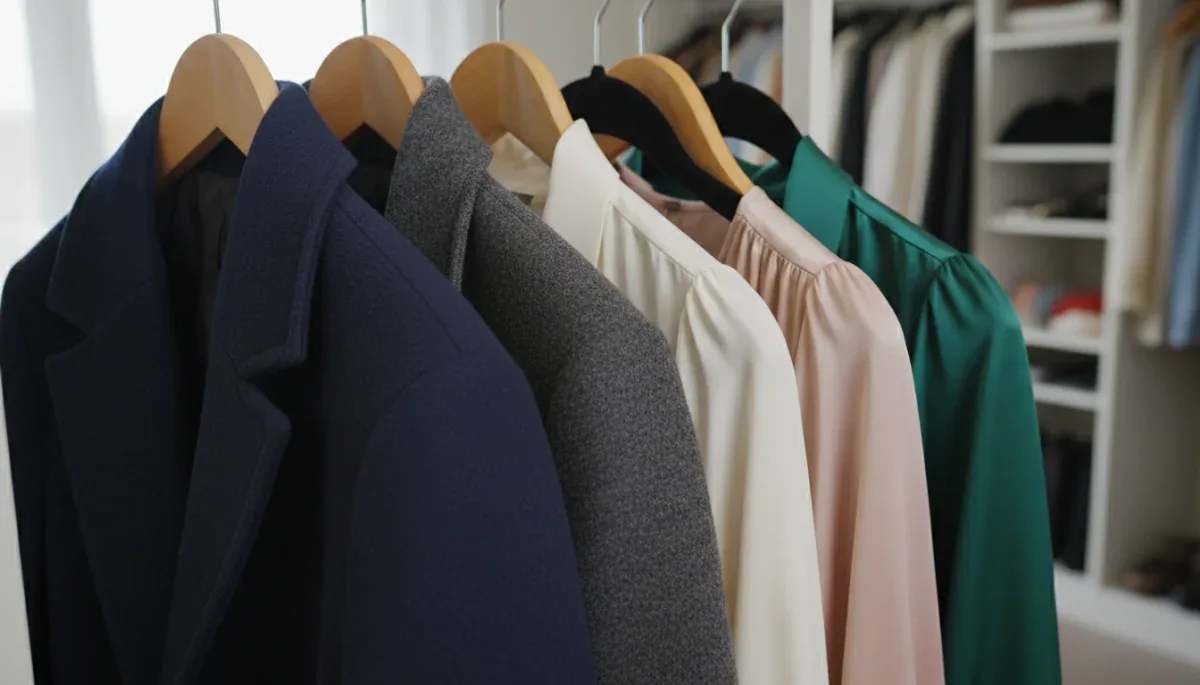
The primary advantage of wooden hangers lies in their rigid construction and anatomical contouring. Tailored garments such as wool trench coats, heavy leather jackets, blazers, and structured suits rely on internal padding and canvas construction to maintain their shape across the chest and shoulders. A thin velvet hanger lacks the depth required to fill out a tailored shoulder cavity, causing the heavy wool to collapse inward under its own weight and degrading the jacket structure over time.
Quality wooden hangers are cut with a forward contour that mimics human shoulders, supporting the lapel structure and keeping shoulder pads properly positioned during extended off-season storage. The substantial wooden crossbars also provide an ideal resting place for heavy suit trousers. Thick dowels prevent the sharp horizontal creases that narrow wire or plastic velvet crossbars leave across the knees of dress slacks after weeks in storage.
Weight capacity differences between the two materials are substantial. A typical wooden coat hanger easily supports fifteen to twenty-five pounds without bowing, splintering, or bending out of alignment. A standard flock-coated plastic velvet hanger generally supports five to ten pounds. Placing a full-length winter parka or heavy shearling jacket onto a velvet hanger frequently causes the plastic frame to snap at the base of the metal swivel hook or bend until the garment slips off the side.
Durability, humidity resistance, and long-term cost
A set of basic wooden hangers carries a higher upfront cost than a comparable multi-pack of velvet hangers, but the service life of timber is significantly longer. Hardwoods such as lotus, beech, or ash resist physical trauma, do not snap easily under accidental weight drops, and feature metal hooks anchored deeply into threaded wooden sockets. A set of solid wood hangers can last decades without losing structural utility or aesthetic appeal, making them a one-time purchase for many households.
Velvet hangers rely on an injection-molded plastic core covered in adhesive and electrostatically sprayed nylon flocking. Over time, recurring stress weakens the plastic around the neck joint, and aggressive twisting can strip the small metal hook from the top. Furthermore, low-cost velvet hangers are vulnerable to moisture and environmental humidity. In damp climates or poorly ventilated basements, synthetic flocking can harbor mildew or shed tiny colored fibers onto damp clothing. You should never hang wet laundry or line-dry garments on velvet hangers, as the dye can transfer permanently into damp whites or light pastels.
Wooden hangers also require attention regarding climate and finishing. Untreated cedar hangers naturally absorb ambient moisture and deter moths, making them practical for wool storage, but they require periodic light sanding to refresh their natural oils. Lacquered wooden hangers handle typical closet humidity well, though cheap versions with rough sanding or uneven varnish can snag delicate linings. When shopping for wooden storage, inspect the finish along the underside of the arms to confirm the wood is smooth.
Daily convenience, snagging risks, and wardrobe maintenance
Routine wardrobe management involves more than just hanging clothes; it dictates how fast you can find, remove, and return garments during busy mornings. Velvet hangers create a uniform, boutique-like look that reduces visual clutter. Because they take up minimal space, your closet looks orderly and open, which makes color-coordinating shirts and categorizing items straightforward. The fixed non-slip surface ensures that shirts stay buttoned and centered, preventing the lopsided look common in closets with mismatched wire or cheap tubular plastic hangers.
The trade-off is the extra physical effort required when putting clothes away. Sliding a freshly laundered shirt onto a velvet hanger requires deliberate care; you cannot slide the hanger in through the bottom hem and glide it effortlessly up to the collar because the rubberized texture grips the interior fabric immediately. Doing so repeatedly can stretch out narrow crew necks. You must work the hanger up gently or unfasten the top buttons to avoid stressing the collar stitching.
With wooden hangers, garments slip smoothly onto the frame in one fluid motion, speeding up post-laundry organization. Buttoning the top button is still recommended to keep the collar straight, but the process is notably faster. The downside is that slick garments without hanger loops can slide off the smooth wood if bumped while you sort through neighboring clothing. If you opt for wood throughout a casual wardrobe, you must ensure shirts with wide collars feature internal ribbons to tether them to notched wooden shoulders.
Creating a functional hybrid organization system
Rather than choosing exclusively between velvet and wooden hangers, an efficient organization system assigns each style to the garment category where its strengths matter most. Outfitting an entire closet in wooden hangers wastes significant rail space on items that do not require structural shoulder support. Conversely, forcing heavy winter coats and delicate business suits onto slim velvet frames damages tailoring and risks broken plastic hooks.
A hybrid configuration organizes the closet into distinct functional zones. The main hanging rod dedicated to daily shirts, casual button-downs, light sweaters, blouses, and dresses benefits directly from velvet hangers. This approach consolidates everyday separates into a slim footprint, leaving adequate breathing room between hangers and freeing up space for storage bins or shoe racks. The unified color of the flocking creates visual uniformity across the busiest section of the wardrobe.
Recommended hybrid closet allocation
- Outerwear and winter storage: Reserve contoured wooden hangers for structured overcoats, leather jackets, wool blazers, and two-piece suits.
- Everyday tops and blouses: Use slim velvet hangers for silk, rayon, cotton button-ups, and slippery tank tops.
- Pants and trousers: Hang heavy denim and wool slacks across thick wooden crossbars; place lightweight casual chinos or linen pants on velvet trouser bars.
- Dresses and formal gowns: Hang light cocktail dresses on velvet to prevent slippage; place beaded or heavily structured gowns on reinforced wooden frames.
By dividing your wardrobe this way, you maximize rod capacity where clothing volume is highest while guaranteeing that expensive, structured investments receive the foundational support they need to last for years.
At a glance
| Factor | What to know |
|---|---|
| Space savings | Velvet models are roughly one-third the thickness of wood, freeing substantial rod space. |
| Garment grip | Velvet prevents slippery fabrics from falling, while smooth wood allows quick removal. |
| Weight support | Wood supports heavy woolens and tailored suits without sagging, bending, or snapping. |
| Long-term durability | Solid wood lasts for decades, whereas plastic-backed velvet flocking can wear or break. |
Frequently asked questions
Do velvet hangers ruin clothes?
No, velvet hangers do not damage most fabrics when used correctly. However, hanging damp garments on colored velvet can cause dye transfer, and heavy knits left on slim profiles for long periods may develop shoulder bumps due to concentrated downward pressure.
Are wooden hangers worth the extra money?
Yes, wooden hangers are worth purchasing for structured coats, suits, and heavy garments. Their broad shoulders maintain garment silhouettes, prevent canvas chest pieces from collapsing, and handle substantial weight without the bending or breakage common in slim synthetic alternatives.
Can you hang wet clothes on velvet hangers?
No, you should never hang wet or damp clothing on velvet hangers. Water weakens the adhesive holding the nylon flocking to the plastic frame, and synthetic dyes from dark flocking can bleed permanently into wet textiles during drying.
How do you prevent shoulder bumps from hangers?
Use hangers with wide, contoured ends that match your shoulder width to prevent bumps. For lightweight knits on slim hangers, fold the garment over the horizontal crossbar rather than hanging it by the shoulders, or switch to rounded wooden frames.
The bottom line
Velvet hangers are the most practical solution for maximizing rod space and keeping lightweight, slippery garments off the closet floor, while wooden hangers remain necessary for preserving the shape and tailoring of heavy outerwear and suits. Instead of forcing your entire wardrobe onto a single hanger type, divide your closet by garment weight and fabric vulnerability. Before buying a large pack of either style, measure your closet rod width and count your heavy coats to determine your actual capacity needs.
Written by
Mariana Viana
Mariana Viana writes about house, electronics and clothes for onlyshein.com. Each article explains how things work, compares published details such as prices, policies and program rules, and points readers to the official source before they decide.