
How vacuum storage bags work for household bedding
Ads
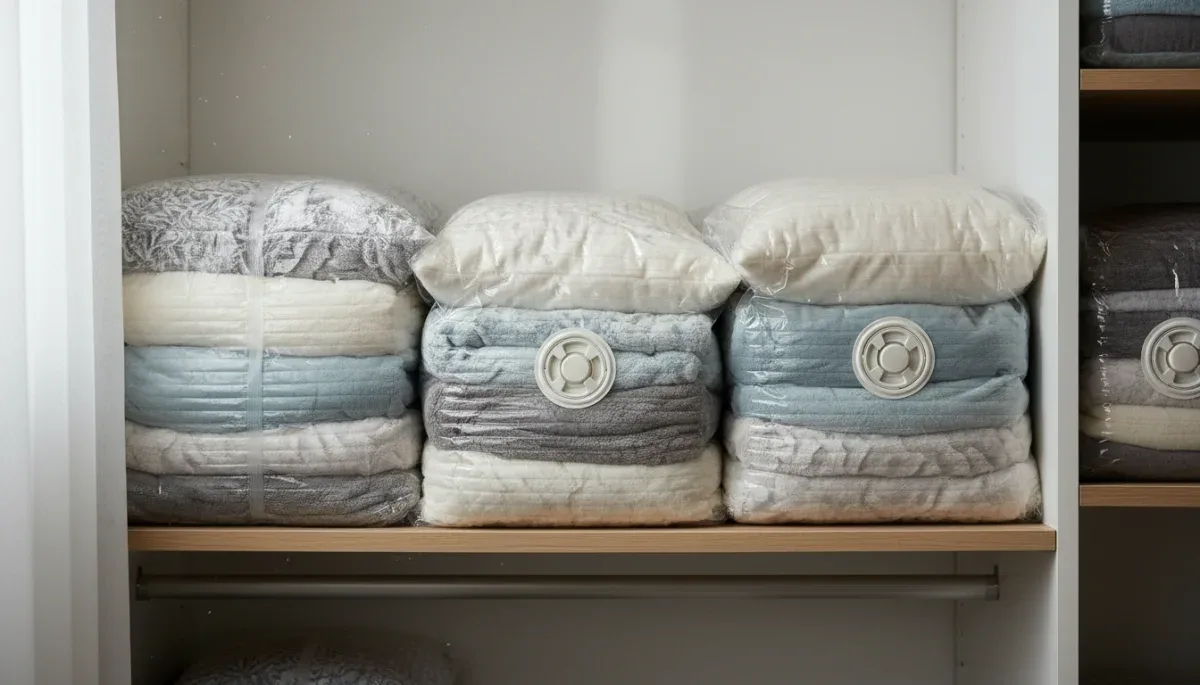
Vacuum storage bags work by using suction to extract ambient air from bulky, porous textiles through an integrated one-way valve, flattening the empty space between woven or spun fibers. When you seal household textiles inside these heavy-duty plastic pouches and attach a standard vacuum cleaner nozzle, the atmospheric pressure outside pushes against the flexible walls, compressing thick items into compact, dense packages.
Ads
This technique helps apartment residents, renters, and organized households reclaim valuable linen closet space during seasonal transitions, but improper packing or sealing damp fabrics can permanently ruin expensive comforters through mold growth and structural fiber fatigue. Knowing the mechanical principles of airtight compression and checking fabric compatibility before packing will protect your bedding investment from irreversible damage.
Ads
The mechanics of compression storage bags
Standard household vacuum storage bags rely on a combination of airtight multi-layer polymer film, a mechanical zip closure, and an external suction port with an internal gasket. Most commercial bags use a blend of polyethylene and polyamide, often referred to as nylon-poly layers, which provides both tear resistance and an impermeable barrier against atmospheric moisture and oxygen. The zip closure features interlocking plastic channels that press together, typically secured by an included plastic slider clip that forces the tracks into an unbroken seal.
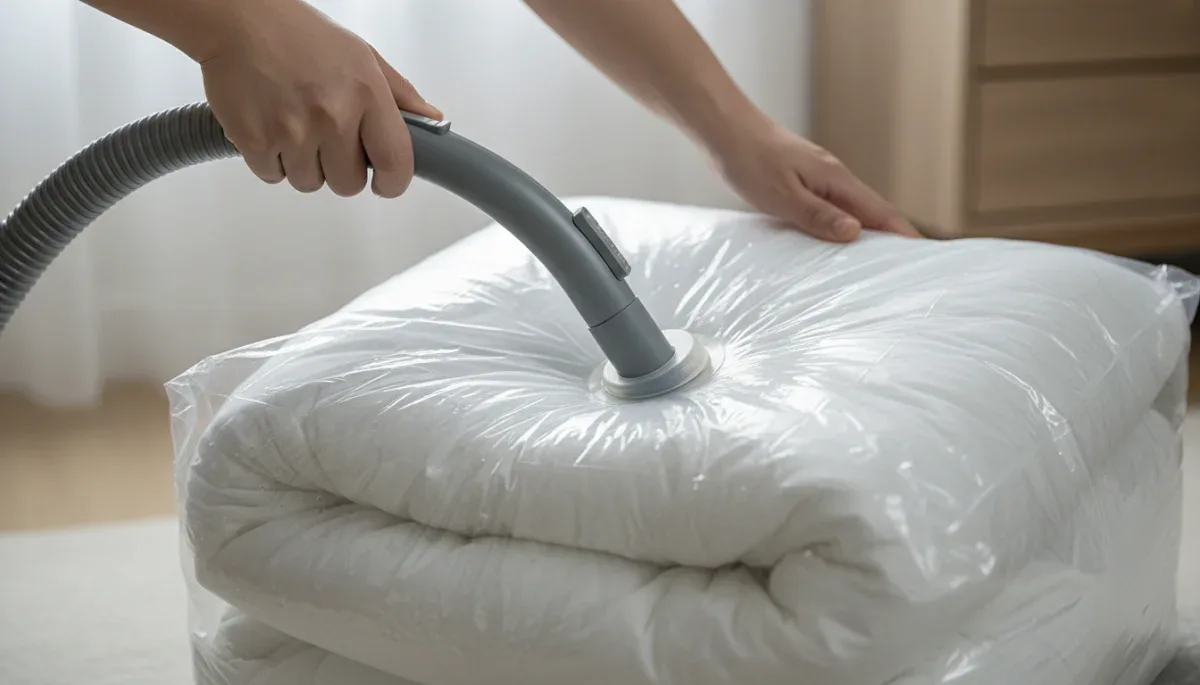
The valve mechanism operates on a straightforward differential pressure system. Inside the rigid plastic valve cap sits a soft silicone or rubber flap that acts as a check valve, allowing air to flow freely outward under the mechanical suction of a household vacuum cleaner while automatically snapping shut when the suction ceases. As the motor evacuates the air, atmospheric pressure pushes inward against the exterior of the bag, forcing the textile filling to compress uniformly until the remaining physical fibers resist further compaction.
This volume reduction does not actually reduce the physical mass or weight of the bedding inside; it solely eliminates the air pockets naturally present in fluffy fabrics. A ten-pound winter duvet will still weigh exactly ten pounds once compressed, even if its visible thickness decreases by more than half. Understanding this distinction is essential when organizing overhead shelves or storage bins, as the resulting packages are dense, heavy, and awkward to handle if packed to maximum capacity.
Bedding fabrics that compress safely
Not all bedding materials handle sustained atmospheric compression equally, making fabric identification an important first step. Synthetic fibers and robust plant-based textiles are generally the most resilient candidates for long-term reduction in vacuum storage bags, as their molecular structure tolerates being flattened without losing structural memory.
Ideal textiles for vacuum packing
- Polyester fill comforters: Synthetic batting easily withstands long periods of compression and returns to its original loft with minimal fluffing.
- Cotton bed sheets and pillowcases: Woven cotton fibers endure pressure without structural degradation, though deep wrinkles may require laundering or pressing afterward.
- Acrylic and fleece blankets: These synthetic weaves hold up against prolonged air extraction and resist fiber crushing better than natural protein fibers.
- Microfiber duvets: Engineered synthetic microfibers compress into flat parcels without risking the brittle breakage that affects delicate animal hairs.
When packing synthetic blankets and standard cotton sheets, the risk of permanent mechanical alteration remains very low. These textiles can remain compressed for several months during warm seasons without losing their insulating qualities or softness. Once released from the plastic enclosure, simple exposure to ambient room air combined with a gentle shake is usually enough to restore their intended loft and drape.
Materials you should avoid sealing in airtight bags
Certain luxury and natural materials suffer permanent degradation when subjected to the vacuum sealing process. Natural down and waterfowl feathers are the most vulnerable. A down cluster features thousands of tiny, microscopic filaments radiating from a central point, trapping air to create insulation. When compressed completely flat by atmospheric pressure inside an evacuated bag, these delicate quills and filaments snap under the force, destroying the natural elasticity and thermal performance of the garment or duvet.
Wool blankets and cashmere throws also require careful consideration before packing. Wool fibers possess natural crimp and scales that require microscopic air circulation to maintain their flexibility. When deprived of air and squashed under intense pressure, wool can develop stubborn creases that permanently break the fibers, leading to thin patches or brittle edges. Furthermore, natural animal fibers contain trace residual oils that can oxidize or produce rancid odors when locked in an airtight, oxygen-depleted environment for extended periods.
Memory foam pillows and mattress toppers represent another common category that should never enter vacuum compression bags for seasonal storage. While manufacturers often vacuum-pack memory foam for factory shipping, they use specialized industrial machines under controlled conditions, and the product is meant to be opened promptly. Long-term home compression breaks the open-cell cellular structure of polyurethane foam, resulting in permanent indentation, loss of resilience, and an inability to expand back to its original shape.
Mandatory cleaning and drying checks before packing
The single most dangerous threat to bedding kept in vacuum storage bags is trapped moisture. An airtight plastic environment creates a closed system where evaporated water molecules have no escape route. Even a minute amount of residual humidity—barely perceptible to the touch—will foster anaerobic bacteria and mold spores over weeks of warm storage, resulting in severe mildew staining, unpleasant sour odors, and fabric rot that no wash cycle can reverse.
Before packing any comforter, blanket, or sheet set, wash the item according to its manufacturer care label using a mild detergent, avoiding fabric softeners that leave waxy chemical residues on fiber surfaces. Once washed, run the bedding through a complete drying cycle. For thick items like heavy synthetic quilts, allow them to air-dry on a drying rack or clothesline for an additional twenty-four to forty-eight hours indoors in a dry room after machine drying to ensure that the innermost core batting is completely dry.
Pre-packing preparation checklist
- Inspect for latent moisture: Press your hand firmly into the center of the folded item for thirty seconds; if your palm feels cool or clammy, the item requires further drying.
- Remove body oils and stains: Never pack used linens; skin flakes, body oils, and residual perfumes attract fabric pests and cause irreversible yellowing over time.
- Check seam integrity: Inspect hems, piping, and baffles for loose threads that could snag against the plastic zipper track during the evacuation process.
- Avoid artificial scent boosters: Do not place perfumed dryer sheets or liquid fragrance pouches inside airtight bags, as concentrated chemical oils can degrade the plastic film.
Taking the extra time to verify that linens are completely clean and dry eliminates the primary cause of ruined bedding. Storing textiles in a pristine state ensures they emerge from the bags ready for direct use on a bed without requiring emergency re-washing or odor removal treatments.
Proper packing and sealing techniques for an airtight hold
A common complaint with vacuum storage bags is slow reinflation over several weeks or months. This failure almost always stems from micro-gaps along the zipper track or debris lodged within the valve gasket, rather than a failure of the bag material itself. Achieving a lasting vacuum seal requires a deliberate, methodical approach during the initial folding and packing stages.
Fold your bedding neatly into broad, flat rectangles rather than tight rolls or irregular lumps. Smooth, even folds distribute pressure uniformly against the bag walls, preventing sharp fabric corners from puncturing the film under extreme suction. Place the folded items inside the bag, taking care not to fill beyond the marked stop line. Overfilling forces bulk against the zipper channels, putting outward tension on the seam that encourages air to seep back inside over time.
Once the bedding is situated, run the included zipper clip firmly across the entire track from end to end at least three times. Follow up by pressing along the plastic track with your thumb and index finger to confirm that every millimeter of the interlocking groove has clicked shut. Unscrew the valve cap, press your vacuum cleaner hose directly over the opening, and turn on the appliance. Gently press down on the bag with your hands to help air escape smoothly. Once compressed to roughly half its original height, shut off the vacuum, remove the nozzle, and screw the valve cap down tightly to protect the internal check valve.
Long-term storage environments and maintenance
Even a perfectly sealed vacuum storage bag remains vulnerable to external environmental factors. The polyethylene film used in storage bags is susceptible to temperature extremes, ultraviolet radiation, and mechanical punctures from rough surfaces. Where you choose to store your compressed bedding plays a decisive role in whether the seal remains intact throughout the season.
Store your sealed bags in a climate-controlled area of your home, such as a master bedroom closet, an under-bed storage drawer, or an interior linen cabinet. Avoid storing compressed bags in unheated attics, damp basements, or outdoor garages. High summer heat can soften the plastic film and expand residual air inside the bag, stressing the seams and valve, while sub-freezing winter temperatures can make the polymer brittle and prone to cracking under slight contact.
Keep bags away from sharp corners, wire shelving burrs, and wooden splinters. If storing on wire closet shelves, lay a piece of heavy cardboard, fabric drawer liner, or a flat towel over the wire rungs to create a smooth resting plane. Check on the bags every two to three months. If you notice a bag has slowly reinflated, do not simply apply the vacuum nozzle again; instead, open the zipper track, inspect the seal for trapped lint or threads, wipe the valve gasket with a clean microfiber cloth, and reseal it completely.
At a glance
| Factor | What to know |
|---|---|
| Safe fabrics | Synthetic fills, cotton linens, and microfiber tolerate vacuum compression without fiber damage. |
| Materials to avoid | Down feathers, delicate wool, and memory foam suffer structural breakdown under sustained suction. |
| Moisture tolerance | Zero; textiles must be completely clean and fully dry to prevent mold and mildew growth. |
| Storage location | Keep sealed bags inside climate-controlled closets away from sharp wire shelves and heat sources. |
Frequently asked questions
Can I store down comforters in vacuum storage bags?
No, you should avoid vacuum sealing natural down comforters. The intense atmospheric pressure snaps the delicate shafts and filaments of down clusters, permanently eliminating their loft and insulating capability. Store down bedding loosely in breathable cotton storage bags instead.
How long can bedding stay sealed in vacuum bags?
Bedding can generally stay sealed for up to six months safely. It is wise to unseal the items twice a year, allow the fibers to breathe and recover their natural shape for a day, and confirm there is no trapped moisture before resealing.
Why does my vacuum storage bag keep reinflating?
Reinflation usually indicates a small gap in the zip track or dust inside the valve. Re-run the zipper clip multiple times, check for trapped threads, ensure the inner rubber valve flap is flat, and verify that the bag is not overfilled.
Will vacuum sealing bedding cause permanent wrinkles?
Woven cotton sheets and pillowcases will develop pronounced wrinkles from compression. However, these creases are temporary and wash out easily, or they can be removed with a warm steam iron once the bedding is unpacked.
The bottom line
Vacuum storage bags offer an efficient, practical method for packing bulky synthetic blankets and spare cotton sheets into compact spaces during seasonal rotations. They protect your textiles from dust, pests, and ambient humidity when handled properly. Before you seal any bedding inside a plastic bag, always confirm that the material contains no natural down or memory foam and that the interior batting is completely dry all the way through.
Written by
Mariana Viana
Mariana Viana writes about house, electronics and clothes for onlyshein.com. Each article explains how things work, compares published details such as prices, policies and program rules, and points readers to the official source before they decide.