
Underbed storage containers compared for dust and access
Ads
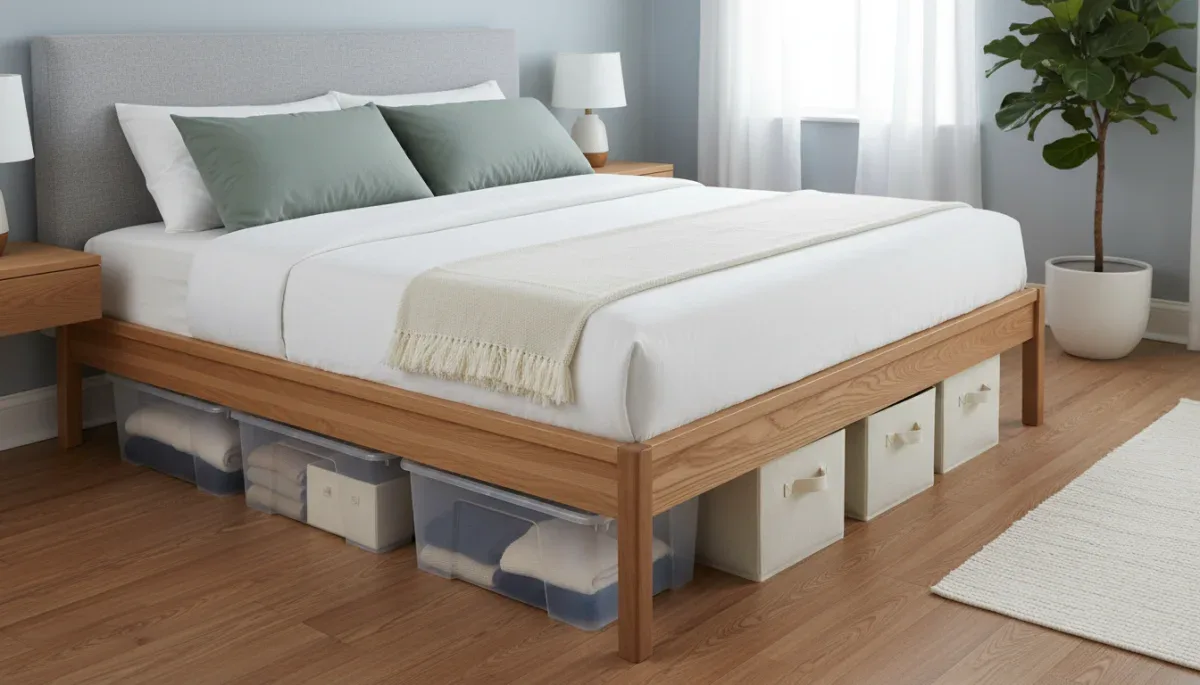
Rigid plastic boxes with latching lids provide the highest level of dust protection under a bed, while wheeled containers and split-lid bins offer the fastest daily access. Choosing between these formats comes down to whether you are storing off-season blankets that sit undisturbed for months or shoes and extra linens you need to reach several times each week.
Ads
This comparison helps apartment dwellers and budget-conscious homeowners turn dead floor clearance into functional closet space without ruining their belongings. The primary catch is that underbed space collects airborne lint, pet hair, and floor grit at an accelerated rate, meaning an improperly sealed container can leave clean textiles smelling musty or coated in grime.
Ads
Rigid plastic bins and latching lid performance
Solid plastic underbed storage containers represent the standard choice when complete barrier protection is your main objective. Molded primarily from polypropylene, these containers feature non-porous walls that prevent dust mites, carpet fibers, moisture, and pests from reaching stored items. Unlike soft materials, polypropylene does not absorb ambient room humidity or trap odors from synthetic carpets.
The seal quality of a plastic box depends almost entirely on its lid mechanism. Budget plastic tubs often rely on friction-fit snap lids that merely rest over the rim. While friction lids block falling dust, they leave micro-gaps at the curved corners where crawling insects and fine dust particles can enter over time. In contrast, models equipped with mechanical latching handles pull the lid downward against the rim, creating a firm mechanical seal. Some high-spec storage brands add a closed-cell foam gasket along the perimeter channel, offering an airtight defense that works well in homes with shedding pets or baseboard heating drafts.
Key advantages of rigid plastic containers
- Complete protection against liquid spills, cleaning sprays, and damp carpets.
- Stackable construction allows vertical pairing if bed risers provide extra clearance.
- Transparent plastic options allow immediate visual inventory without opening the box.
- Firm base structures slide smoothly across low-pile carpet and flat area rugs.
The operational disadvantage of solid plastic units centers on physical handling. A long, thirty-inch plastic tub filled with books or dense winter sweaters becomes heavy and awkward to maneuver. If your bed frame has middle support legs, rigid dimensions cannot flex around obstructions, requiring you to slide the container straight out into the room before you can release the latches.
Fabric storage bags and zippered organizers
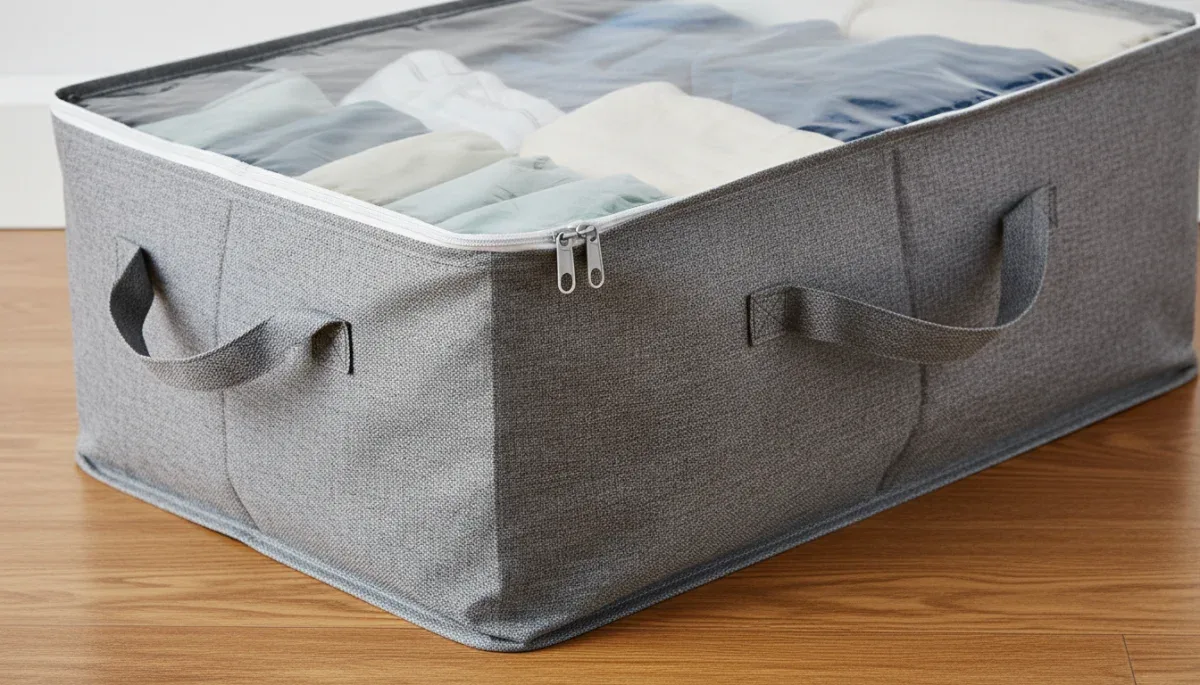
Zippered fabric organizers, commonly constructed from non-woven polypropylene or woven polyester canvas, take a softer approach to bedroom organization. These units are lightweight, collapsible when empty, and pliable enough to squeeze past bed skirt hems and low clearance bars where hard containers get stuck. Their pliable nature makes them especially useful in rental bedrooms with tight walk spaces between the mattress edge and surrounding dressers.
Dust defense in fabric models depends on weave density and zipper construction. Premium woven canvas or heavy Oxford cloth blocks visible dust mites and lint while maintaining light airflow that discourages stagnant air pockets. Non-woven fabric alternatives are less durable; over several seasons, exposure to floor friction can cause thin non-woven panels to fray or tear. Furthermore, standard nylon coil zippers protect against general dust settling, but because zipper teeth do not create a hermetic bond, fine powdery dust can still work through the seams if the floor remains unvacuumed for long periods.
Structural points to check on fabric containers
- Reinforced webbing handles cross-stitched to the body to prevent ripping under load.
- Self-correcting two-way metal zippers that allow selective opening from either end.
- Rigid cardboard or plastic base inserts that maintain flat shapes during sliding.
- Clear polyvinyl chloride windows on top to inspect contents without unzipping.
Accessibility with fabric organizers is generally effortless for lighter items like clothing, pillows, and spare sheets. Pulling them out requires minimal hand strength, provided the floor surface is smooth. However, when loaded with heavy textiles, unstructured fabric containers tend to sag and bow in the center, causing the underside fabric to drag heavily against carpet fibers and creating friction that makes routine retrieval frustrating.
Rolling underbed drawers and wheeled frames
Wheeled underbed organizers prioritize convenience over isolation, making them the most practical choice for daily-use items like active shoes, children's toys, or workout gear. These systems feature hard molded plastic shells, wire mesh baskets, or finished composite wood frames mounted on small directional casters. Because you do not need to lift the weight of the container, pulling a loaded wheeled bin out requires only a light, single-handed pull.
Dust protection is the significant vulnerability of rolling designs. Many wire and wooden rolling drawers feature open tops or loose wooden lids that provide no true perimeter seal. As people walk past the bed, floor drafts lift dust and push it directly over the open sides of the drawer. Some manufacturers combat this flaw by including a fitted fabric dust cover or a loose vinyl shroud that wraps over the frame, but these covers add an extra step whenever you need to drop an item inside or take one out.
Floor compatibility is another factor to weigh before choosing wheels. The tiny plastic casters found on affordable underbed drawers are designed for hard surfaces like oak planks, laminate, or vinyl tile. On medium-to-high pile carpeting, small wheels sink into the yarn pile, locking in place and forcing the plastic caster housing to drag rather than roll. Over time, dragging wheels can leave permanent track marks or crush carpet loops under your bed.
Split-hinged lids versus full-removal covers
The lid design dictates how much clear floor space you need beside your bed to retrieve your belongings. Standard storage boxes feature a one-piece lid that must be unclipped and removed entirely. To open a fully covered bin, you have to drag the entire length of the box out from under the mattress frame, which requires at least three to four feet of open perimeter space along the bedside.
Split-hinged lids solve the clearance problem by incorporating a center crease or dual-end hinge into the plastic mold. With a bi-fold or split lid, you only need to slide the container halfway out from the bed skirt to reach the front half of your items. This configuration proves invaluable in narrow bedrooms where nightstands, walls, or wardrobes restrict how far you can extend a container out into the pathway.
While split lids enhance accessibility, they introduce an extra seam along the top surface. High-quality split lids use interlocking plastic lips along the hinge line to shed falling dust, but inferior versions have simple fold lines that leave small gaps. If you choose a split-lid container, place items that tolerate exposure, such as seasonal footwear in shoe bags, toward the hinged center and sensitive items toward the sealed outer edges.
Clearance measurements and physical access hurdles
Accurate measurement is the most reliable way to avoid storage failure under modern bed frames. The distance between the underside of the bed rail and the floor determines your maximum container height, but many shoppers forget that bed frames often feature lower support hardware toward the center. Center beams, diagonal bracing brackets, and central support legs can divide a king or queen underbed area into separate quadrants, blocking long single-piece bins.
Clearance challenges also involve the flooring beneath the frame. Standard area rugs positioned under a bed often end just before the outer legs, creating a raised lip where the rug backing meets bare flooring. A storage bin pulled across this transition point can catch on the rug edge, bending plastic wheels or snagging fabric bases. If your rug covers the area unevenly, low-profile fabric bags without sharp corners clear the uneven threshold more gracefully than hard-edged plastic tubs.
Finally, consider the presence of a bed skirt. Fabric skirts act as a modest primary air filter, catching large clumps of circulating dust before they settle under the frame. However, lifting a heavy bed skirt every time you slide a bin out can become annoying. Smooth plastic lids slide past bed skirts without catching, whereas exposed zipper pulls or textured canvas handles on soft bags can snag on delicate skirt embroidery or lace hems over repeated uses.
Matching container types to household storage needs
Selecting the right underbed container requires aligning the material properties with the vulnerability of the items inside. Not everything stored under a bed requires airtight isolation, and forcing high-turnover items into sealed boxes creates needless friction in your daily routine. By categorizing your belongings by their access frequency and sensitivity to dirt, you can purchase the exact style that fits your lifestyle.
Seasonal clothing, down comforters, and archival linens demand maximum protection. Natural fibers like wool, silk, and down attract biological pests and absorb environmental moisture, making latching polypropylene boxes with gaskets the only safe option for long-term placement. When packing these boxes, keep the total weight under twenty-five pounds so the container remains manageable when seasonal rotation time arrives in spring and autumn.
Active wardrobes, casual shoes, and guest towels thrive in zippered fabric bags or rolling organizers. Because you open these containers every few days or weeks, stale air and settling dust do not have time to accumulate to damaging levels. Furthermore, fabric containers conform slightly to overstuffed items, letting you pack bulky winter parkas or plush blankets with greater forgiving tolerance than rigid, unyielding plastic walls permit.
At a glance
| Container type | What to know |
|---|---|
| Latching plastic bins | Best dust barrier; requires full clearance to pull out and open. |
| Split-lid plastic boxes | Strong dust defense with half-extension access for tight rooms. |
| Zippered fabric organizers | Light and flexible; protects against dust but vulnerable to crushing. |
| Wheeled open drawers | Fastest retrieval; poor dust defense unless paired with aftermarket covers. |
Frequently asked questions
Do plastic underbed storage containers attract extra dust?
Plastic containers can develop a mild static electrical charge that attracts fine surface dust to the exterior lid. However, that dust remains strictly on the outside of the box, keeping your stored blankets, garments, and paper products completely clean and isolated within the interior compartment.
Can I store leather shoes in zippered fabric underbed bags?
Yes, breathable fabric organizers are preferable to airtight plastic for natural leather shoes. Leather requires modest air exchange to prevent drying or fungal growth. Using breathable fabric bags with small cedar blocks keeps shoes dust-free while preserving the flexibility of the leather.
How much vertical clearance do standard underbed bins require?
Most standard underbed boxes range from five to seven inches in total height, including wheels and lids. Low-profile models measure around four and a half inches, making it essential to measure your bed frame rail from the floor before buying any container.
Are wheels necessary for underbed storage containers?
Wheels are helpful on hard flooring for heavy items, but they are unnecessary on low-pile carpets where smooth plastic runners slide easily. In fact, small wheels add about an inch of height, reducing the usable vertical packing volume inside your storage bin.
The bottom line
Rigid latching plastic boxes offer the most reliable barrier against dust, moisture, and pests for long-term underbed storage, while wheeled and split-lid designs trade some perimeter sealing for rapid daily access. If your bedroom has limited floor space, prioritize split lids or flexible zippered bags that maneuver easily around nightstands and bed legs. Before you order any container, measure both the perimeter rail height and the center clearance of your bed frame to verify the boxes will slide freely beneath the supports.
Written by
Mariana Viana
Mariana Viana writes about house, electronics and clothes for onlyshein.com. Each article explains how things work, compares published details such as prices, policies and program rules, and points readers to the official source before they decide.