
Petite versus regular clothing fits for online shopping
Ads
Petite clothing differs from regular clothing primarily in proportion and vertical scale rather than overall garment circumference. Choosing between them depends on your height and skeletal frame length rather than your body weight or general clothing size.
Ads
This sizing distinction helps shoppers who stand five feet four inches or shorter find clothing that settles naturally at the waist, shoulders, and ankles without bunching, though inconsistent size designations across global fashion brands mean buyers must inspect garment measurement charts directly. Understanding how manufacturers construct these cuts prevents common ordering errors and reduces the need for expensive alterations.
Ads
The structural difference between petite and regular cuts
A widespread misconception among shoppers is that petite garments are made exclusively for thin individuals. In modern garment manufacturing, petite sizing addresses vertical stature rather than width. In the United States fashion market, standard petite apparel is engineered specifically for individuals who are five feet four inches (162 centimeters) tall or shorter. Regular fit lines, conversely, are drafted on fit models who stand between five feet five inches and five feet eight inches tall.
Because the design focus is vertical proportion, the difference between a regular size eight and a petite size eight does not center on waist width. Both garments typically accommodate a similar waist circumference. The difference lies in where that waistline is placed on the garment. In a regular garment, the distance from the top of the shoulder to the narrowest point of the waist is longer. When a shorter individual puts on a regular size eight, the defined waistline often drops down onto their high hip, creating fabric pooling in the lower back and improper draping across the chest.
Clothing manufacturers do not simply take a regular garment and trim fabric off the bottom hem. True petite engineering involves altering multiple proportional anchor points across the entire garment pattern. These alterations include shifting the neckline higher, narrowing the shoulder span, moving armholes upward, shortening sleeve lengths, adjusting dart placement at the bust, and repositioning pockets and knee tapers.
Key proportional adjustments in petite manufacturing
- Shoulder seams are narrowed by approximately one-half inch to one full inch to sit cleanly on narrower bone structures.
- Armholes are cut smaller and raised higher to prevent gaping and preserve full range of arm motion.
- Bust darts are shifted upward by one to two inches to align with a shorter natural torso apex.
- Sleeve lengths are shortened by two to three inches to terminate properly at the wrist bone.
- Torso lengths from nape to waist are reduced by one to two inches to prevent pooling around the hip line.
Torso proportions in tops, jackets, and dresses
Tops, blazers, and dresses present distinct fit challenges when vertical proportions do not match body structure. In regular fit tops, a deep V-neck or scoop neckline is drafted for a longer chest span. On someone with a shorter upper body, that same neckline can sit uncomfortably low, revealing undergarments or requiring layering camisoles to maintain modest coverage. Petite cuts lift the neckline so the design displays as intended.
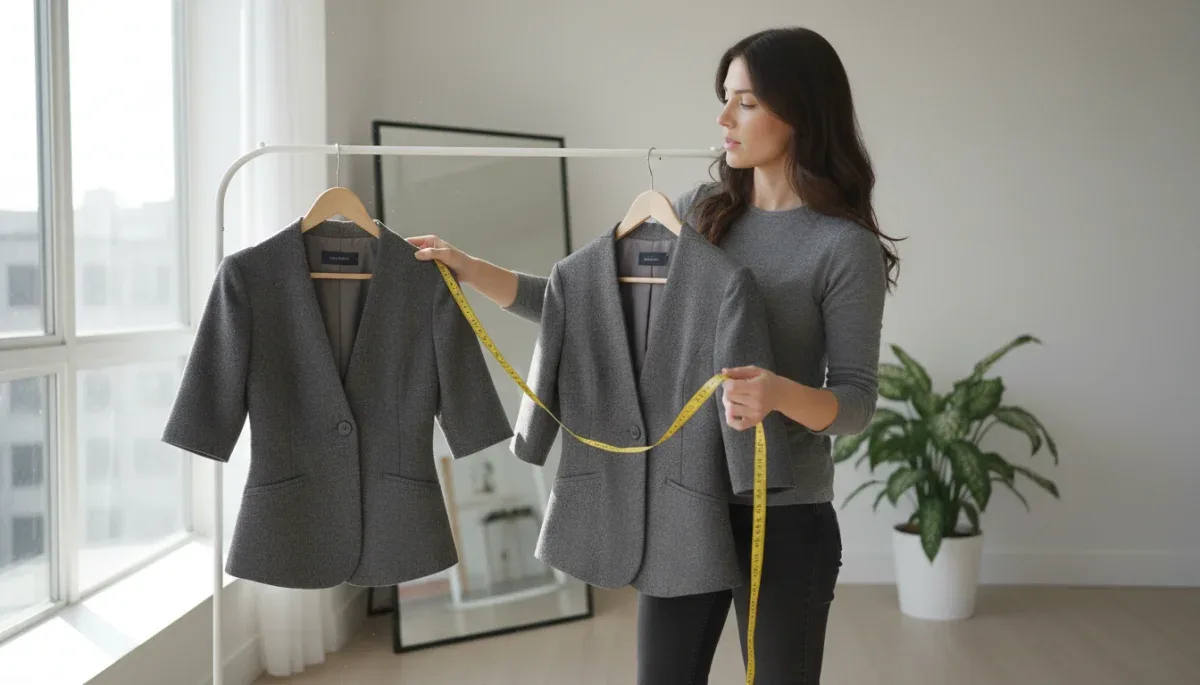
Jackets and structured coats highlight these fit discrepancies even more clearly. In a regular cut blazer, the armhole is positioned lower on the torso. If your underarm sits higher than the garment armhole, raising your arms pulls the entire body of the jacket upward, creating strain across the back and shoulders. Furthermore, the elbows of regular jackets often rest past the wearer's forearm, causing unnecessary creases and restricting movement. A petite blazer reduces sleeve length and raises the elbow contouring to match natural arm articulation.
Dresses require careful attention because a single connected piece of fabric must align with three major anatomical markers: the bust, the natural waist, and the hips. In regular dresses, particularly bodycon or tailored sheath styles, the curve designed for the hip shelf can sit around the mid-thigh of a shorter person. This misplaced volume creates excess fabric wings where no curvature exists. Petite dresses adjust these horizontal anchor points vertically along the silhouette so that fabric curves meet actual body contours.
Inseams, rise, and leg shaping in pants and skirts
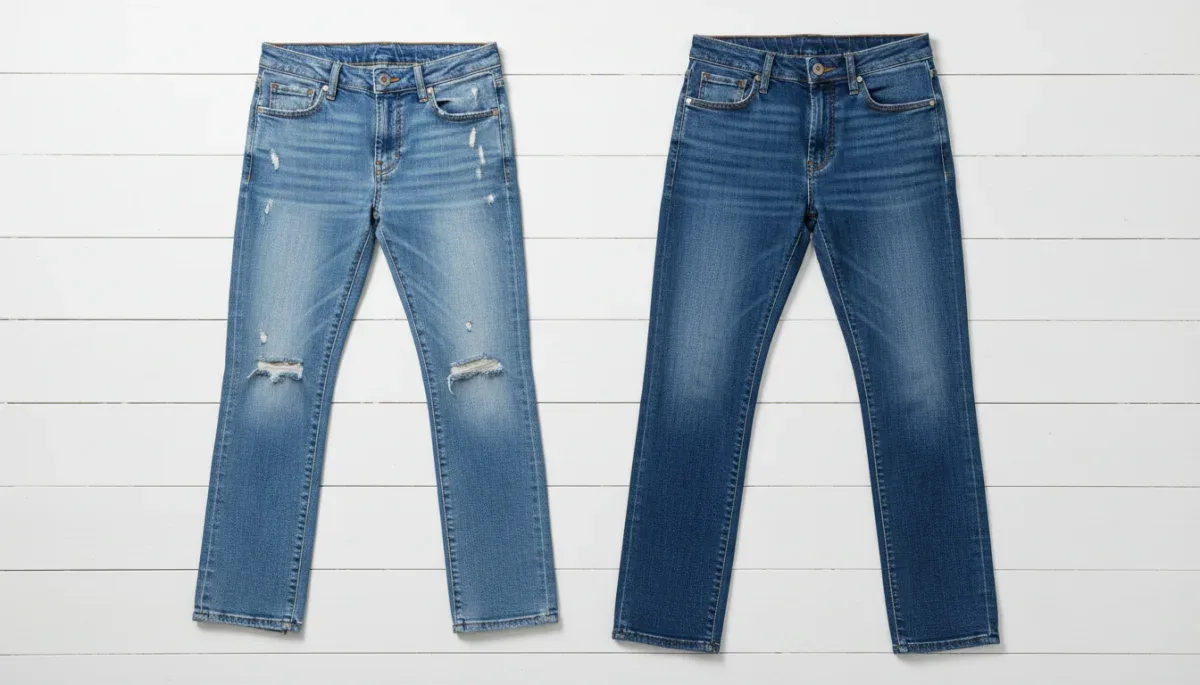
Bottoms involve more than just shortening the leg opening. While many shoppers believe that rolling up or hemming a regular pair of trousers solves the fit problem, doing so often neglects the critical balance of the rise, hip curve, and knee placement. Pants are drafted with specific transition points, and shortening only the hem can result in an awkward silhouette.
The rise of a pant refers to the distance from the middle of the crotch seam to the top of the waistband. Regular pants feature longer front and back rises designed for longer pelvises. On a shorter frame, regular high-rise trousers can extend upward toward the rib cage, while regular mid-rise pants function like high-rise pants. Petite pants feature shorter rises that allow the waistband to settle at the intended anatomical point, eliminating excessive sagging fabric beneath the crotch.
Knee placement is another overlooked factor in pant construction. Straight-leg, bootcut, and flared jeans are designed to narrow slightly around the knee before widening down toward the ankle. In a regular pair of flared pants worn by someone under five feet four inches, that narrowing happens around the upper calf. Hemming the bottom off a regular flared pant often removes the entire flare, leaving a boxy, disproportionate leg. Petite trousers position the knee taper several inches higher on the leg, allowing the flare or straight silhouette to begin and finish where the designer intended.
Comparison of standard pant dimensions
- Regular inseams typically measure between thirty and thirty-two inches, whereas petite inseams range from twenty-six to twenty-nine inches.
- The front rise on a petite pant is generally one-half to one inch shorter than its regular counterpart.
- The back rise is contoured with a reduced slope to prevent excess fabric under the seat.
- The knee break point is raised approximately one to two inches higher up the trouser leg.
How to read retailer size charts before buying
Because there is no universal legal standard for garment dimensions in the clothing industry, one brand's petite category might align with another brand's regular short sizing. When shopping on budget fashion platforms or multi-brand websites, relying strictly on alphabetical size tags such as S, M, or L can lead to sizing mistakes. Accurate ordering requires comparing your actual body measurements against published garment dimension tables.
To evaluate a garment before purchasing, measure your body using a flexible measuring tape while standing naturally without shoes. The three most critical measurements for evaluating vertical fit are total inseam, shoulder width, and torso length. Measure your inseam from the upper interior of your thigh down to the ankle bone. For torso length, measure from the base of your neck at the back down to your natural waistline, which is located at the bend when you lean sideways.
Many fast-fashion retailers use the label "Petite" to describe items that are simply cut smaller in overall width, rather than re-engineered for shorter frames. If a size chart lists a petite inseam as thirty inches, that garment is likely not drafted as a true petite product. Always cross-check the garment length specification, which is frequently listed under product details. If a mini skirt is listed with a total length of eighteen inches, compare that number directly against your body using a measuring tape to see where the hemline will fall on your thigh.
When regular fit can work better for shorter frames
Being five feet four inches or under does not mean you must purchase exclusively from petite sections. Human bodies have varied proportional distributions. Some individuals have a short torso combined with relatively long legs, while others have a longer torso paired with shorter legs. Identifying your personal body distribution determines when buying from regular sections provides a superior fit.
If you have long legs and a short torso, standard regular pants may fit your leg length accurately, while regular tops may require too much tailoring. In this situation, purchasing regular bottoms and petite tops creates a balanced silhouette. Conversely, if you have a long torso and shorter legs, regular tops and jackets will accommodate your torso length without feeling cropped, while your pants will almost certainly need to come from the petite section to match your inseam.
Certain garment styles also offer natural flexibility across sizing categories. Relaxed, oversized, or unconstructed silhouettes often bypass strict vertical fit requirements. A boxy, drop-shoulder sweater from a regular line can drape comfortably on a shorter person without appearing ill-fitting because there are no defined shoulder seams or bust darts to misalign. Similarly, skirts with elasticized waistbands can be adjusted higher or lower on the waist to achieve the desired hem length.
At a glance
| Garment Factor | What to Know |
|---|---|
| Target Height | Designed for bodies measuring five feet four inches (162 cm) or shorter. |
| Vertical Placement | Bust darts, waistlines, and knee breaks are raised one to two inches. |
| Circumference | Bust, waist, and hip widths remain similar to matching regular numeric sizes. |
| Sleeve and Inseam | Inseams and sleeve lengths are reduced by approximately two to three inches. |
Frequently asked questions
Is petite sizing the same as buying a smaller regular size?
No, a smaller regular size reduces both width and length simultaneously, often resulting in garments that are too tight across the bust or hips. Petite sizing maintains proportional width while reducing vertical distances like torso length, rise, and sleeve drop.
Can someone who is five feet six inches wear petite clothing?
Yes, individuals above five feet four inches can wear petite garments if they have an exceptionally short torso or shorter arms. In those cases, petite tops, cropped blazers, or petite outerwear may fit their upper body proportions better than regular items.
What is the difference between petite and short sizes in pants?
Short sizes generally take a regular pant pattern and trim the hem length, leaving the standard rise and knee position untouched. True petite pants re-engineer the entire pattern, featuring a shorter rise, raised knee placement, and reduced inseam.
Why do regular blazers look disproportionate on shorter frames?
Regular blazers feature lower armholes, wider shoulder spans, and lower waist contours. On a shorter frame, these design choices pull the jacket out of alignment, causing fabric bunching at the lower back and excessive sleeve length past the hands.
The bottom line
Petite sizing is a matter of anatomical proportion, not a measure of body width or weight. Choosing petite garments allows waistlines, necklines, bust darts, and pant rises to sit where the designer intended, preventing costly tailoring bills and unflattering fabric bunching. Before completing any apparel purchase on an online store, confirm the specific garment measurements against your own inseam and torso measurements on the retailer's published size chart.
Written by
Lucas Bastos
Lucas Bastos writes about house, clothes and discounts for onlyshein.com. Each article explains how things work, compares published details such as prices, policies and program rules, and points readers to the official source before they decide.