
Comparing nylon and polyester linings in winter jackets
Ads
Nylon linings offer superior tear resistance and a smoother glide over knitwear, whereas polyester linings provide better moisture resistance and lower retail prices. Choosing between a nylon vs polyester lining depends largely on whether you prioritize long-term abrasion resistance or budget-friendly moisture management in cold weather conditions.
Ads
This comparison helps shoppers evaluating affordable and mid-tier winter coats online who want to know what the garment tag actually means for daily comfort. The catch is that outerwear brands frequently use specialized trade names like taffeta, ripstop, or microfleece without clearly stating the base polymer, making it easy to mistake a basic polyester weave for a high-strength nylon shell.
Ads
How fabric construction shapes coat linings
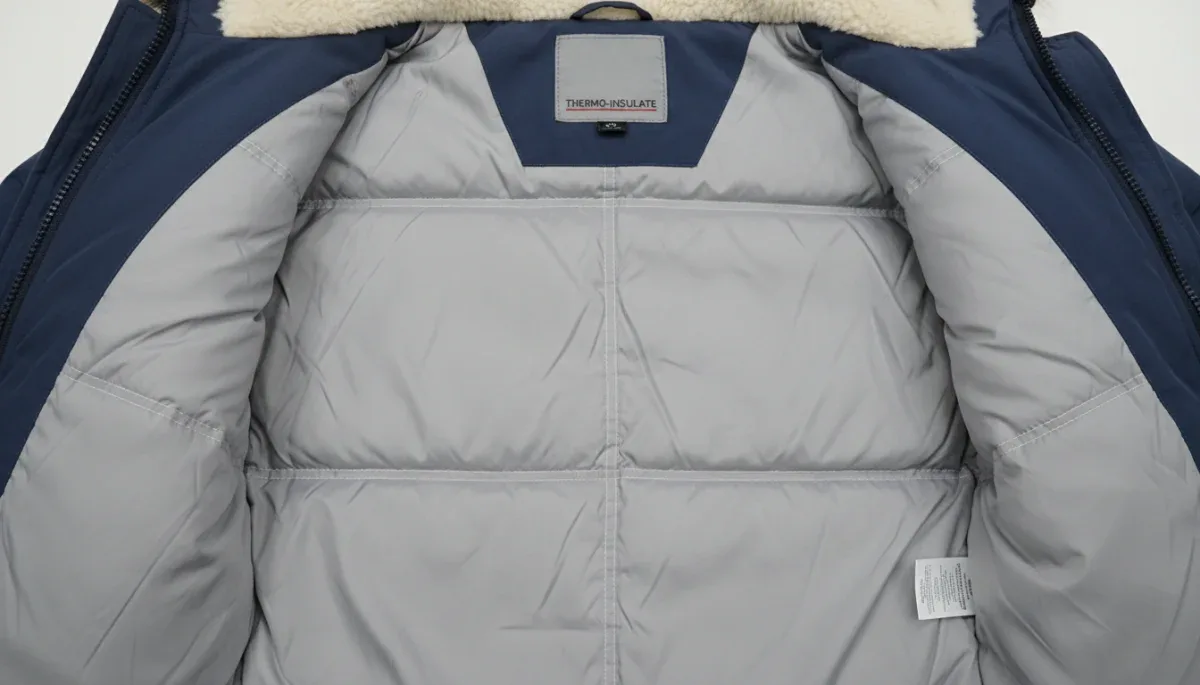
The interior layer of a winter jacket serves three functional purposes: protecting insulation, facilitating easy dressing, and managing personal comfort against your skin or inner clothing layers. Both nylon and polyester belong to the synthetic polymer category, yet their chemical backbones create distinct physical behaviors when extruded into fine fibers and woven into textile linings.
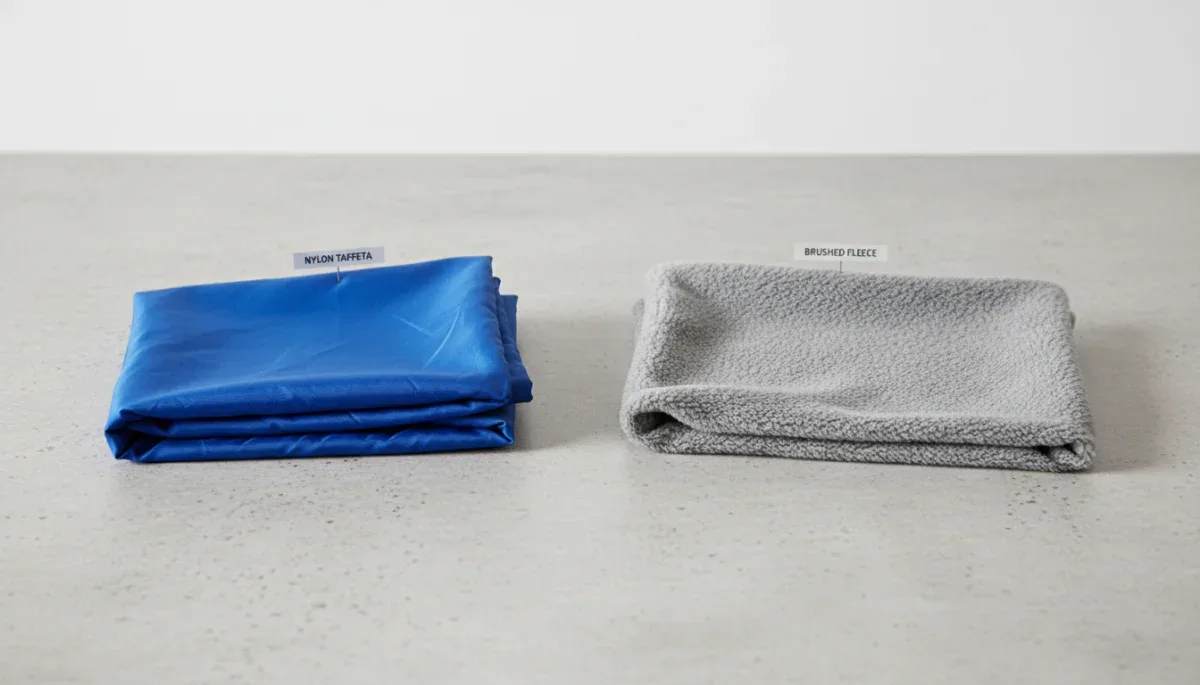
Nylon, chemically known as a polyamide, possesses an inherently high tensile strength and higher natural elasticity. When manufacturers weave polyamide fibers into lining fabrics, they produce an exceptionally smooth surface with a slight sheen. This slippery finish reduces friction dramatically, allowing your sweater or long-sleeve thermal shirt to slip into the sleeve without bunching or catching on internal seams.
Polyester, or polyethylene terephthalate, consists of ester functional groups that yield stiffer, more dimensionally stable fibers. While basic polyester filament linings can feel marginally less silky than nylon counterparts, modern texturing processes allow polyester to mimic satin, taffeta, or cozy brushed fleece. Because polyester absorbs virtually zero moisture from ambient air, it dries rapidly and maintains its structural integrity even after repeated machine wash cycles.
Common weave types found in jacket interiors
- Taffeta weave: A crisp, plain-woven fabric with fine horizontal ribs that provides a smooth, snag-resistant surface for effortless sleeve entry.
- Satin weave: A lustrous structure with floating yarns that yields a silky hand feel, often utilized in dress coats and tailored wool overcoats.
- Brushed fleece: A raised polyester pile that traps still air directly against the body for immediate, soft-touch warmth along the collar and upper back panels.
- Ripstop grid: An interlocking grid of reinforced threads that halts small tears from expanding across the lightweight fabric lining.
Durability and abrasion resistance over daily wear
A winter jacket interior faces constant friction from rough denim rivets, belt buckles, textured wool pullovers, and internal pocket items like keys and smartphone edges. When comparing a nylon vs polyester lining for sheer endurance, nylon remains the stronger polymer pound for pound. Polyamide fibers absorb friction without fraying or pill formation, which prevents the lining from wearing thin at the underarms and lower hemline.
Polyester linings are adequately durable for casual seasonal use, but lower-denier iterations can suffer from surface pilling when rubbed repeatedly against coarse knitwear. Over two or three seasons of heavy commuting, an entry-level polyester lining might develop friction fuzz or stress tearing along sleeve cuff openings where your wrists repeatedly pull against the seam allowance.
That durability difference is why mountaineering gear, heavy-duty work parkas, and expedition shells overwhelmingly utilize nylon linings. The material handles high-stress flexing without breaking down. However, polyester linings hold their shape exceptionally well and rarely stretch out of alignment, ensuring the interior lining does not sag below the coat hem after repeated cleanings.
Moisture handling and heat retention in cold climates
Thermal comfort inside a winter coat depends not just on the insulation fill, but on how the adjacent lining manages vapor produced by normal body perspiration. Neither nylon nor polyester acts as a natural insulator on its own when woven as a flat sheet. Instead, their job is to sit flush against the down or synthetic batting, keeping heat-trapping air pockets intact while transferring moisture away from your base layers.
Polyester is naturally hydrophobic, holding less than one percent of its weight in water under normal ambient conditions. If you begin to sweat during a fast walk to the train or while shoveling fresh snow, polyester moves moisture vapor toward the outer shell efficiently. It will not retain clammy dampness against your mid-layers, allowing you to dry out quickly once your activity level slows down.
Nylon absorbs up to four percent of its weight in moisture, making it slightly more hydrophilic than polyester. While four percent seems modest, it means a nylon lining can hold onto humidity longer in freezing environments, creating a chilly sensation against your skin if you sweat heavily inside an unvented parka. Nylon works best in dry cold or when paired with highly breathable insulations, whereas polyester excels across damp, wet-snow conditions.
Performance factors in freezing weather
- Initial skin contact: Flat nylon feels noticeably colder against bare skin upon first putting on the coat than brushed polyester.
- Static buildup: Both synthetics generate static cling in dry indoor air, though untreated polyester tends to hold electrical charges slightly longer.
- Wind blockage: Tight nylon weaves stop drafting winds more effectively than porous, budget-grade polyester plain weaves.
- Odor retention: Polyester fibers trap bacterial body oils more readily, requiring dedicated odor-neutralizing detergent over time.
Weight, drape, and freedom of movement
The total weight of a winter jacket influences how tiring it feels during extended outdoor errands or winter travel. Nylon boasts an exceptional strength-to-weight ratio, allowing garment designers to specify ultralight fabric linings that weigh mere ounces without sacrificing tear security. Lightweight packable down jackets and compressible travel coats rely almost universally on gossamer nylon linings to maintain compact packability.
Polyester lining fabrics are generally denser to achieve comparable tensile security. In heavier city overcoats and casual cold-weather parkas, this additional heft can provide a welcome sense of substance and clean, structured drape. A jacket lined with medium-weight polyester hangs straight without the crinkly sound or parachute-like feel that sometimes accompanies ultralight nylon.
Movement comfort also hinges on surface friction. If your lining catches against your shirt sleeves, the jacket twists across your back whenever you reach forward to drive or lift groceries. Nylon taffeta provides near-frictionless gliding, eliminating arm bind. While polyester can be finished to achieve a similar slip, lower-cost polyester fabrics often produce minor drag against ribbed cotton sweaters or dense flannel button-downs.
Care requirements and cleaning sensitivity
Winter outerwear inevitably picks up salt stains, makeup smudges around the collar, and food spills from daily use. Knowing how these synthetic linings respond to heat, detergent, and agitation prevents accidental shrinkage or lining separation during routine maintenance. Fortunately, both materials wash easily in residential washing machines, but their temperature thresholds vary substantially.
Polyester handles moderate laundering heat with ease. It resists thermal distortion and will not wrinkle heavily when dried on low machine settings. Polyester also tolerates conventional laundry detergents without losing its soft texture or experiencing color bleeding, making it a low-stress option for everyday family winter garments.
Nylon requires cooler water and gentle drying cycles because polyamide fibers weaken and warp when exposed to direct, sustained heat. Placing a nylon-lined coat in a high-temperature commercial dryer can melt internal microfibers, leading to puckered seams or permanent stiffness across the back panels. Furthermore, nylon exhibits sensitivity to sunlight and prolonged ultraviolet radiation, though interior jacket linings rarely face direct sun exposure.
Production costs and sustainability considerations
Price differences between off-the-rack winter coats often trace back to the fiber selection inside the hidden panels. Nylon raw materials cost more to synthesize and spin than polyester equivalents, driving up the baseline manufacturing expense of coats that utilize full nylon linings. When shopping budget fashion storefronts, finding a jacket under one hundred dollars with an authentic high-denier nylon interior is increasingly rare.
Polyester dominates affordable apparel because of economical global supply chains and efficient spinning methods. This price advantage does not necessarily denote poor quality; instead, it allows manufacturers to allocate budget toward heavier insulation or weather-treated outer shells while keeping retail price points accessible to average shoppers.
Environmental trade-offs exist for both petrochemically derived fabrics. Recycled polyester, manufactured from post-consumer plastic beverage containers, is now widely standardized across budget and outdoor brands alike. Recycled nylon is expanding rapidly, primarily sourced from discarded fishing nets and industrial carpet scraps, though its processing demands more energy. Both textiles shed synthetic microfibers during washing, underscoring the value of spot-cleaning outer coats rather than laundering them excessively.
At a glance
| Feature | What to know |
|---|---|
| Abrasion resistance | Nylon withstands heavy interior friction without thinning, while polyester can pill over multiple seasons of daily wear. |
| Moisture management | Polyester absorbs less than one percent moisture to dry faster, whereas nylon holds humidity slightly longer. |
| Layering ease | Nylon provides a slicker glide over textured knitwear, while budget polyester can occasionally drag against cotton. |
| Care and heat | Polyester tolerates standard low-heat drying, while nylon can warp or melt if exposed to high laundering temperatures. |
Frequently asked questions
Which lining material is warmer in freezing weather?
Neither material provides substantial warmth on its own unless woven into a thick fleece. A flat nylon lining blocks interior drafts slightly better, but a brushed polyester lining feels warmer immediately against cold skin because its raised fibers trap pockets of body heat.
Can a polyester jacket lining cause excessive sweating?
A dense, non-breathable polyester lining can trap humid air if the jacket lacks proper ventilation. However, polyester itself does not absorb moisture, so pair it with breathable base layers to allow vapor to pass outward rather than condensing inside the coat.
How do you tell nylon and polyester apart on a label?
Garment care labels inside the lower side seam list the fiber content of the shell, lining, and filling separately. Look for polyamide, which is the technical textile term for nylon, while polyester will be stated explicitly or noted under trade names like Dacron.
Does nylon lining make a winter jacket more expensive?
Yes, nylon generally increases the retail cost of a winter coat due to higher polymer manufacturing and dyeing expenses. Garments with full nylon linings typically sit in mid-tier to premium outdoor categories rather than extreme budget fast fashion collections.
The bottom line
Nylon delivers maximum tear resistance and effortless sleeve glide for active wear, while polyester offers superior moisture evaporation and dependable performance at a more accessible price point. For basic city commuting and dry cold, a polyester interior provides reliable, low-maintenance insulation protection. If you frequently wear heavy textured knits or need your coat to survive seasons of rigorous outdoor use, seek out nylon. Before buying, check the inner sewn-in material tag to confirm whether the lining matches the outer shell fiber.
Written by
Lucas Bastos
Lucas Bastos writes about house, clothes and discounts for onlyshein.com. Each article explains how things work, compares published details such as prices, policies and program rules, and points readers to the official source before they decide.