
How GaN and silicon chargers compare for travel
Ads
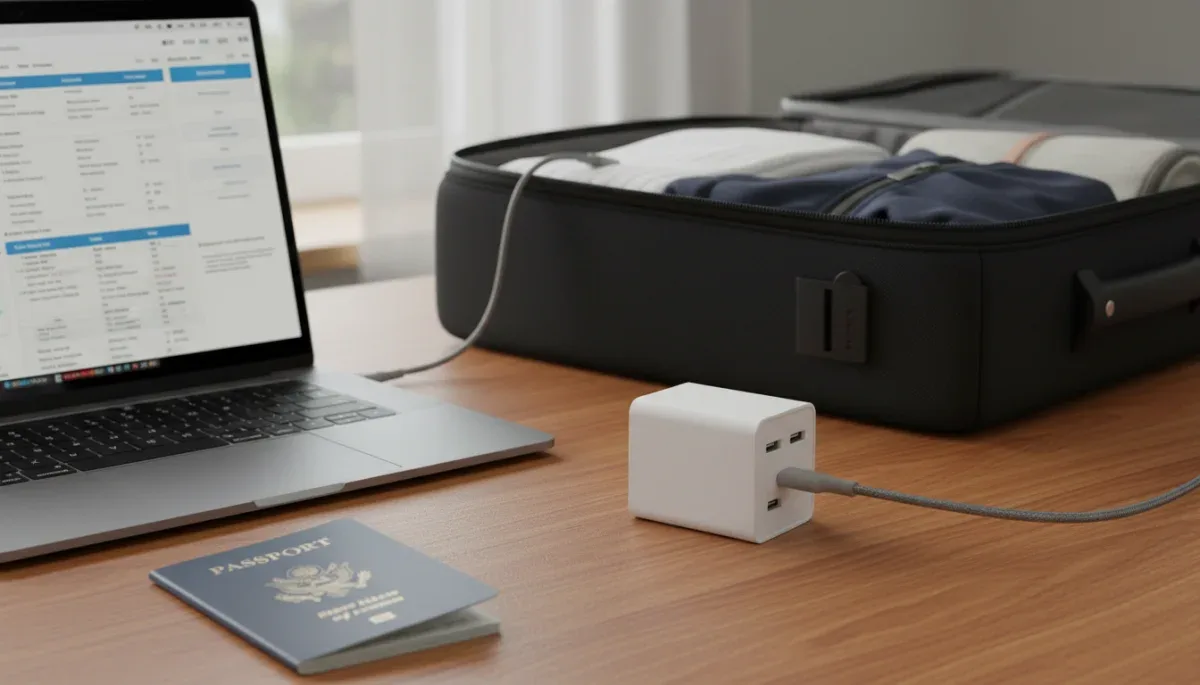
GaN chargers offer significantly smaller dimensions, lower operating temperatures, and higher wattage outputs than traditional silicon chargers, making them more practical for packing into carry-on luggage. Choosing GaN chargers for travel helps mobile workers, international travelers, and minimalist packers reduce clutter by replacing several single-device plugs with one lightweight unit, though they generally carry a higher retail price tag than legacy silicon bricks.
Ads
Silicon has served as the baseline semiconductor material for consumer electronics power supplies for decades, establishing standard expectations for bulk, weight, and heat dissipation during everyday use. As personal travel demands more portable power for phones, tablets, smartwatches, and laptops simultaneously, the physical limits of silicon components have created bulky power bricks that take up excessive space in personal bags and travel packs.
Ads
Understanding the shift from silicon to gallium nitride
Silicon has long been the primary semiconductor used in electronic charging circuits due to its abundance, well-established manufacturing processes, and low production costs. In a standard silicon wall charger, alternating current from an electrical outlet is converted into direct current suitable for battery storage through a sequence of internal switches, transformers, and capacitors. However, silicon possesses intrinsic physical boundaries regarding electrical conductivity and thermal limits. When manufacturers attempt to push higher amounts of power through silicon components in small enclosures, electrical resistance creates notable heat loss, which demands larger heatsinks and thicker casings to prevent overheating.
Gallium nitride, commonly abbreviated as GaN, is a wide-bandgap semiconductor material that conducts electrons far more efficiently than silicon. Because the bandgap of gallium nitride is roughly three times wider than that of silicon, electrical current moves through internal components at higher switching speeds without generating the same level of waste heat. This material property allows engineers to place internal components closer together without compromising electrical safety or component longevity.
Core technical distinctions between charging semiconductors
- Bandgap width: Gallium nitride features a 3.4 electron-volt bandgap compared to 1.1 electron-volts for standard silicon, allowing higher voltage operation.
- Energy conversion efficiency: Higher switching speeds in GaN circuits reduce energy loss during conversion, keeping more energy directed into connected devices.
- Physical volume: GaN internal circuits require substantially smaller transformers and passive cooling hardware to manage identical wattage tiers.
- Thermal limits: GaN components can withstand significantly higher internal junction temperatures before suffering performance degradation.
For everyday travelers, these chemical and electrical differences translate directly into practical utility. Rather than packing a separate 65-watt power brick for an ultraportable laptop and two smaller 20-watt bricks for mobile phones and digital readers, a single multiport GaN unit can manage all three loads while maintaining a physical footprint smaller than an original single-port silicon laptop brick.
Size and weight differences in your carry-on luggage
Physical luggage allowances established by airlines make the volume and mass of packed electronics an essential consideration. Standard airline carry-on weight limits for domestic U.S. carriers are rarely enforced on personal items, but international carriers frequently enforce strict limits between seven and ten kilograms for all cabin baggage combined. Heavy silicon charging bricks, especially those equipped with long, thick proprietary AC power cables, consume a disproportionate percentage of that weight allowance.
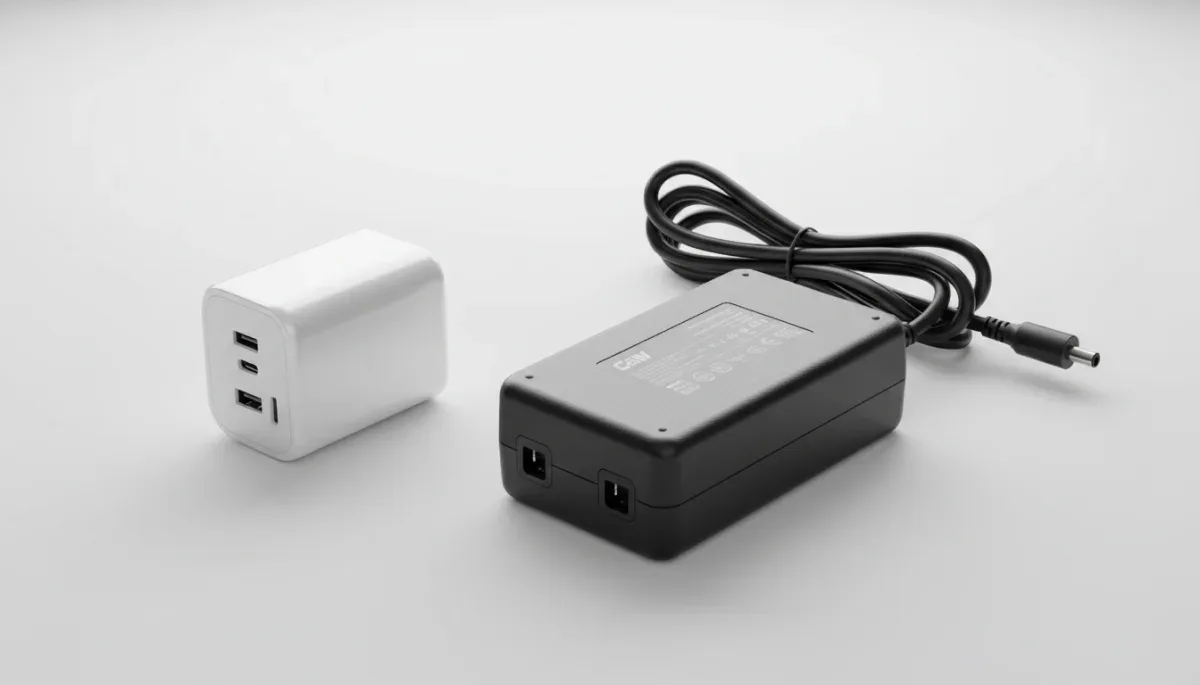
Traditional silicon laptop chargers rated between 60 watts and 100 watts frequently weigh between 250 grams and 450 grams, excluding wall cords. In contrast, modern GaN chargers delivering identical or greater power ratings generally weigh between 100 grams and 220 grams. The reduction in physical volume is equally significant, as GaN units typically measure 30 percent to 50 percent smaller than comparable silicon counterparts with equivalent power output specifications.
Beyond simple scale readings, the exterior profile of a charger impacts practical packing ergonomics. Silicon bricks frequently use elongated rectangular designs with heavy three-prong cables that do not fold or compress easily inside tight tech pouches. Many GaN travel chargers integrate foldable AC prongs directly into the main housing, creating a smooth, cubical or compact rectangular shape that slides cleanly into laptop sleeve pockets or accessory organizers without puncturing adjacent fabric or scratching delicate screen surfaces.
Heat management and thermal efficiency during long trips
Charging devices inside airport terminals, hotel rooms, or shared transportation spaces often means plugging into power outlets located in confined or poorly ventilated areas. Heat generation is one of the primary indicators of energy inefficiency in charging hardware, representing wasted electrical power that dissipates into the ambient environment rather than transferring into device batteries.
Silicon-based chargers rely heavily on passive heat dissipation through thermal pads, internal copper spreaders, and physical exterior surface area. When a silicon charger runs at sustained maximum output, such as during the rapid charging phase of an empty laptop battery, the outer casing can become uncomfortably warm to the touch. In cramped airline seat pockets or tight hotel bedside setups, high operating temperatures can trigger thermal throttling mechanisms that deliberately slow down charging speeds to safeguard internal components.
Thermal behaviors observed under continuous load
- Passive cooling reliance: Silicon designs require larger internal air gaps and heat spreaders to shed excess heat across an expanded plastic surface.
- Sustained output retention: GaN chargers maintain peak wattage delivery longer because internal junction temperatures stay well within operational thresholds.
- Exterior touch safety: While both charger types warm up during operation, GaN devices distribute heat more evenly and cool down faster once power draws taper off.
- Enclosure integrity: Lower operating temperatures reduce thermal expansion and contraction cycles, preserving internal solder joints over years of frequent use.
Because GaN architecture yields lower electrical resistance during energy conversion, less electricity transforms into waste heat. This thermal stability helps travelers charge sensitive electronics overnight on nightstands, wooden desks, or bedside tables without the elevated heat concerns associated with aging high-wattage silicon equipment.
Multi-device charging and dynamic power allocation
Modern travel gear rarely consists of a single electronic item. A standard travel kit routinely includes a smartphone, wireless noise-canceling headphones, a tablet or digital e-reader, a portable battery bank, and a laptop. Traditional silicon charging setups generally demand separate wall bricks for each distinct device because adding multiple high-output ports to a single silicon housing results in an unmanageably large, heavy unit.
GaN chargers have accelerated the adoption of multiport power hubs designed around USB Power Delivery, commonly known as USB-PD. Because GaN components fit into dense physical spaces, manufacturers can include two, three, or four USB-C and USB-A ports within a standard pocket-sized form factor. This enables travelers to power their entire mobile setup from a single electrical wall receptacle, which is particularly beneficial in older hotel rooms, trains, or airport waiting areas where available wall sockets are severely limited.
These multiport units incorporate intelligent microcontrollers that manage dynamic power allocation. When a single laptop is connected to a primary port, the charger can direct the full 65-watt or 100-watt capacity to that device. If a smartphone is plugged into the secondary port, the internal controller automatically recalculates the power distribution, allocating 45 watts to the laptop and 20 watts to the phone without interrupting the connection. Silicon multi-port chargers capable of this dynamic balancing exist, but their physical footprint is commonly comparable to a household power strip rather than a pocket accessory.
Durability, voltage fluctuations, and international outlets
International travel introduces irregular electrical environments, ranging from loose wall sockets to regional variations in line voltage and frequency. In the United States, standard wall outlets deliver alternating current at 120 volts and 60 hertz, whereas destinations across Europe, Asia, and Africa commonly supply power between 220 and 240 volts at 50 hertz. Traveling across these regions requires hardware that adapts smoothly across different electrical grids.
Virtually all modern consumer chargers, whether silicon or GaN, support universal input ratings from 100 volts to 240 volts at 50 to 60 hertz. However, physical stability inside wall receptacles differs markedly between the two formats. Loose, worn-out electrical sockets in public lounges or older hotels frequently struggle to support heavy, elongated silicon adapters. The sheer leverage and weight of a traditional silicon power brick can pull the prongs partially out of the wall, interrupting power transfer or creating an electrical arc hazard.
Physical resilience factors for travel use
- Weight distribution: Compact GaN designs keep the center of gravity closer to the wall plate, preventing accidental disconnection from loose wall sockets.
- Connector strain: Modular USB-C cables detached from the GaN wall brick reduce strain on fixed proprietary cords that frequently fray on silicon units.
- Adapter plug stability: Snap-on international travel adapters attach more securely to lightweight GaN housings than to heavy, cantilevered silicon bricks.
- Vibration and impact tolerance: Dense surface-mount GaN components withstand drops, pack compression, and transit vibration with minimal internal displacement.
When selecting accessories for cross-border trips, pairing a multi-country mechanical plug adapter with a lightweight GaN charger provides a stable, low-profile connection that remains seated firmly against wall surfaces, even when using vertical adapters in older European or British sockets.
Value comparison and cost considerations for travelers
While gallium nitride chargers provide clear technical advantages in size, thermal control, and portability, traditional silicon chargers retain an advantage in upfront purchase pricing. Gallium nitride manufacturing requires specialized wafer fabrication facilities and proprietary layering techniques that remain more costly to produce on a commercial scale than standardized silicon crystal ingots.
At the time of writing, basic single-port 20-watt silicon wall adapters frequently retail between eight and fifteen dollars, making them inexpensive replacement purchases if left behind in a hotel room. In comparison, brand-name GaN chargers delivering between 65 watts and 100 watts across multiple ports generally range between thirty and seventy dollars, depending on total wattage, port configuration, and supported fast-charging protocols. Budget-conscious consumers must evaluate whether the space savings and multi-device capabilities justify the higher initial financial outlay.
For individuals who travel infrequently and only need to charge a single smartphone overnight, an existing silicon charger provides reliable functionality without additional investment. However, for regular commuters, business travelers, and vacationers managing multiple devices simultaneously, the cost of one versatile GaN charger is often lower than purchasing three separate silicon OEM replacement adapters for a laptop, tablet, and phone.
At a glance
| Feature | What to know |
|---|---|
| Physical size and mass | GaN chargers are approximately 30 to 50 percent smaller and noticeably lighter than equivalent silicon chargers. |
| Operating temperature | GaN conducts current with higher efficiency, resulting in less waste heat and more consistent sustained output. |
| Port configurations | GaN units routinely feature multiple USB-C and USB-A ports to charge several devices from a single wall outlet. |
| Retail purchase price | Silicon chargers remain less expensive upfront, while GaN units command a moderate price premium for compact convenience. |
Frequently asked questions
Can a GaN charger damage smaller electronics like smartwatches or earbuds?
No, a GaN charger will not damage low-power devices. Modern chargers use smart communication chips that negotiate the exact voltage and current required by the connected device. Your earbuds or watch will only draw the small amount of power they are designed to receive safely.
Do GaN chargers charge compatible devices faster than silicon chargers?
No, charging speed is determined by the supported charging protocol and wattage, not the semiconductor material itself. A 65-watt silicon charger and a 65-watt GaN charger will charge a device at the same speed, but the GaN unit does so in a smaller, cooler package.
Are GaN chargers safe to use with international outlet adapters?
Yes, GaN chargers are safe with international plug adapters provided their label lists 100 to 240 volts input. Their compact dimensions and lighter weight actually make them safer, as they are far less likely to sag or pull loose from international wall adapters.
Can I use my existing cables with a new GaN travel charger?
Yes, provided your cables feature matching connectors such as USB-C or USB-A. However, to achieve maximum charging rates above 60 watts for modern laptops, you must use a certified USB-C cable rated specifically for 100 watts or higher.
The bottom line
GaN chargers represent a superior technical option for travel bags due to their compact physical footprint, exceptional thermal management, and multiport convenience, allowing travelers to consolidate multiple bulky silicon power bricks into a single pocketable unit. While standard silicon chargers remain a functional, budget-friendly baseline for home nightstands, upgrading to GaN streamlines luggage and simplifies daily charging on the road. Before making a purchase, always verify your laptop or primary device's minimum required wattage and confirm that the charger supports your device's specific fast-charging protocol.
Written by
Maria Eduarda
Maria Eduarda writes about discounts, house and electronics for onlyshein.com. Each article explains how things work, compares published details such as prices, policies and program rules, and points readers to the official source before they decide.