
Advertisements
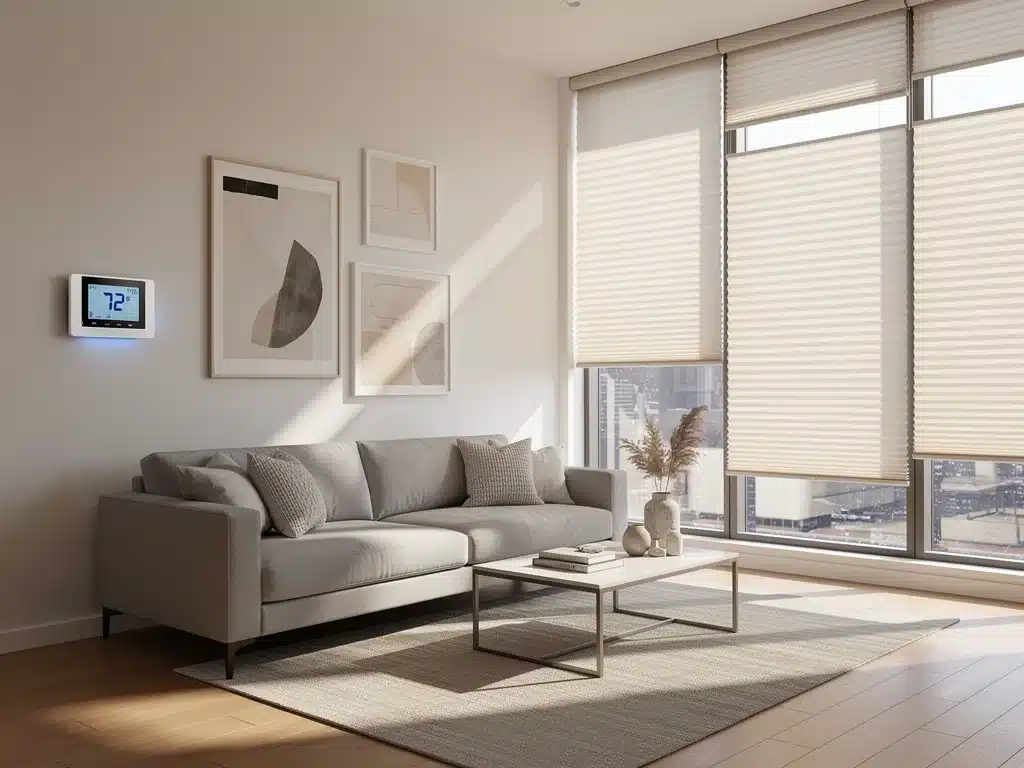
Insulated window treatments can reduce unwanted solar heat gain and improve comfort during hot weather, particularly when they are properly fitted and operated at the right times.
Cellular shades are among the strongest interior options studied by the U.S. Department of Energy, although actual savings vary substantially by climate, window orientation and user behavior.
Instead of promising one universal percentage reduction, homeowners should focus on selecting efficient products, controlling direct sunlight and combining window treatments with broader home-efficiency improvements.
Advertisements
Why Windows Affect Summer Cooling Demand
Windows connect indoor spaces directly with outdoor temperatures and sunlight, making them an important part of a home’s overall thermal performance.
During warm weather, solar radiation passing through glass can heat floors, furniture and other indoor surfaces, increasing the amount of cooling required.
Window coverings can reduce part of that heat gain while also influencing air movement and heat transfer near the interior surface of the glass.
Advertisements
Heat Moves in More Than One Way
Conduction transfers heat through materials, while convection moves energy through air circulating around warmer and cooler surfaces.
Radiation, including solar energy entering through windows, can directly warm interior surfaces even when the outdoor air itself is not entering the room.
An effective window attachment can influence several of these pathways, although performance depends heavily on construction, glazing and installation.
- Conduction moves heat through glass and surrounding materials.
- Convection transfers heat through moving air near the window.
- Solar radiation can warm interior surfaces directly.
Windows Are Only One Part of the Cooling Load
Roof insulation, air leakage, internal appliances, outdoor humidity and building orientation also affect how much energy an air conditioner consumes.
This means improving window performance can help without necessarily producing the same percentage reduction in every home’s total electricity bill.
The strongest strategy evaluates windows alongside the rest of the building envelope instead of treating one product as a complete cooling solution.
Cellular Shades Have Strong Energy-Saving Evidence
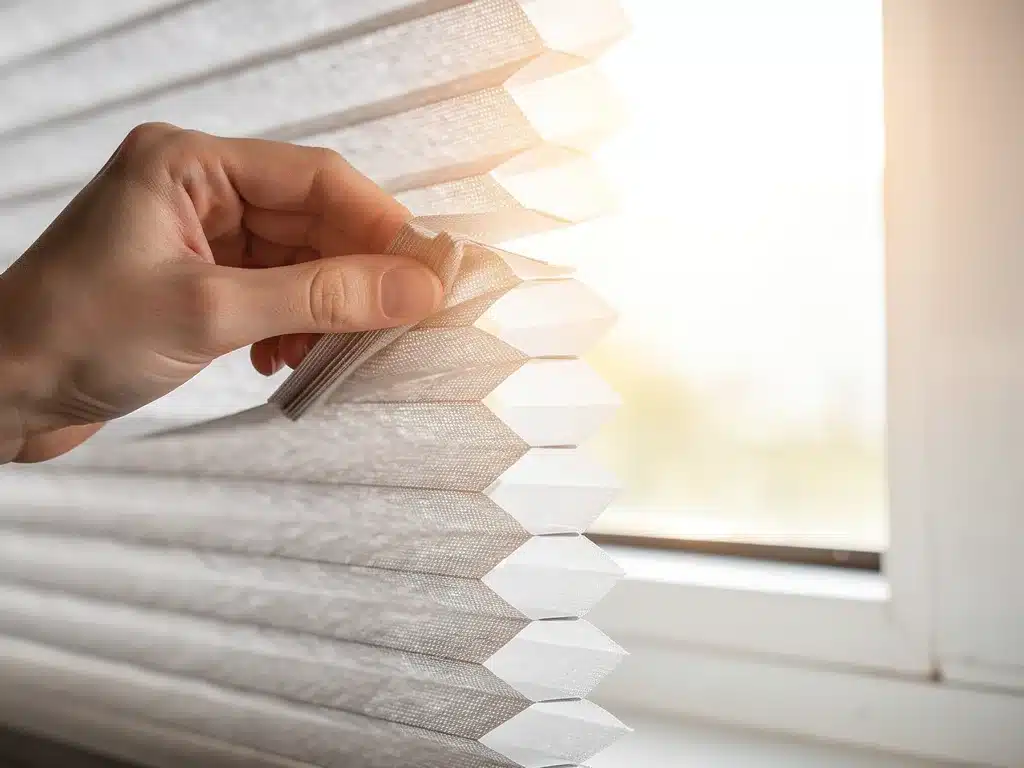
Cellular shades use folded fabric to create honeycomb-shaped air pockets that add insulating resistance between the room and the window.
Department of Energy research found that well-designed cellular shades can outperform conventional vinyl blinds in overall energy performance.
The advantage comes from both trapped air and, in some products, surfaces designed to reduce radiant heat transfer through the window assembly.
Do Not Treat One Savings Percentage as Guaranteed
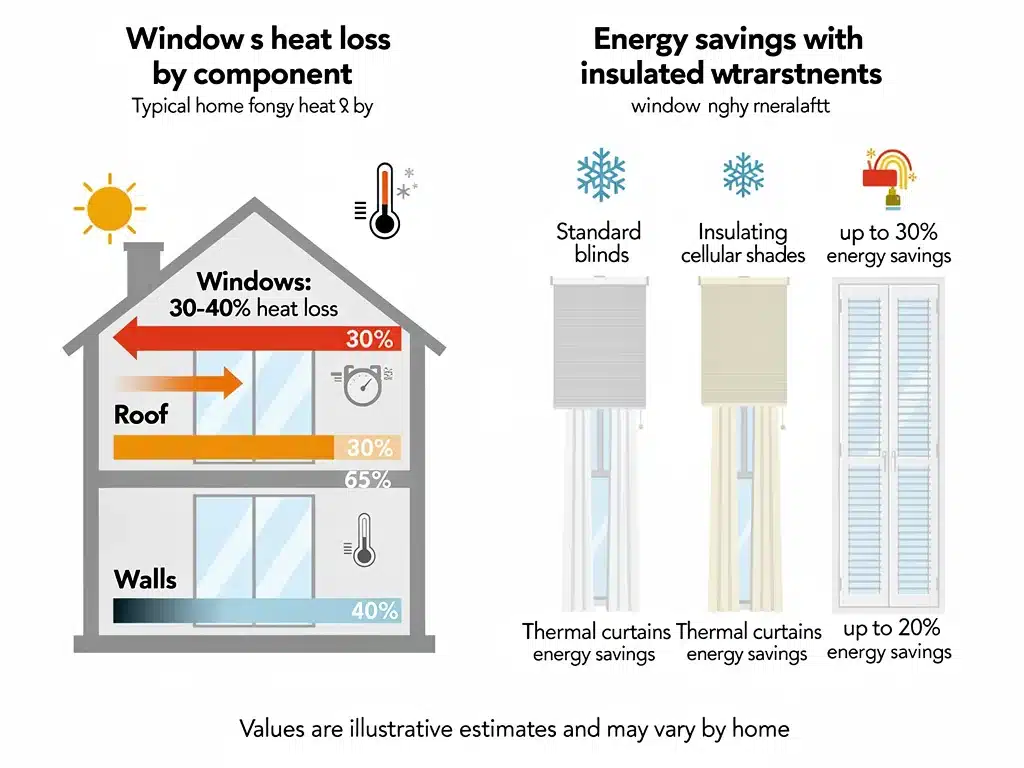
DOE modeling found cellular shades could save up to 15% of total heating and cooling energy compared with having no shades.
Summer testing found roughly 6% to 15% HVAC savings under typical-use conditions compared with conventional blinds, depending on how the shades were operated.
More controlled scenarios produced higher results, showing that operation and window exposure can matter almost as much as the product itself.
Orientation Makes a Major Difference
South- and west-facing windows can receive intense afternoon solar exposure, making shading particularly valuable during hot periods.
Research found much lower savings when high-heat-gain windows were left uncovered during summer even though other cellular shades remained in use.
Prioritizing the windows receiving the strongest sunlight can therefore provide more practical value than treating every window identically.
Other Window Treatments Can Also Reduce Heat Gain
Cellular shades are not the only option, and homeowners may prioritize appearance, light control, cost or ease of installation differently.
Insulated curtains, shutters, blinds and films can all influence solar heat gain or thermal transfer, although their performance varies significantly.
Readers considering broader improvements can compare these options with additional home energy efficiency updates.
Insulated Drapes Depend on Fit
Heavy or lined curtains can reduce heat exchange more effectively when they remain close to the window and limit airflow around their edges.
Extending fabric beyond the window opening can improve coverage, particularly where strong direct sunlight reaches the glazing for several hours.
However, fabric composition and installation vary widely, so the word “thermal” alone does not establish a specific energy-performance level.
Window Film Works Differently From Insulating Shades
Window films are applied directly to glazing and can reduce particular portions of solar energy before they enter the room.
Their performance should be evaluated through measures such as solar heat gain and compatibility with the existing window rather than insulation alone.
Some glazing systems can have restrictions on aftermarket films, so manufacturer guidance should be checked before permanent installation.
Installation Strongly Affects Performance
A high-performing shade can lose part of its advantage when large gaps allow air movement or sunlight around the edges.
Accurate measurements help the treatment cover the intended glass area while still allowing safe and reliable daily operation.
The appropriate mounting method depends on the product, window geometry and whether the primary goal is appearance, light control or energy performance.
Inside and Outside Mounts Serve Different Needs
An inside mount creates a clean appearance because the treatment sits within the window opening, but edge gaps may remain around some products.
An outside mount can overlap the opening and potentially reduce direct light entering around the sides when dimensions are selected appropriately.
Neither configuration is automatically superior for every window, so homeowners should follow the performance guidance supplied with the chosen product.
Side Channels Can Improve Some Cellular Shades
Some insulating shade systems use side tracks or other edge-sealing methods to reduce air circulation around the treatment.
This can improve the effective insulating layer between the shade and window compared with a loosely installed covering.
Products should still open safely and smoothly, particularly where windows also provide emergency egress or everyday ventilation.
How You Operate Shades Matters
Energy-efficient window attachments only affect heat gain while they are positioned to block or modify the incoming solar energy.
Leaving a west-facing window completely uncovered during the hottest afternoon hours can substantially reduce the potential benefit of an insulating shade.
Homeowners should therefore coordinate shade position with sunlight rather than assuming installation alone produces the maximum available savings.
Close Shades Before Strong Solar Gain
On hot sunny days, closing shades before direct sunlight strongly heats interior surfaces can reduce the amount of heat that must later be removed.
This is particularly relevant for large west-facing windows, where afternoon sun can create noticeable temperature increases near the glass.
Opening the treatment when direct heat gain is no longer a concern can restore daylight and views without sacrificing the entire day’s performance.
Automation Can Improve Consistency
Motorized treatments can follow schedules or compatible smart-home routines, reducing dependence on someone remembering to operate every shade manually.
Automation may be useful where several large windows receive predictable sunlight at different periods throughout the day.
Readers exploring this approach can review these smart home integration devices for related household automation ideas.
Calculate Savings From Your Actual Cooling Use
A realistic financial estimate begins with how much electricity or money the household currently spends on cooling rather than the total utility bill.
Lighting, water heating, appliances and other loads will not automatically decrease simply because solar heat entering through windows has been reduced.
This distinction is why a percentage reduction in HVAC energy cannot be applied directly to the entire monthly electric bill.
A Simple Example Shows the Difference
If a household spends approximately $120 per month specifically on air conditioning, a 10% reduction in cooling energy would equal about $12.
If the total electricity bill were $250, applying the same 10% to the entire bill would incorrectly estimate $25 of monthly savings.
Real savings also change throughout the year because cooling demand depends on outdoor weather, thermostat settings and occupancy.
Payback Depends on Product Cost
A basic manually operated shade can have a very different payback period from custom motorized cellular treatments installed throughout an entire house.
Energy savings should therefore be weighed alongside privacy, glare control, appearance and comfort when deciding how much to spend.
A treatment does not need to repay its entire price through electricity savings alone if the homeowner also values its other functions.
Comfort May Improve Even When Savings Are Modest
Reducing direct solar gain can make areas near windows feel more comfortable even when the whole-house energy reduction is relatively small.
Lower radiant heat near seating, workspaces and bedrooms can reduce the sensation that certain rooms become excessively hot during sunny periods.
This can make window treatments worthwhile in targeted locations even before a whole-home retrofit becomes financially attractive.
Light and Glare Control Add Practical Value
Window treatments can reduce glare on televisions, computer monitors and work surfaces while allowing homeowners to control daylight throughout the day.
Some products offer adjustable positions that balance natural light with solar protection instead of requiring the room to remain completely dark.
These practical benefits should be considered alongside energy performance when comparing different types of shades and blinds.
Combine Window Treatments With Air Sealing
Window attachments cannot fix uncontrolled air leakage occurring through cracks around frames, doors, attic penetrations or other parts of the envelope.
Air sealing addresses those pathways directly and can complement shades that primarily improve performance at the glazing area.
A broader approach to home energy efficiency can therefore produce more reliable results than one isolated intervention.
Inspect the Window Before Covering It
Noticeable drafts around a closed window can indicate deteriorated seals, gaps or installation issues that an interior shade will not permanently repair.
Weatherstripping, caulking or professional evaluation may be more appropriate when unwanted outdoor air is entering around the window assembly.
Addressing the underlying leak can improve comfort while allowing the insulating treatment to perform the function it was designed to provide.
Attic Insulation Can Matter More Than Window Decor
A poorly insulated attic can create a substantial cooling burden during summer because heat from the roof transfers toward conditioned living areas.
Improving attic insulation and sealing penetrations may therefore deserve priority before expensive decorative window upgrades in some homes.
A home-energy audit can help identify which parts of the building envelope offer the strongest opportunities instead of relying solely on visual inspection.
Prioritize the Weakest Part of the Envelope
A house with efficient modern windows but inadequate attic insulation has a different priority list from a home with large unshaded single-pane glazing.
The most cost-effective improvement depends on climate, construction, existing equipment and where the largest heat gains are occurring.
Energy upgrades should therefore be selected according to the building rather than copied directly from another homeowner’s project.
Smart Thermostats Can Complement Window Shading
Programmable and smart thermostats can reduce unnecessary HVAC operation when properly configured around occupancy and comfort requirements.
They do not create insulation, but they can complement window shading by controlling when cooling equipment operates as outdoor and indoor conditions change.
Combining passive heat-gain reduction with sensible temperature control can create a more comprehensive efficiency strategy.
Zoning Requires the Right HVAC System
True zoned cooling generally requires equipment and controls designed to manage different areas independently rather than simply closing random supply registers.
Improperly restricting airflow can create performance problems for some HVAC systems, so modifications should follow manufacturer or professional guidance.
Window shading can still be targeted room by room without altering the HVAC ductwork or refrigeration system itself.
Ceiling Fans Improve Comfort Rather Than Cooling the Room
Ceiling fans move air across occupants, increasing evaporative and convective heat loss from the body and making warmer indoor temperatures feel more comfortable.
They do not substantially lower the room’s air temperature, which is why running a fan in an empty room usually provides little cooling benefit.
Used appropriately, fans may allow some households to raise the thermostat while maintaining acceptable comfort.
Turn Fans Off When the Room Is Empty
Because the primary benefit is felt by people rather than the unoccupied room, fans should generally operate where people are present.
This avoids consuming electricity without delivering the comfort improvement the device is intended to provide.
Fan direction and speed should also follow manufacturer recommendations for seasonal use and the configuration of the particular room.
Landscaping Can Reduce Solar Exposure Over Time
Exterior shade from appropriately located vegetation can reduce direct sunlight reaching windows and walls during hot periods.
Deciduous trees can provide summer shade while allowing more sunlight after leaves fall, depending on climate and building orientation.
However, landscaping is a long-term strategy and should account for roots, utilities, wildfire risk, maintenance and mature plant size.
Exterior Shading Can Stop Heat Earlier
An exterior overhang, awning or appropriate vegetation can intercept solar radiation before it reaches the glazing and enters the building.
Interior shades still provide useful control, but some solar energy has already reached the window by the time an interior attachment manages it.
The best approach can combine exterior and interior strategies when climate, architecture and budget make that practical.
Maintain Treatments According to Manufacturer Guidance
Dust, damaged mechanisms and misaligned tracks can make a window treatment harder to operate and discourage homeowners from using it consistently.
Cleaning requirements vary substantially among fabrics, coatings and cellular constructions, so generic washing instructions should not override product documentation.
Regular inspection also helps identify frayed cords, loose hardware or other safety and performance concerns before they worsen.
Avoid Assuming Every Drapery Is Dry-Clean Only
Some insulated curtains require professional cleaning, while others can be machine washed or spot cleaned according to their textile and lining.
Following the care label protects coatings, dimensions and fabric performance better than applying one universal cleaning method.
This is particularly important for specialty materials whose insulating or reflective layers could be damaged by inappropriate heat or chemicals.
Federal Tax Credits Do Not Cover Window Treatments
The federal Energy Efficient Home Improvement Credit can apply to qualifying exterior windows, skylights and other specified efficiency improvements under current IRS rules.
However, the IRS explicitly states that window treatments such as blinds, shutters and tinting do not qualify for this federal credit.
Homeowners should therefore avoid assuming that purchasing energy-efficient cellular shades will automatically generate a federal income-tax benefit.
Qualifying Replacement Windows Are Different
Eligible exterior windows and skylights can fall under the federal credit when they satisfy the required efficiency standards and other taxpayer conditions.
The IRS applies separate limits and qualification rules to these building-envelope improvements, making them distinct from removable interior window coverings.
A homeowner replacing windows should verify current eligibility and retain the required documentation rather than assuming every efficient product receives the same treatment.
Local Rebates May Still Exist
States, utilities and local efficiency programs can establish incentives that differ from federal tax-credit rules and may change over time.
Minnesota, for example, formally recognized certified cellular window shades within its energy-efficiency framework following Department of Energy research.
Homeowners should search current utility and state programs for their location instead of relying on a generic promise that rebates are universally available.
AERC Ratings Can Help Compare Products
The Attachments Energy Rating Council evaluates qualifying window attachments and provides performance information intended to help consumers compare energy characteristics.
Ratings can include factors related to heat loss, solar heat gain and visible light, which affect whether a product is better suited to warm or cool conditions.
Choosing a rated product provides more useful performance information than relying solely on marketing terms such as “thermal” or “energy saving.”
Look at Solar Heat Gain for Summer Performance
For homeowners focused primarily on cooling, the ability to limit unwanted solar heat gain can be particularly important.
Products intended for different climates may balance insulation, sunlight and visible light differently, so one specification is not optimal everywhere.
Use climate-appropriate ratings together with window orientation and household preferences when comparing available products.
Replacing Windows Is a Different Investment
Installing an interior shade is generally less invasive than replacing an entire window, but the two improvements address different parts of the building envelope.
A replacement window can change glazing, frame performance, air leakage and durability, while a shade remains an attachment to the existing assembly.
Comparing the two solely by purchase price ignores how long the homeowner expects to remain in the property and what defect is actually being addressed.
Do Not Replace Sound Windows Solely for Small Energy Savings
If existing windows are structurally sound and reasonably efficient, lower-cost shading or air-sealing measures may provide a more attractive financial starting point.
Replacement can make more sense when windows are deteriorated, difficult to operate, leaking or performing poorly enough to justify a broader upgrade.
An energy audit or professional building assessment can help distinguish comfort problems caused by glazing from those caused elsewhere in the home.
Use Window Treatments Strategically, Not Uniformly
A home may have only a few windows responsible for a disproportionate amount of unwanted summer solar gain.
Targeting large south- and west-facing windows can therefore be more cost-effective than installing premium insulating treatments on every opening immediately.
Start with rooms that become noticeably hotter during sunny periods and evaluate comfort and energy use before expanding the project.
Bedrooms and Workspaces May Offer Extra Value
Reducing afternoon heat gain in a bedroom can improve evening comfort even if the whole-house cooling reduction remains modest.
Home offices may benefit simultaneously from reduced glare, privacy and lower radiant heat near the workstation.
Multiple practical benefits can make a targeted treatment worthwhile even when energy savings alone would produce a long payback period.
Insulated Window Treatments at a Glance
The strongest evidence supports properly fitted cellular shades as an effective interior attachment for improving window-related energy performance.
Real savings vary according to climate, glazing, orientation, shading schedule and the percentage of household energy already devoted to heating and cooling.
The most reliable way to reduce summer cooling demand is to use efficient treatments strategically while addressing other major building-envelope weaknesses.
Set Realistic Expectations
Do not assume one advertised savings percentage will apply to every house, every climate or the household’s complete electricity bill.
Use independent performance information and actual cooling expenses to estimate whether a particular product makes financial sense.
Comfort, privacy, glare reduction and appearance can then be considered alongside energy savings when making the final decision.
| Key Point | What the Evidence Supports |
|---|---|
| Cellular Shades | DOE research shows meaningful HVAC energy-saving potential when properly selected and operated. |
| Cooling Savings | Actual results vary; a universal 22% reduction in cooling bills should not be promised. |
| Installation | Fit, edge gaps, window orientation and operating schedule can materially affect performance. |
| Federal Tax Credit | Blinds, shades, shutters and tinting do not qualify for the federal Energy Efficient Home Improvement Credit. |
Frequently Asked Questions About Insulated Window Treatments
Can insulated window treatments cut cooling costs by exactly 22%?
No. Research shows meaningful energy-saving potential, but actual cooling savings vary by product, climate, window orientation, installation and operating behavior.
Which window treatment has the strongest energy-saving evidence?
Cellular shades have strong Department of Energy research supporting their insulating performance and potential to reduce HVAC energy use.
How much energy can cellular shades save?
DOE modeling found up to 15% total heating-and-cooling energy savings versus no shades, while summer results varied substantially with operating conditions.
Are double-cell or triple-cell shades always better?
More cells can improve thermal performance, but complete product ratings, fit, solar control and climate suitability matter more than cell count alone.
Should shades stay closed all summer?
Not necessarily. Close them during periods of strong unwanted solar gain and adjust them when daylight, views or beneficial conditions make opening preferable.
Do insulated curtains work?
They can reduce heat transfer, particularly when they fit closely around the window, but effectiveness varies with fabric, lining and installation.
Do window treatments qualify for a federal tax credit?
No. Current IRS guidance explicitly excludes blinds, shutters, tinting and other window treatments from the Energy Efficient Home Improvement Credit.
Can replacement windows qualify for the federal credit?
Certain qualifying exterior windows and skylights can, subject to current efficiency standards, taxpayer requirements and annual credit limits.
Do I need professional installation?
Not always. Many products can be installed by homeowners, but accurate measurement and proper mounting are important for performance and safe operation.
Are insulated shades cheaper than replacing windows?
They generally have a much lower upfront cost, but they also address a narrower part of window performance than replacing the entire assembly.
Conclusion
Insulated window treatments can lower unwanted solar heat gain and reduce HVAC energy demand, with cellular shades supported by substantial Department of Energy research.
They should not be marketed as guaranteeing a 22% reduction in cooling bills, because actual results depend strongly on the house, climate and how treatments are operated.
Prioritize high-heat-gain windows, use independent energy ratings and combine shading with air sealing, insulation and sensible HVAC control for stronger overall results.
