
Acrylic versus fabric drawer dividers for your closet
Ads
Acrylic dividers provide rigid, transparent separation that keeps structured accessories standing upright, while fabric dividers offer flexible, soft-sided compartments that protect delicate textiles and adapt to irregular drawer dimensions. Choosing between these materials determines whether your storage remains neat under heavy use or sags over time.
Ads
This comparison helps shoppers selecting budget-friendly closet storage on online retail platforms who need to balance aesthetic appeal against physical durability. The catch is that acrylic units require exact drawer measurements to avoid shifting, whereas fabric inserts sacrifice structural firmness to achieve universal fit and lower retail costs.
Ads
How acrylic drawer dividers perform in everyday closets
Clear acrylic dividers act as permanent structural walls within a dresser or wardrobe drawer. Because polymethyl methacrylate is an inflexible, hard plastic, it does not bend, buckle, or deform under the weight of heavy clothing items or rigid accessories. When you place a row of acrylic panels inside a drawer, each compartment stays completely uniform regardless of how full or empty the neighboring sections become.
The primary visual benefit of acrylic is full optical clarity. Clear dividers allow ambient light to filter to the very bottom of the drawer, eliminating dark corners where small accessories tend to disappear. For deep dresser units, this transparency lets you view folded garments from top to bottom without pulling items out of place. It creates a boutique display effect that highlights the colors and textures of your wardrobe collection.
However, the lack of flexibility introduces operational limitations that buyers must account for prior to purchase. Acrylic panels cannot squeeze past drawer glide hardware or flex over uneven drawer bottoms. If your drawer dimensions are slightly narrower than the minimum length of an adjustable acrylic divider, the unit will not fit at all. Furthermore, when dropped on hard flooring such as tile or hardwood, unreinforced acrylic can crack or shatter along its stress points.
Key characteristics of acrylic drawer organizers
- Rigid vertical borders that prevent thick garments from spilling into adjacent rows.
- Complete optical transparency that maximizes light exposure and visibility across deep drawers.
- Smooth non-porous surfaces that wipe clean instantly with a damp microfiber cloth.
- Inflexible outer boundaries that require millimeter-precise interior drawer measurements.
Where fabric drawer organizers excel and fall short
Fabric drawer organizers typically consist of non-woven polypropylene or polyester fabric wrapped around semi-rigid cardboard or plastic backing boards. These units are usually designed as self-contained rectangular bins, fold-out honeycomb grids, or multi-cell trays that drop straight into an open drawer cavity. Their primary advantage is softness; they provide a gentle, non-abrasive barrier that prevents fragile fabrics like silk, lace, and fine wool from snagging on rough wooden drawer edges.
Because fabric organizers are lightweight and collapsible, they arrive flat-packed and assemble in seconds using a zippered bottom panel. This collapsible design makes them an exceptional solution for rental homes, temporary living spaces, or dorm rooms where furniture dimensions change frequently. If a fabric organizer is slightly wider than your drawer interior, the soft sidewalls will gently compress by a quarter of an inch to accommodate the tight squeeze without damaging the drawer box.
The downside of fabric dividers is their gradual loss of structural tension over months of regular use. Non-woven materials are prone to stretching when compartments are consistently overstuffed with bulky socks or winter base layers. Once the internal cardboard or plastic stiffeners warp from moisture or physical pressure, the compartment walls bow outward, allowing small accessories to slide beneath the internal partitions and mingle together at the bottom of the drawer.
Durability and maintenance across both materials
Evaluating long-term durability between acrylic and fabric comes down to moisture resistance, abrasion tolerance, and ease of sanitation. A dresser drawer is a closed environment where dust mites, moisture, and fabric fibers accumulate over time, making material maintenance an essential consideration for clothing hygiene.
Acrylic retains its structural integrity indefinitely under normal indoor climate conditions. It is entirely waterproof, making it impervious to high indoor humidity, liquid spills from beauty products, or moisture trapped within seasonal closets. When dust or lint collects around the base of an acrylic divider, maintenance requires only a quick wipe down using water and mild dish soap. Strong chemical solvents like acetone or high-concentration rubbing alcohol must be avoided, as they cause clouding and surface crazing on transparent plastics.
Fabric organizers demand far more caution regarding moisture and stains. Most inexpensive fabric bins rely on heavy paperboard or pressed cardboard cores to hold their shape, which means submerging them in water for a thorough wash will ruin the internal support panels. If liquid spills occur inside a fabric organizer, your only recourse is spot cleaning with a damp rag and air-drying. Over years of use, non-woven fabric fibers can also pill, fray along stitched borders, or absorb ambient drawer odors that require complete replacement rather than simple cleaning.
Maintenance protocols to preserve closet organizers
- Wipe acrylic surfaces with soft microfiber cloths to avoid hairline surface scratches.
- Vacuum fabric divider cells with a narrow brush nozzle to lift dry lint and dust.
- Avoid solvent-based chemical cleaners that dissolve or fog clear polymer plastics.
- Keep cardboard-backed fabric inserts away from high-humidity areas like damp basements.
Matching divider materials to specific clothing items
Not all garments interact with storage materials in the same way. The choice between acrylic and fabric should match the physical density, drape, and structural weight of the clothing categories you intend to store inside the drawers.
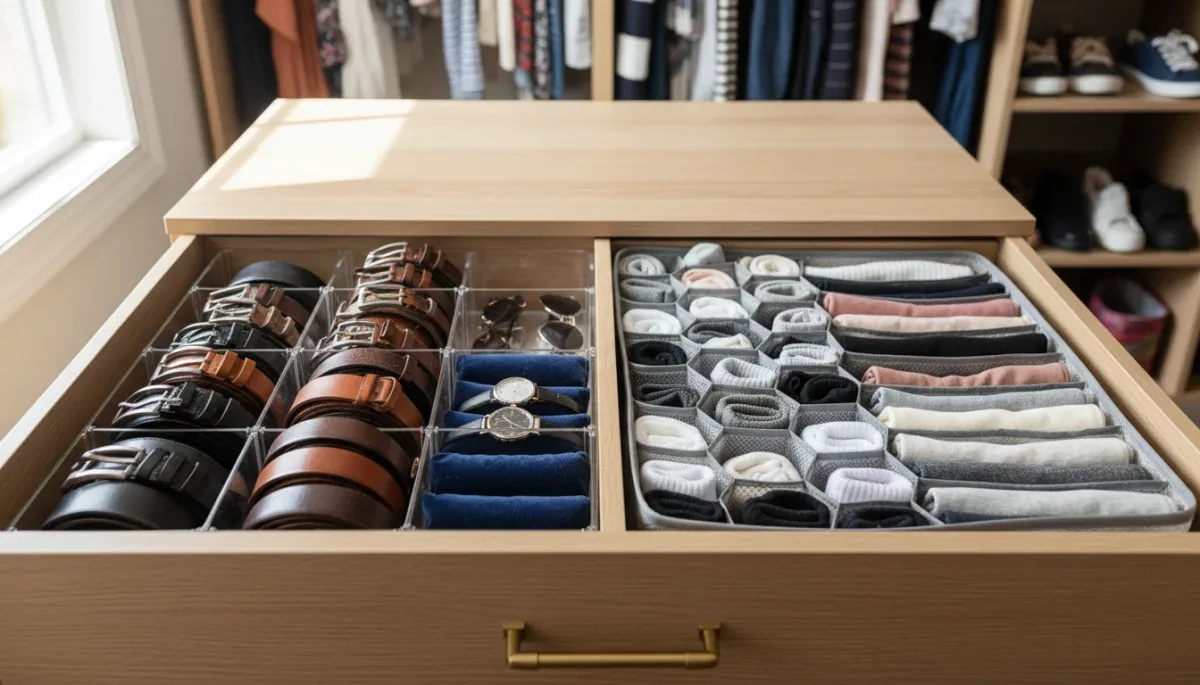
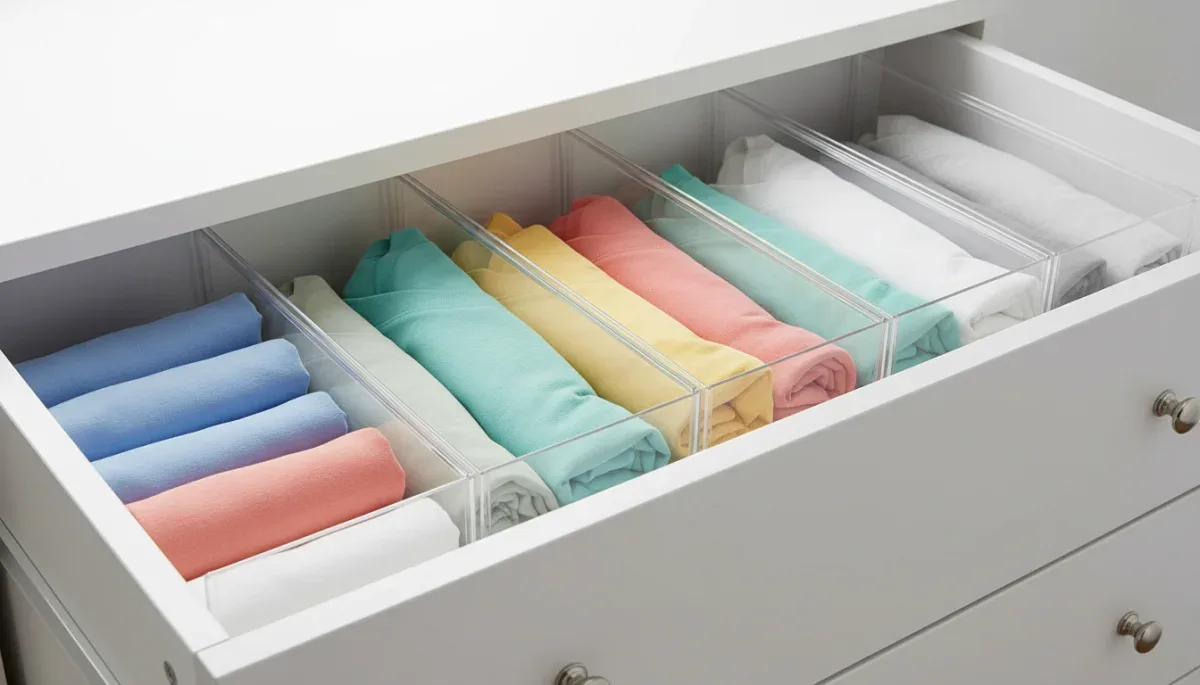
Heavy textiles and upright accessories perform best when supported by the solid framework of acrylic. Rolled leather belts, stiff brass buckles, sunglasses cases, and metal watches put concentrated pressure on divider walls. Acrylic withstands this localized force without tipping over, holding dense accessories in designated vertical channels. Acrylic is also the standard choice for filing folded denim, heavy cotton t-shirts, and structured knitwear, as the solid walls allow you to pull out a single item without collapsing the rest of the stack.
Conversely, lightweight intimates and delicates find their ideal home inside fabric cell organizers. Bras, seamless underwear, athletic socks, and sheer stockings do not exert outward pressure against compartment walls. The soft texture of fabric pockets cushions molded bra cups and protects fine lace from catching against hard corners. Fabric organizers are also well suited for baby apparel, swaddles, and children's socks, where soft edges ensure child safety during daily dressing routines.
Recommended divider assignments by apparel category
- Use acrylic panels for folded denim jeans, cotton athletic wear, and rolled leather belts.
- Use fabric multi-cell trays for undergarments, dress socks, and thin athletic ankle socks.
- Use tall acrylic dividers for thick winter sweaters and structured linen shirts.
- Use fabric drawer boxes for silk scarves, neckties, and delicate sleepwear.
Cost considerations and budget shopping strategies
Price differentials between acrylic and fabric closet drawer dividers are substantial, particularly when you calculate the total cost required to outfit a full bedroom dresser with six or eight deep drawers.
Fabric organizers occupy the entry-level price tier on affordable global e-commerce marketplaces. Multipacks containing three to six fabric organization boxes with varying grid layouts frequently sell for a fraction of the price of a single specialty acrylic divider. This low barrier to entry makes fabric an economical choice for organizing a complete wardrobe on a strict budget, or for outfitting temporary guest rooms and dormitories where long-term durability is not a primary concern.
Acrylic hardware represents a higher initial capital outlay. High-grade cast acrylic requires specialized manufacturing and precise shipping packaging to prevent transit fractures, which raises the final retail price. Spring-loaded tension models and interlocking acrylic grid kits cost considerably more per drawer. Shoppers must weigh whether the multi-year lifespan, pristine aesthetic, and rigid utility of clear acrylic justify spending three to four times the cost of fabric alternatives for their master closet.
Installation methods and drawer fit requirements
The process of fitting closet drawer dividers into existing cabinetry reveals significant mechanical differences between rigid acrylic and flexible fabric inserts.
Adjustable acrylic dividers typically rely on spring-loaded expansion mechanisms or adhesive bracket channels. Spring-loaded models use internal steel springs that push rubber-padded ends against the front and rear walls of your drawer box. While this creates a custom built-in appearance, the constant outward tension exerts mechanical stress on the drawer joints. On budget dressers made from low-density particleboard or thin plywood, excessive spring pressure can bow the drawer face outward or separate the dovetail joints over time.
Fabric drawer organizers avoid tension-based installation entirely. They function as drop-in containers that rest passively on the drawer floor. You simply expand the collapsed box, zip the diagonal base zipper to lock the square shape, and set the bin into the drawer. While this eliminates all risk of structural damage to your furniture, loose fabric inserts can slide forward and backward when you open and close the drawer rapidly. Applying small adhesive rubber dots or non-slip drawer liner beneath fabric bins resolves this sliding issue effectively.
At a glance
| Factor | What to know |
|---|---|
| Structural rigidity | Acrylic holds heavy garments upright while fabric yields under substantial lateral weight. |
| Fabric protection | Soft fabric compartments prevent snagging on fine lace, silk, and lightweight knits. |
| Ease of cleaning | Acrylic wipes clean with soapy water while cardboard-backed fabric cannot be submerged. |
| Upfront purchase cost | Fabric organizers provide the lowest cost per cell for outfitting multiple dressers. |
Frequently asked questions
Can acrylic drawer dividers damage wooden dresser drawers?
Yes, spring-loaded acrylic dividers can damage wooden drawers if the internal spring tension exerts too much force against thin particleboard walls. Always inspect the rubber end grips to verify they are soft and flat, and never force an expanding divider into a drawer box that exhibits weak joints.
Are fabric drawer dividers washable in a laundry machine?
No, standard fabric organizers should not be washed in a laundry machine. Most budget fabric bins contain internal cardboard stiffening boards that dissolve and lose structural shape when soaked in water. Instead, spot clean the outer fabric using a slightly damp cloth and mild liquid soap, then air-dry completely.
Do clear acrylic organizers turn yellow over time?
High-quality cast acrylic does not turn yellow inside a closet drawer because it is shielded from direct outdoor ultraviolet sunlight. Discoloration typically occurs only when low-grade polystyrene plastics are mislabeled as acrylic or when organizers sit exposed to direct, unfiltered window sunlight over multiple years of continuous sun exposure.
Which divider style works best for storing rolled t-shirts?
Acrylic channel dividers work best for filing rolled or folded t-shirts. The solid vertical walls keep shirt rows upright so you can slide out a single shirt without causing the surrounding clothes to unravel or slump forward, which frequently happens inside soft fabric cubbies.
The bottom line
Acrylic dividers deliver durable, crystal-clear structure that transforms disorganized drawers into clean, boutique displays for heavy apparel and rigid accessories, whereas fabric organizers offer a soft, affordable, and flexible solution for undergarments and delicate textiles. If you prioritize long-term durability and visual clarity, invest in acrylic; if you need rapid, low-cost organization for lightweight knits, choose fabric. Before ordering any divider system, use a rigid tape measure to confirm your interior drawer depth, width, and height to ensure a proper fit.
Written by
Mariana Viana
Mariana Viana writes about house, electronics and clothes for onlyshein.com. Each article explains how things work, compares published details such as prices, policies and program rules, and points readers to the official source before they decide.